 English
 English
  Spanish
  Russian
  Arabic
  French
  German
  Portuguese
  Turkish
  Dutch
Dutch  Polish
  Korean
  Vietnamese
  Indonesian
  Online Consultation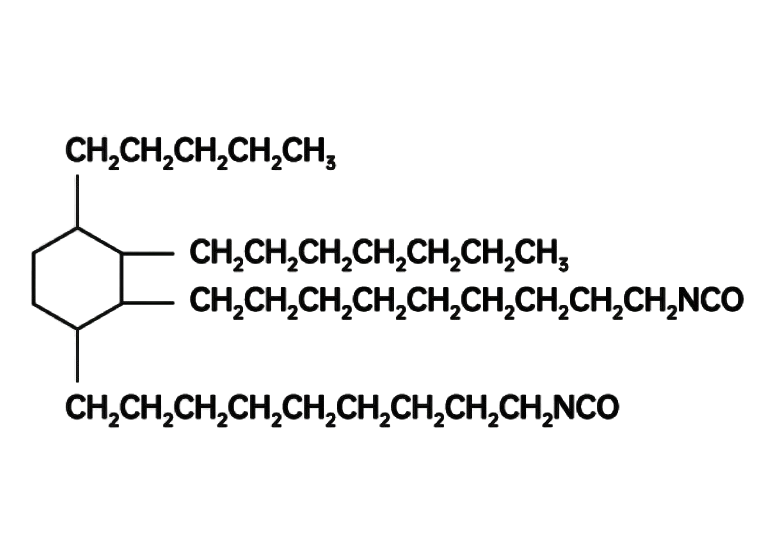
DDI (DDI (Dimeryl Diisocyanate) CAS No. 68239-06-5 DIMERYL-DI-ISOCYANATE )
Dimeryl Diisocyanate
DDI
CAS No. 68239-06-5
Read More
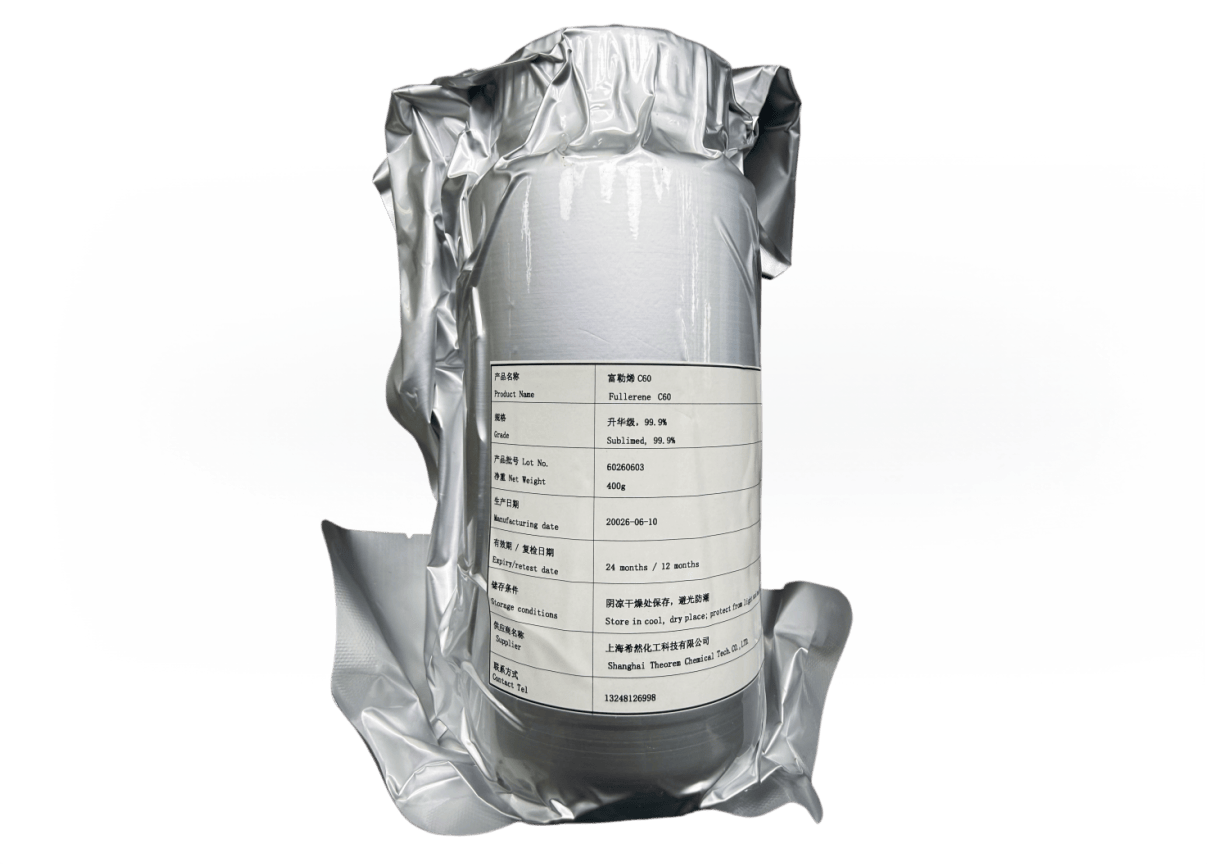
Fullerene C60
CAS No. 99685-96-8
Name: Fullerene C60
Aliases: Buckminsterfullerene, Bucky ball, Footballene
Molecular Formula: C₆₀
Molecular Weight: 720.66
Type: Regular Grade, Sublimation Grade
Purity: 90%, 95%, 99%, 99.5%, 99.9%, 99.95%, 99.99%
CAS No.99685-96-8
Product Description
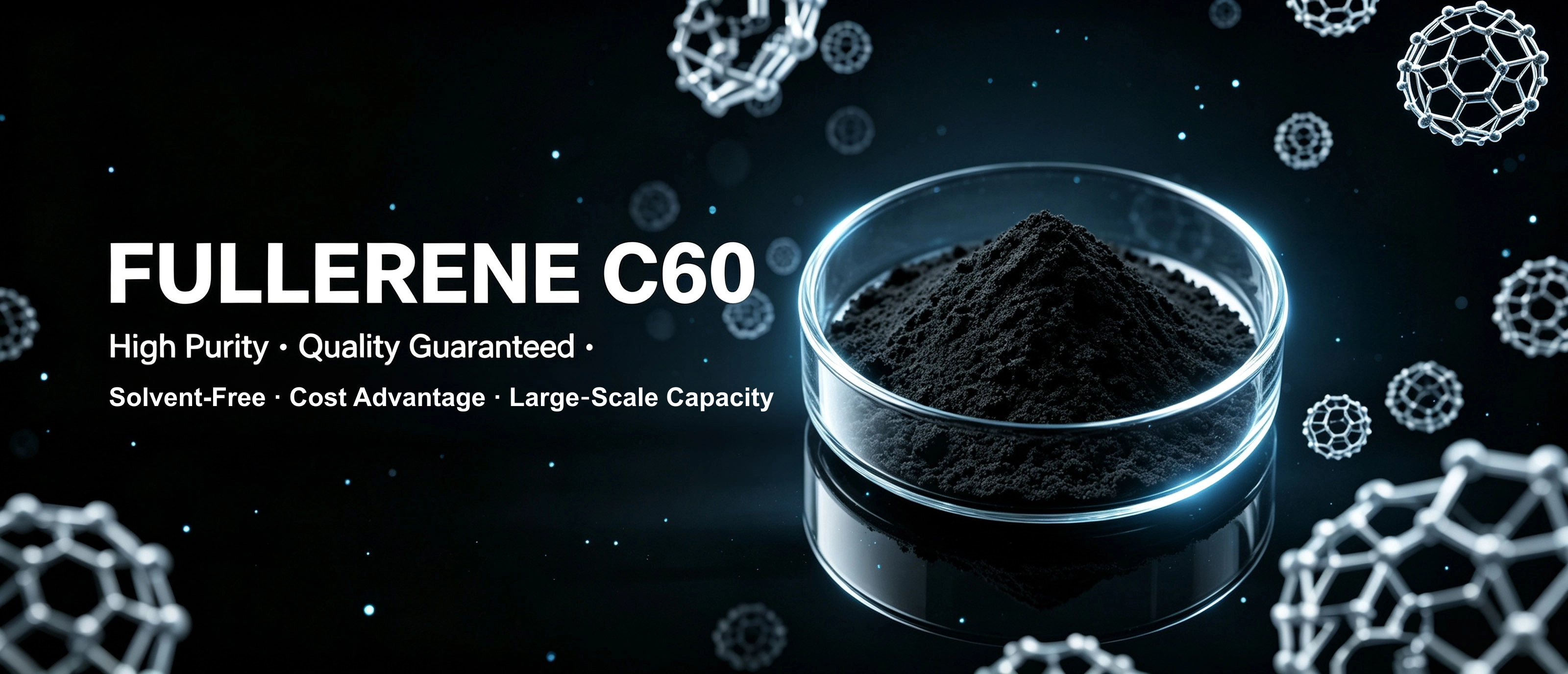
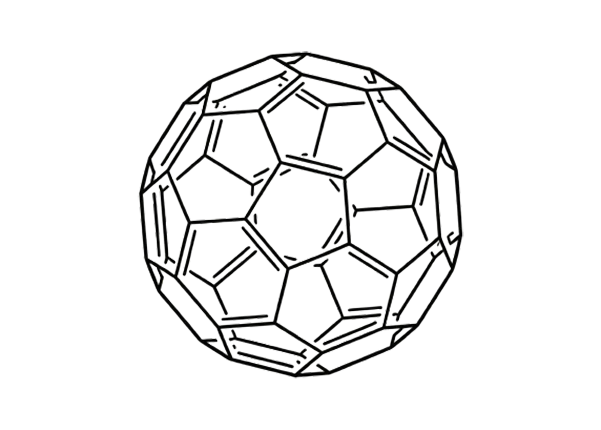
Fullerene C60 is a hollow cage‑shaped spherical molecule composed of 60 carbon atoms.
Geometry: Truncated icosahedron, containing 12 regular pentagons and 20 regular hexagons (32 faces, 60 vertices, 90 edges in total).
Bonding: Each carbon atom is sp²‑hybridized with delocalized π‑bonds; highly symmetric structure (Ih point group).
Product properties & Features
The molecular structure of C60 resembles a modern soccer ball: a spherical 32-hedron composed of 12 disjoint pentagons and 20 hexagons, with all 60 carbon atoms being completely equivalent. Each carbon atom is located at a vertex of a pentagon or hexagon, forming σ bonds with three adjacent carbon atoms through sp² hybridization, while the remaining p-orbital electrons form a conjugated π system both inside and outside the spherical shell. Due to its resemblance to the spherical dome architecture designed by the architect Buckminster Fuller, it is named Buckminsterfullerene, commonly known as "buckyball".
Core Performance Advantages:
Structural Stability: The carbon-carbon σ bonds and π-conjugated system allow C60 to remain stable under extreme conditions (high temperature, radiation)
Excellent Electronic Properties: High electron affinity, small reorganization energy, high electron mobility; conductivity can be tuned through doping (semiconductor → conductor → superconductor)
Broad Light Absorption: Light absorption range covers ultraviolet to near-infrared wavelengths
Antioxidant Activity: Antioxidant capacity 125 times that of vitamin C, effectively scavenging free radicals
Surface Modifiability: Functional groups can be attached via covalent bonds (e.g., carboxyl, amino) or non-covalent bonds (π-π stacking)
Endohedral Filling: Metals or nitrides can be encapsulated inside the fullerene cage, forming endohedral metallofullerenes
Applications
1.Energy Field
Solar Cells : As an electron acceptor material, it exhibits good electron transport performance and photostability, enhancing the power conversion efficiency of perovskite solar cells and organic photovoltaic cells
Photocatalysis: Used as a photocatalyst for photolytic water splitting to produce hydrogen, achieving a hydrogen evolution rate of up to 1.2 mmol/g/h with 23% efficiency
Supercapacitors : The high surface area and excellent electrochemical properties of C60 make it an ideal material for high-performance energy storage devices
2.Electronics and Optoelectronics
Organic Optoelectronic Devices : Used in photodetectors, photodiodes, and organic light-emitting diodes (OLEDs); the high electron mobility of C60 effectively improves device performance
Flexible Electronics : C60-doped materials can be used to manufacture flexible displays with bending radii <1 mm
Quantum Computing : The C60 cage can serve as a "quantum protective shell" for qubits. IBM plans to launch a prototype chip containing 1,000 qubits based on C60 encapsulation technology
3.Biomedical Field
Antioxidant/Anti-aging : Antioxidant capacity 125 times that of vitamin C, widely used in high-end skincare products and health supplements
Drug Delivery : The cage structure of C60 can encapsulate drug molecules for targeted delivery, improving efficacy and reducing side effects
Photodynamic Therapy : Acts as a photosensitizer to destroy cancer cells under light and oxygen, used in cancer treatment
Gene Therapy : C60-liposome nanocarriers can increase siRNA delivery efficiency to 85%, achieving 70% tumor shrinkage in breast cancer models
4.Materials Science and Catalysis
Catalysis : Can serve as an "electron buffer" combined with metal catalysts for reactions such as syngas production and CO₂ conversion
Polymer Modification : Used to enhance the mechanical properties and thermal stability of polymer materials
Smart Materials : C60-doped shape memory polymers achieve 99% shape recovery under infrared light trigger, used in aerospace adaptive structures
Sensors : C60-SnO₂ composites achieve ppb-level sensitivity for NO₂ detection, applied in air quality monitoring
5.Other Applications
Lubricants: As high-performance lubricant additives
Cosmetics: Raw materials for anti-aging skincare products
Hydrogen Storage Materials: The cage structure of C60 can be used for hydrogen storage
Packing & Storage
1) 10g/100g/500g/glass bottle, or as request
2) 1kg/bag (1kg net weight, 1.1kg gross weight, packed in an aluminum foil bag)
3) 5kg/carton(1kg net weight, 1.1kg gross weight, packed in five aluminum foil bag)
Primary packaging: Double PE-lined aluminum foil bags, heat-sealed under argon or nitrogen atmosphere
Secondary packaging: HDPE bottles or drums with tamper-evident seals
Outer packaging: Corrugated fiberboard shipping cartons suitable for international transport
Technical Index
| Fullerene C60 Grade I | Fullerene C60 Grade II | Fullerene C60 Grade III | Fullerene C60 Grade IV | Fullerene C60 Grade V | Fullerene C70 Grade I | Fullerene C70 Grade II | Fullerene C70 Grade III | Fullerene mixture |
| Purity: 99.5% | Purity: 99.9% | Purity: 99.95% | Purity 99.99% | Sublimation Grade | Purity: 98% | Purity: 99% | Purity: 99.5% | ~78% C60, ~19% C70, ~3% higher fullerenes |
Comparison of Fullerene C60 and C70
| Comparison Item | C60 | C70 |
| Number of Carbon Atoms | 60 | 70 |
| Molecular Shape | Spherical (soccer ball shape) | Ellipsoidal (rugby ball shape) |
| Symmetry | Ih | D5h |
| Number of Pentagonal Rings | 12 | 12 |
| Number of Hexagonal Rings | 20 | 25 |
| Types of Non-equivalent Carbons | 1 type (all carbons equivalent) | 5 types |
| Number of ¹³C NMR Lines | 1 line | 5 lines |
| Energy Gap | ~1.5-1.7 eV | ~1.6 eV |
| Visible Light Absorption | Relatively weak | Stronger (broad absorption at 500-700 nm) |
| Light Absorption Range | UV to near-infrared | UV to near-infrared (enhanced in visible region) |
| Electron Affinity | 2.6-2.8 eV | Comparable |
| Compressibility | Higher | Relatively lower |
| Solid-State Phase Transition | Sharp first-order phase transition at 260 K | Complex phase transition with hysteresis effect |
| Abundance | Highest (approximately 60-80%) | Second highest (approximately 15-30%) |
| Typical Photovoltaic Efficiency Improvement | Baseline | 26-62% higher than C60 |
| Antioxidant Activity | Baseline | Derivatives can reach 16 times that of C60 |
| Main Applications | Solar cells, biomedicine, quantum computing, catalysts | Organic photovoltaics, photocatalysis, anti-HIV, antioxidants |
By submitting this form, you consent to the storage of your data and
your interests in order to answer your enquiry. Further
information
on data processing, your rights and revocation can be found in our
privacy policy.