 English
 English
  Spanish
  Russian
  Arabic
  French
  German
  Portuguese
  Turkish
  Dutch
Dutch  Polish
  Korean
  Vietnamese
  Indonesian
  Online Consultation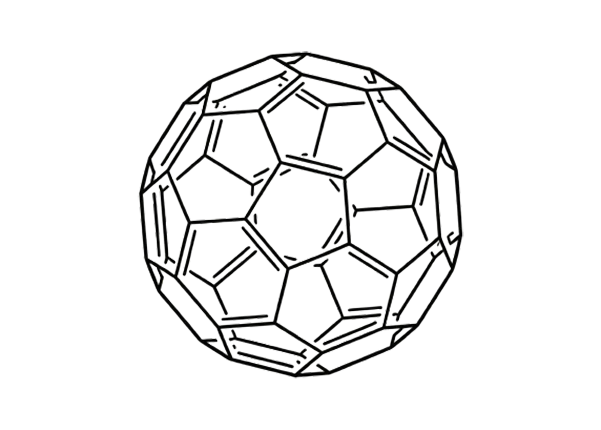
Fullerene C60 (Fullerene C60 CAS No. 99685-96-8 )
Fullerene C60
CAS No. 99685-96-8
Read More

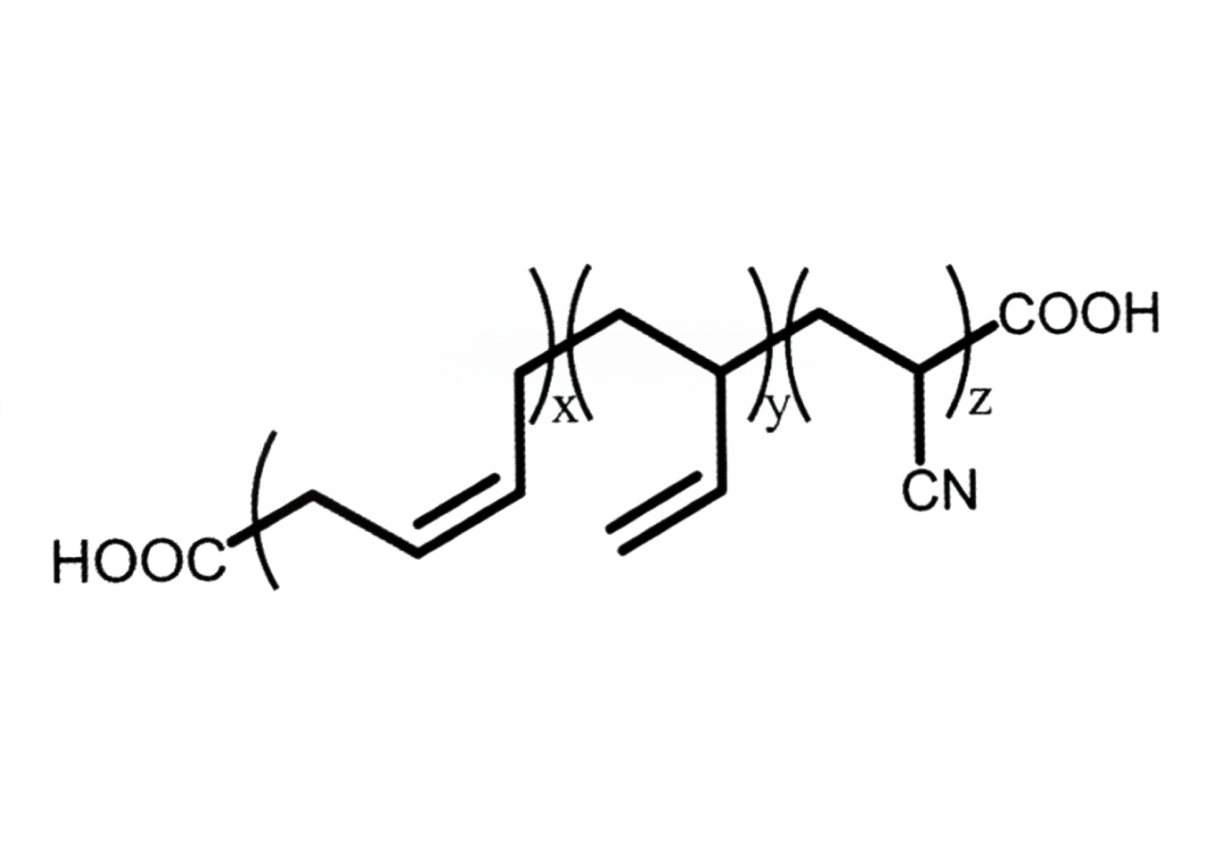

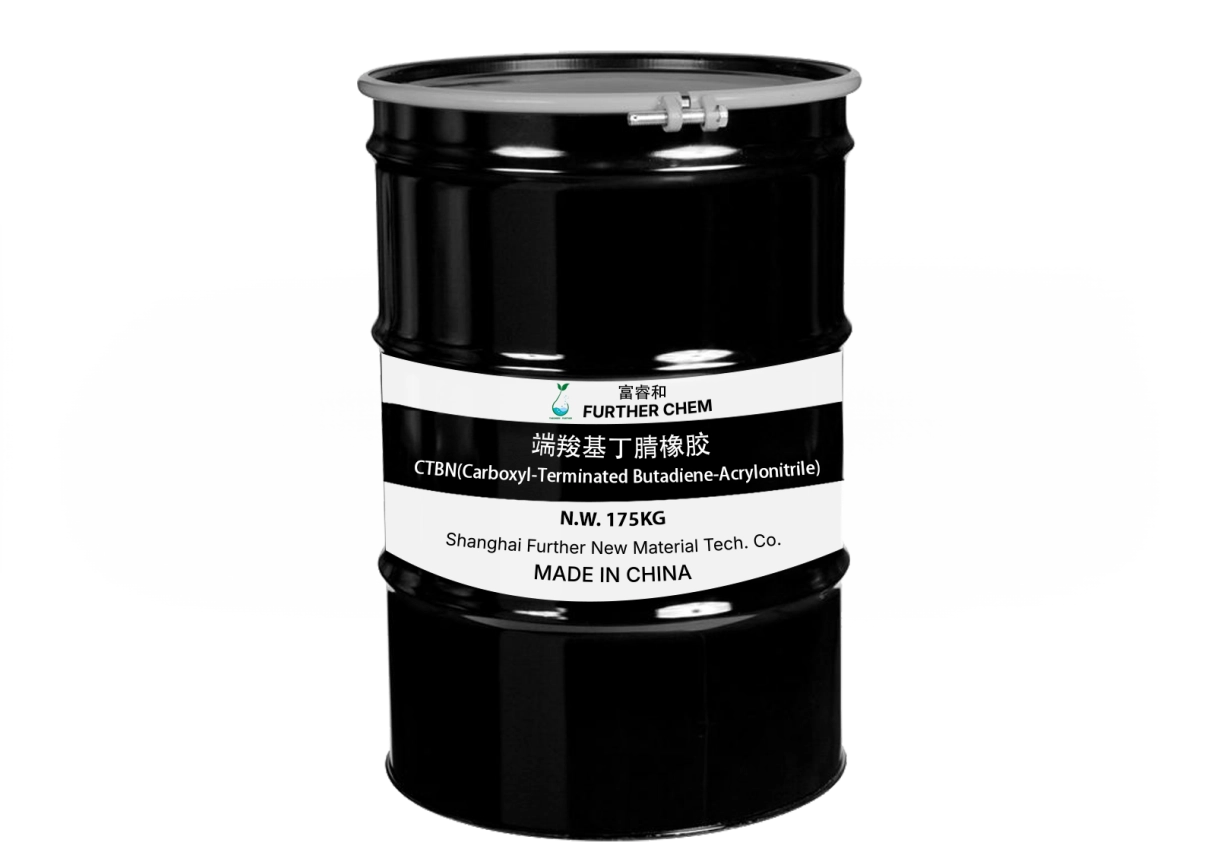
Carboxyl-terminated butadiene-acrylonitrile
CTBN
CAS No. 25265-19-4
Chemical name: Carboxyl-terminated butadiene-acrylonitrile
Other name: Carboxy-Terminated Nitrile Butadiene Rubber
Code: CTBN
CAS No.: 25265-19-4
Product Description
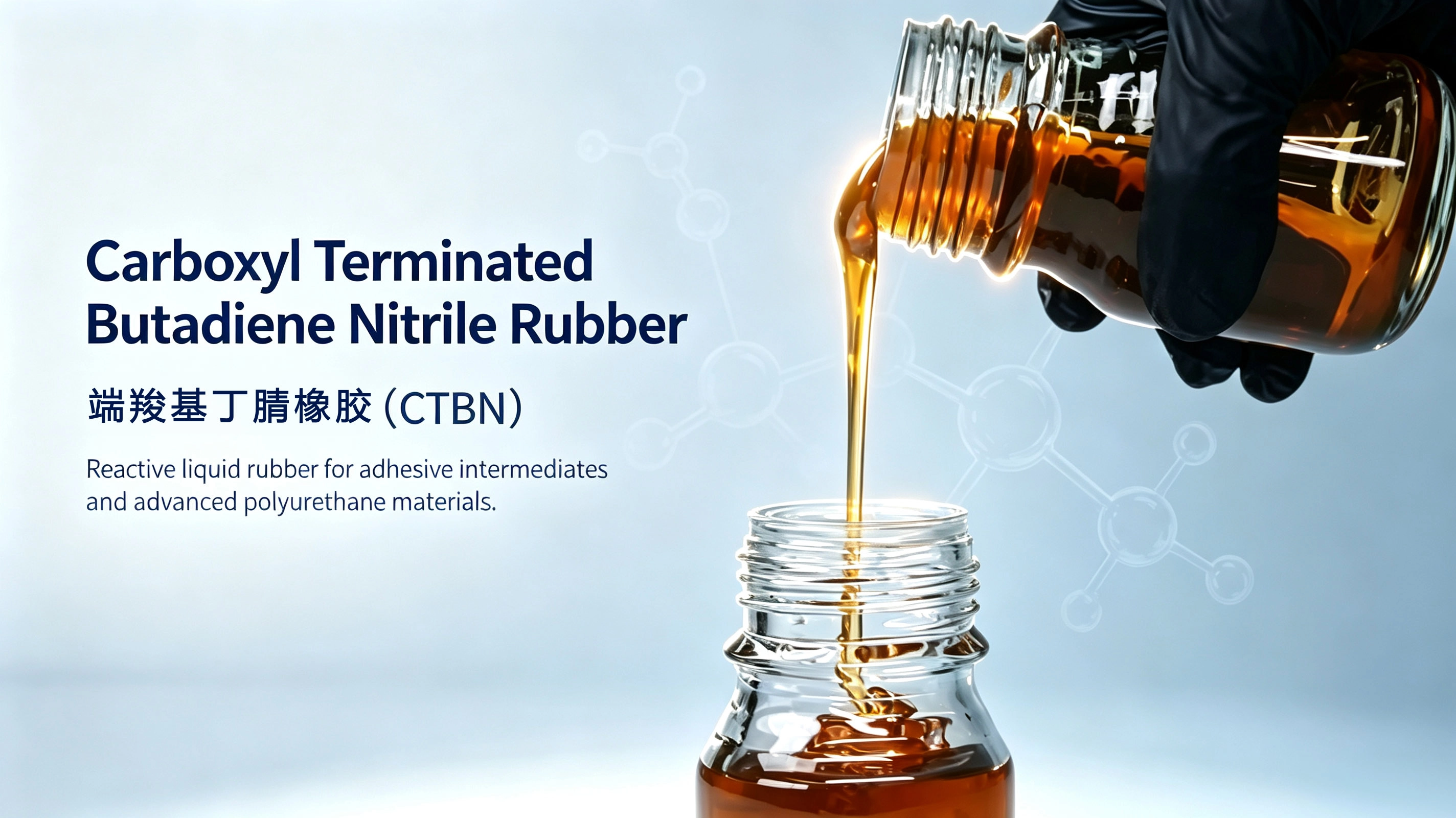
CTBN (Carboxyl-Terminated Butadiene-Acrylonitrile) is a high-molecular polymer polymerized from butadiene and acrylonitrile monomers, with carboxyl groups at the ends of its molecular chains. It appears as a brown viscous liquid at room temperature.
Structural Features:
Reactive terminal carboxyl groups for chain extension & crosslinking
Acrylonitrile segments in the main chain offer high polarity, oil resistance, wide temperature tolerance, superior adhesion and stability.
It can blend with thermosetting structural resins for modification and enhance crack resistance.
acrylonitrile content: 8%–28% (Customizable)
NOTE:The viscosity of CTBN increases significantly with the rise of nitrile group content in the molecular chain. The dosage of additives including colorants, stabilizers, curing agents and fillers shall be determined according to viscosity. Viscosity is a vital indicator of its service performance.
As the most critical parameter of CTBN, acrylonitrile content directly governs the overall properties and exerts a profound influence on its processability and applications.
The incorporation of acrylonitrile into molecular chains improves the compatibility of CTBN with epoxy resins and phenolic resins, and enhances adhesion, oil resistance and crack resistance.
| Acrylonitrile Content | Characteristics | Suitable Applications |
| Low nitrile (~10%) | Low viscosity, good low-temperature performance | Applications requiring low-temperature toughness |
| Medium nitrile (~18%) | Balanced comprehensive performance | General toughening, structural adhesives |
| High nitrile (~28%) | High polarity, good compatibility with epoxy, excellent oil resistance | High-performance composites, oil-resistant seals |
Product properties & Features
High-efficiency toughening & flexibility
Strong adhesion to difficult substrates
Superior impact & crack resistance
Excellent fatigue durability
High reactivity
Wide temperature tolerance (heat & low-temperature resistance)
Good chemical resistance
Excellent resin compatibility
Key Property Comparison (CTBN vs. Conventional HTPB)
Polarity: CTBN (strong, with acrylonitrile) > HTPB
Adhesion: CTBN superior to metals/polar substrates
Oil Resistance: CTBN significantly better than HTPB
Reactive Sites: CTBN (dicarboxyl end groups); HTPB (dihydroxyl end groups)
Typical Uses: CTBN prioritizes epoxy toughening, oil-resistant adhesives/sealants; HTPB prioritizes polyurethanes, propellants, low-temperature flexible materials.
Applications
1. Epoxy Resin Toughening
Reduce brittleness of epoxy systems, enhance impact, crack and fatigue resistance, applied in wind power and aerospace composite matrices
2. High-performance Adhesives & Sealants
Improve bonding strength of metals and composites, optimize temperature, oil, humidity resistance and low-temperature toughness for automotive and wind power sealing parts
Suitable for bonding plexiglass and polyester tapes with remarkably enhanced properties; it can also be used for impregnating glass fiber, polyester, carbon fiber and other fabrics.
As abrasive binder for grinding wheels and cut-off wheels, it requires less binder and offers outstanding wear resistance, excellent polishing effect, as well as good resistance to hot water and cutting fluids.
3. Aerospace Composites
Fabricate structural adhesives and heat-resistant laminates to strengthen mechanical properties of aviation components
4. Electronic Encapsulation Materials
Modify packaging resins to boost corrosion and impact resistance for electronic potting and chip encapsulation
5. Rubber & Special Resin Modification
Toughen phenolic, BMI and cyanate ester resins; improve oil resistance and low-temperature ductility of rubber substrates
Packing & Storage
50kg/plastic drum or 170kg/metal drum packaging.
The shelf life is 12 months, after the expiration of the re-inspection can still be used.
Storage should be cool, dry and ventilated.
Avoid rain and sun during transportation. Do not mix with strong oxidants.
Technical Index
| Item | CTBN-1 | CTBN-2 | CTBN-3 | CTBN-4 | CTBN-5 |
| Carboxyl value(mmol/g) | 0.45-0.55 | 0.45-0.65 | 0.45-0.65 | 0.65-0.75 | 0.45-0.70 |
| Appearance | Amber Viscous liquid, no visible impurities | ||||
| Viscosity (27℃,Pa.S) | ≤180 | ≤200 | ≤300 | ≤200 | ≤600 |
| Acrylonitrile content,% | 8.0-12.0 | 8.0-14.0 | 18.0-22.0 | 18.0-22.0 | 24.0-28.0 |
| Moisture,wt% ≤ | 0.05 | 0.05 | 0.05 | 0.05 | 0.05 |
| Volatile Content,% ≤ | 1.0 | 1.0 | 1.0 | 1.0 | 1.0 |
| Molecular weight | 3600-4200 | 3000-4500 | 3000-4500 | 2500-3000 | 3000-4500 |
*NOTE: We are able to customize CTBN based on customers' intended applications and required specifications.
By submitting this form, you consent to the storage of your data and
your interests in order to answer your enquiry. Further
information
on data processing, your rights and revocation can be found in our
privacy policy.