| Product Name | CODE | CAS No. | Product properties & Features |
| Hydroxyl-Terminated Polybutadiene | HTPB | 69102-90-5 | Key Properties:
1. Hydrophobic with low moisture permeability 2. Reactive hydroxyl groups for versatile curing 3. Ultra-low glass transition temperature (≈ -80°C) 4. Excellent hydrolysis, acid/alkali, and low-temperature resistance 5. Superior wear resistance and electrical insulation 6. Strong adhesion to diverse substrates 7. Low-color, high-clarity viscous liquid
Primary Applications: - Coatings,Adhesives,Sealants,Potting and encapsulation - Propellant - Polyurethane(PU) elastomers - Electrical insulation materials - Rubber products - Polymer Modification etc.
*High output, steady supply, cost-effective quality, Customized production can be operated. |
| Epoxidized Hydroxyl-Terminated Polybutadien | EHTPB | 71342-74-0 | EHTPB introduces epoxy groups onto the HTPB backbone, significantly enhancing molecular polarity while retaining reactive hydroxyl and double-bond functionalities. It offers excellent oil and aging resistance, high transparency, low viscosity, and outstanding low-temperature performance.
Dramatically improves mechanical properties, adhesive strength, and heat resistance of polyurethane materials—making it a key component for adhesives, sealants, coatings, and elastomers. Exhibits excellent compatibility with epoxy resins, good hydrophobicity, acid/alkali resistance, and strong adhesion to various substrates.
When used as a toughening agent for epoxy systems, EHTPB not only significantly enhances impact toughness but also imparts superior electrical properties to cured products.
*Customized production can be operated. |
| Carboxy-terminated Nitrile Butadiene Rubber | CTBN | 25265-19-4 | CTBN is a liquid nitrile rubber with carboxyl functional groups at both ends of its molecular chain. The terminal carboxyl groups can react with epoxy resin, providing an effective toughening effect on the epoxy resin.
CTBN can be used as:
- Adhesives, bonding, sealing, spraying, potting(aerospace, automotive, electrical/electronics, industrial. marine and construction applications...)
- Coatings (solution, powder, waterborne)
*Customized production can be operated. |
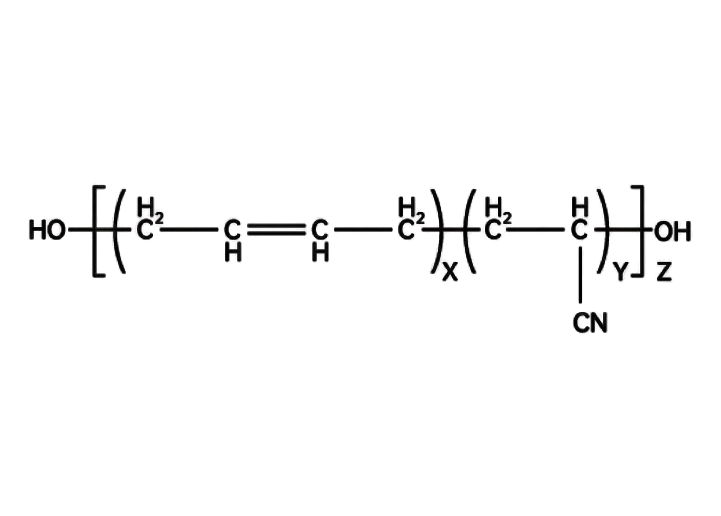
| Hydroxy-terminated Nitrile Butadiene Rubber | HTBN | 9003-18-3 | HTBN is a liquid nitrile rubber with hydroxyl functional groups at both chain ends. It retains the excellent oil, heat, and abrasion resistance characteristic of nitrile rubber, while offering efficient reactivity with isocyanate curatives and good processability with strong adhesion.
Primarily used in adhesives, coatings, and resin toughening—significantly enhancing the toughness, adhesion, durability, and oil/heat resistance of composite materials.
*Customized production can be operated. |
| Amine-terminated Nitrile Rubber | ATBN | 68683-29-4 | ATBN is a liquid nitrile rubber with amine functional groups at both chain ends. It can be cured with isocyanate curatives or react with epoxy groups. Exhibits excellent oil, heat, and abrasion resistance with strong adhesion. When used to toughen epoxy resins, it effectively reduces gelation and curing temperatures.
Primarily used for epoxy resin toughening—significantly enhancing composite toughness, shear strength, and peel strength. Can also be used alone as adhesives and sealants.
*Customized production can be operated |
| Carboxyl terminated polybutadiene | CTPB | 586976-24-1 | CTPB is a liquid polybutadiene rubber with carboxyl functional groups at both ends of its molecular chain. The terminal carboxyl groups can react with epoxy resin, providing an effective toughening effect on the epoxy resin. Compared to CTBN, CTPB has lower viscosity, as well as better low-temperature performance and flexibility.
*Customized production can be operated. |
| Liquid Polybutadiene | LPB | 9003-17-2 | One of the most promising hydrocarbon resins for 5G copper clad laminates, with high reactivity, excellent hydrophobicity and dielectric properties, and good processing performance.
LPB can be applied in many fields such as circuit boards, coatings, rubber sealing products, rubber rollers, etc. |
| Liquid Butadiene Styrene Rubber | LSBR | 9003-55-8 | LSBR is a low molecular weight copolymer of butadiene and styrene with a molecular weight of 2000-10000.
It possesses excellent electrical insulation and physical properties, and is often used in many fields such as circuit boards, adhesives and sealing materials. |
| Monohydroxy liquid polybutadiene | LPBOH | | LPBOH is a polybutadiene product with a hydroxyl group at one end, which can achieve double curing of hydroxyl and vinyl groups.
It possesses high reactivity, excellent hydrophobicity and dielectric properties, and good processing performance. |
| Hydroxy-terminated Butadiene-styrene Random Copolymer | HTBS | | HTBS is a liquid copolymer of butadiene and styrene containing hydroxyl functional groups at the end of the molecular chain.
It possesses excellent heat resistance, wear resistance, aging resistance, good processing performance, low heat generation and low temperature flexility.
It can be used with natural rubber and synthetic rubber, and can also be used alone for pouring polyurethane tires, potting adhesives, adhesives, etc.. |
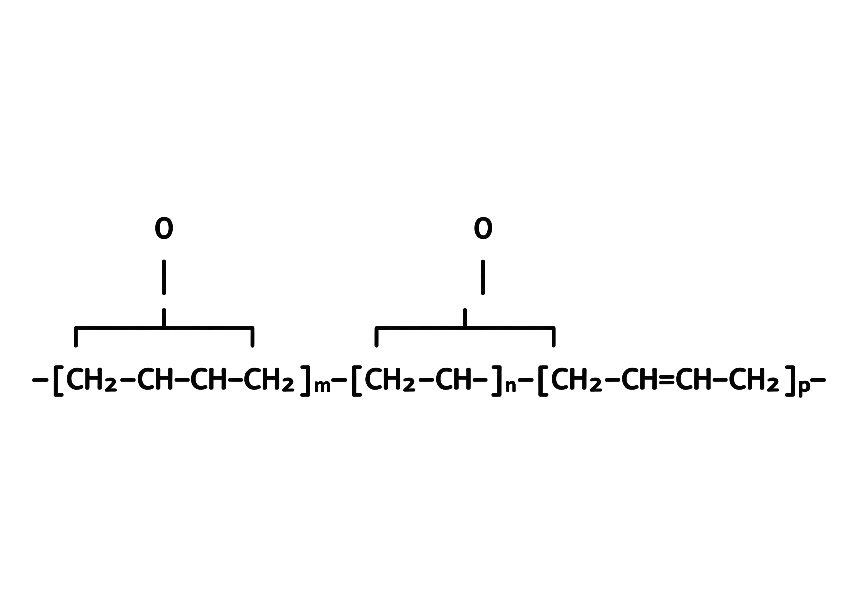
| Epoxidized Polybutadiene | EPB | 129288-65-9 | EPB introduces epoxy groups onto the polybutadiene backbone, offering oil resistance, aging resistance, good transparency, and excellent low-temperature performance.
The epoxy groups serve as reactive sites for curing with isocyanates or epoxy curatives, significantly enhancing mechanical strength, adhesion, and heat resistance in polyurethane systems. The polar nature also improves bonding to both metallic and non-metallic substrates.
Widely used in adhesives, sealants, coatings, epoxy toughening, and PU elastomers. |
| 3-Methoxypropylamine | MOPA | 5332-73-0 | MOPA is an ether amine with balanced hydrophilic and lipophilic properties. It serves as a key intermediate for curing agents, water-based coatings, corrosion inhibitors, surfactants and pharmaceutical synthesis, featuring low volatility and excellent miscibility. |

 English
 English
  Spanish
  Russian
  Arabic
  French
  German
  Portuguese
  Turkish
  Dutch
Dutch  Polish
  Korean
  Vietnamese
  Indonesian