 English
 English
  Spanish
  Russian
  Arabic
  French
  German
  Portuguese
  Turkish
  Dutch
Dutch  Polish
  Korean
  Vietnamese
  Indonesian

 Online Consultation
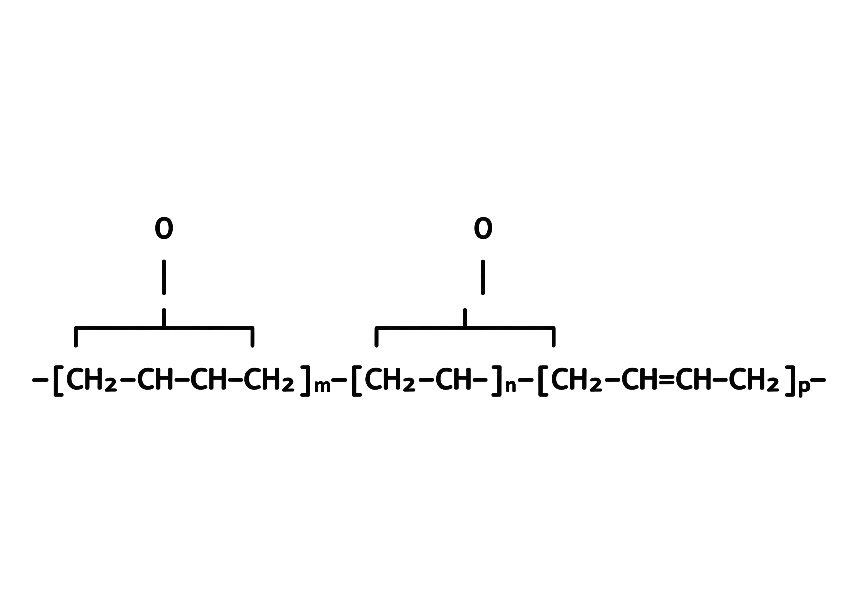
HTBS (Hydroxyl-Terminated Butadiene-Styrene Random Copolymer(HTBS) )
Hydroxy-terminated Butadiene-styrene Random Copolymer
HTBS
Read More
Online Service

 Mobile/Wechat/Telegram: +86-18321679576
 WhatsApp:+86-13248126998
 Email:young@further-chem.com
Email:info@further-chem.com
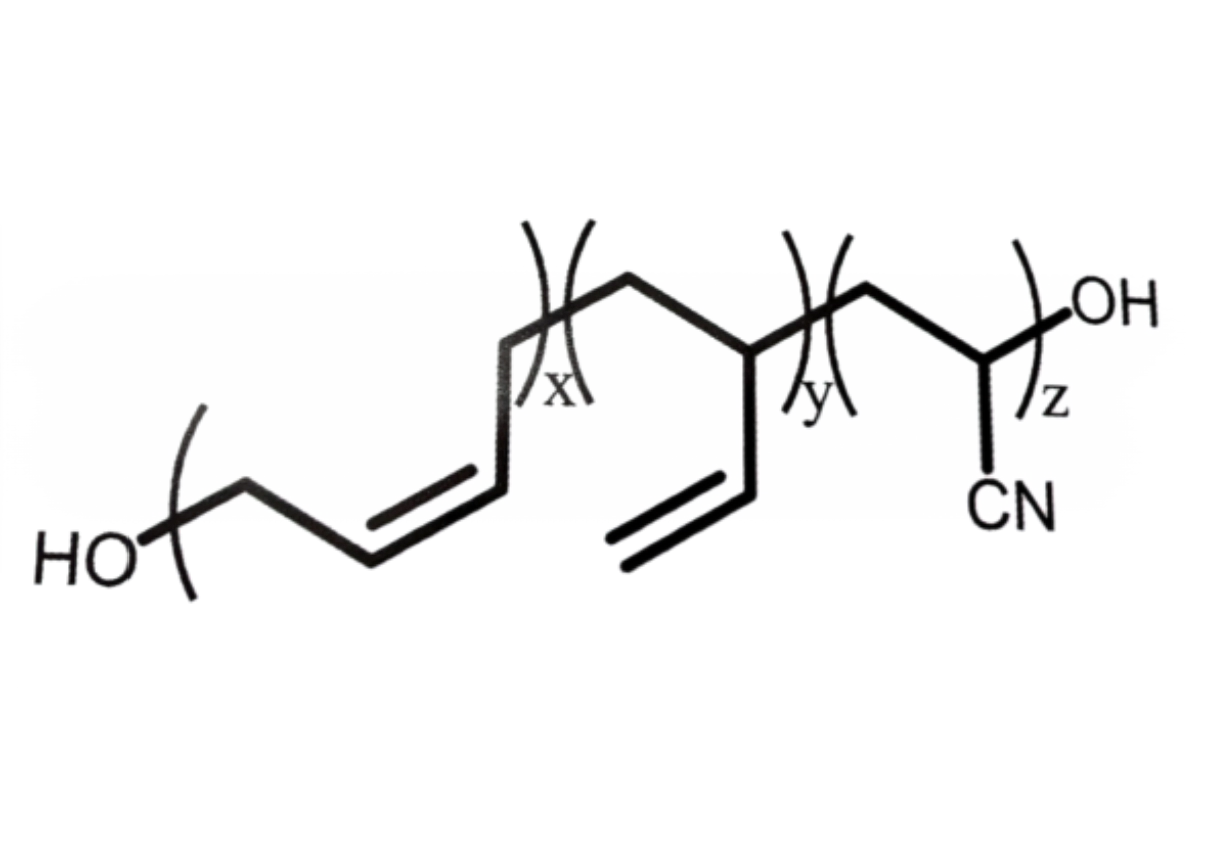
Hydroxy-Terminated Nitrile Butadiene Rubber
HTBN
CAS No. 69102-90-5 / 9003-18-3
Chemical Name: Hydroxy-Terminated Nitrile Butadiene Rubber
Synonyms: Hydroxyl-Terminated Butadiene-Acrylonitrile Rubber
Code: HTBN
Product Description
HTBN (Hydroxyl-Terminated Butadiene-Acrylonitrile Rubber; Hydroxyl-Terminated Liquid Nitrile Rubber) commonly known as nitrile hydroxyl rubber, is a telechelic liquid rubber with reactive hydroxyl groups (–OH) at both ends of the molecular chain and a main chain copolymerized from butadiene and acrylonitrile.
It exhibits the same physical and chemical properties as nitrile rubber, can be cured with isocyanate curing agents, and possesses good reactivity, processability, as well as excellent oil resistance, heat resistance, abrasion resistance and strong adhesion.
Product properties & Features
Structure: Copolymer of butadiene and acrylonitrile, end-capped with hydroxyl groups; nitrile groups (–CN) impart oil/solvent resistance, and terminal hydroxyl groups enable cross-linking with isocyanates, epoxies, etc.
Core Advantages: Excellent oil resistance, aging resistance, low-temperature flexibility, strong adhesion, room-temperature curability, combining the processability of liquid rubber with the durability of solid nitrile rubber.
Differences from CTBN/HTPB
| Property | HTBN | CTBN | HTPB |
|---|---|---|---|
| Terminal Group | Hydroxyl (–OH) | Carboxyl (–COOH) | Hydroxyl (–OH) |
| Main Chain | Butadiene-acrylonitrile | Butadiene-acrylonitrile | Butadiene (no acrylonitrile) |
| Oil Resistance | Excellent | Excellent | Fair |
| Cross-Linking Partner | Epoxy, isocyanate | Epoxy (catalyst required) | Isocyanate |
| Price | Medium-High | High | Medium |
Applications
1. Toughening of Epoxy Resins/Thermosetting Resins (Most Mainstream)
As an epoxy toughening agent (replacing CTBN), it improves the peel strength, impact resistance, and humidity-heat resistance of epoxies while reducing brittleness; suitable for structural adhesives, composite materials, and electronic encapsulation.
Mechanism: Pre-reacts with epoxy to form a sea-island structure, where the rubber phase absorbs impact energy without significantly lowering Tg.
2. Polyurethane (PU) Elastomers and Adhesives
Cross-links with MDI/TDI and other isocyanates to prepare oil-resistant PU elastomers, seals, rubber rollers, and conveyor belts; superior to ordinary PU in oil resistance, aging resistance, and low-temperature flexibility.
Solvent-free room-temperature curable adhesives: Bonds metals, rubbers, plastics, and composite materials for automotive, marine, and aerospace structural bonding.
3. Oil-Resistant/Anti-Corrosion Coatings and Sealing Materials
Oil-resistant and anti-corrosion coatings for ships, marine engineering, and chemical equipment: Resists seawater, salt spray, acids, alkalis, and fuel erosion.
Automotive oil seals, O-rings, chassis seals, oil pipeline liners, and hydraulic system seals; oil resistance + high and low temperature resistance (–40°C to 120°C).
4. Electrical/Electronic Potting and Insulation
Potting compounds and insulating sealing materials for electrical/electronic components: Moisture-proof, shockproof, weather-resistant, and electrically insulating, used for high-voltage devices, sensors, and power modules.
5. Aerospace
Grain cladding/thermal insulation layers for solid rocket motors, and impact-resistant modification of aerospace composites; extreme environment resistance + high mechanical properties.
6. Rubber/Plastic Modification
Reactive plasticizer for nitrile, neoprene, and butyl rubbers: Improves processability, enhances interfacial adhesion, and resists migration.
Oil-resistant modifier for PVC, nylon, etc.: Replaces DOP/DBP, solves plasticizer migration, and improves oil and cold resistance.
Packing & Storage
50kg/plastic drum or 180kg/metal drum packaging.
Storage should be cool, dry and ventilated.
The shelf life is 12 months, after the expiration of the re-inspection can still be used.
Avoid rain and sun during transportation. Do not mix with strong oxidants.
Technical Index
| Item | HTBN-1 | HTBN-2 |
| Hydroxyl value, mmol/g | 0.30-0.45 | 0.45-0.65 |
| Viscosity (40℃,Pa.S) | ≤100 | ≤300 |
| Acrylonitrile content,% | 13-20 | 17-23 |
| Molecular weight | 4000-6000 | 3500-5500 |
By submitting this form, you consent to the storage of your data and
your interests in order to answer your enquiry. Further
information
on data processing, your rights and revocation can be found in our
privacy policy.