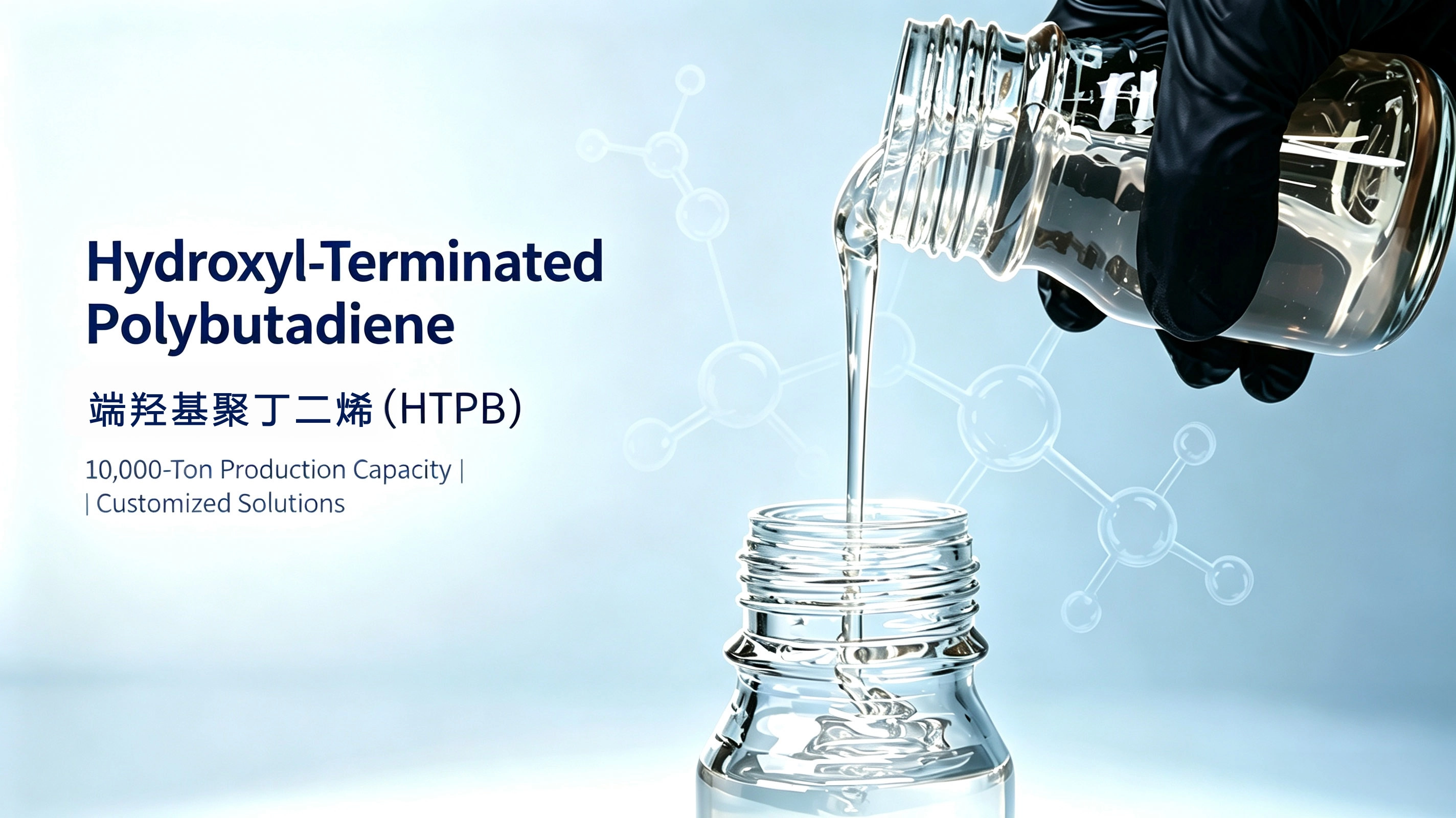
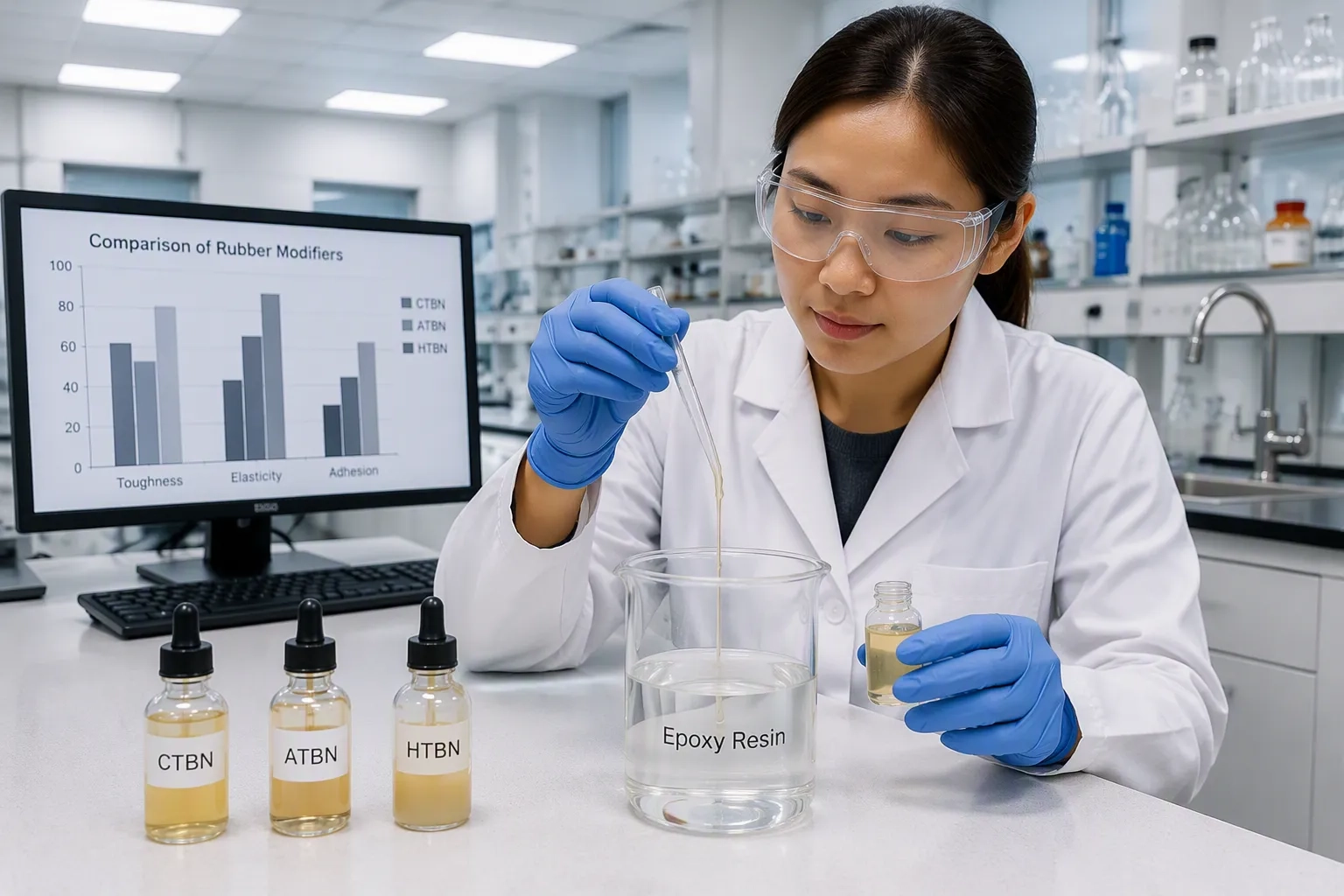
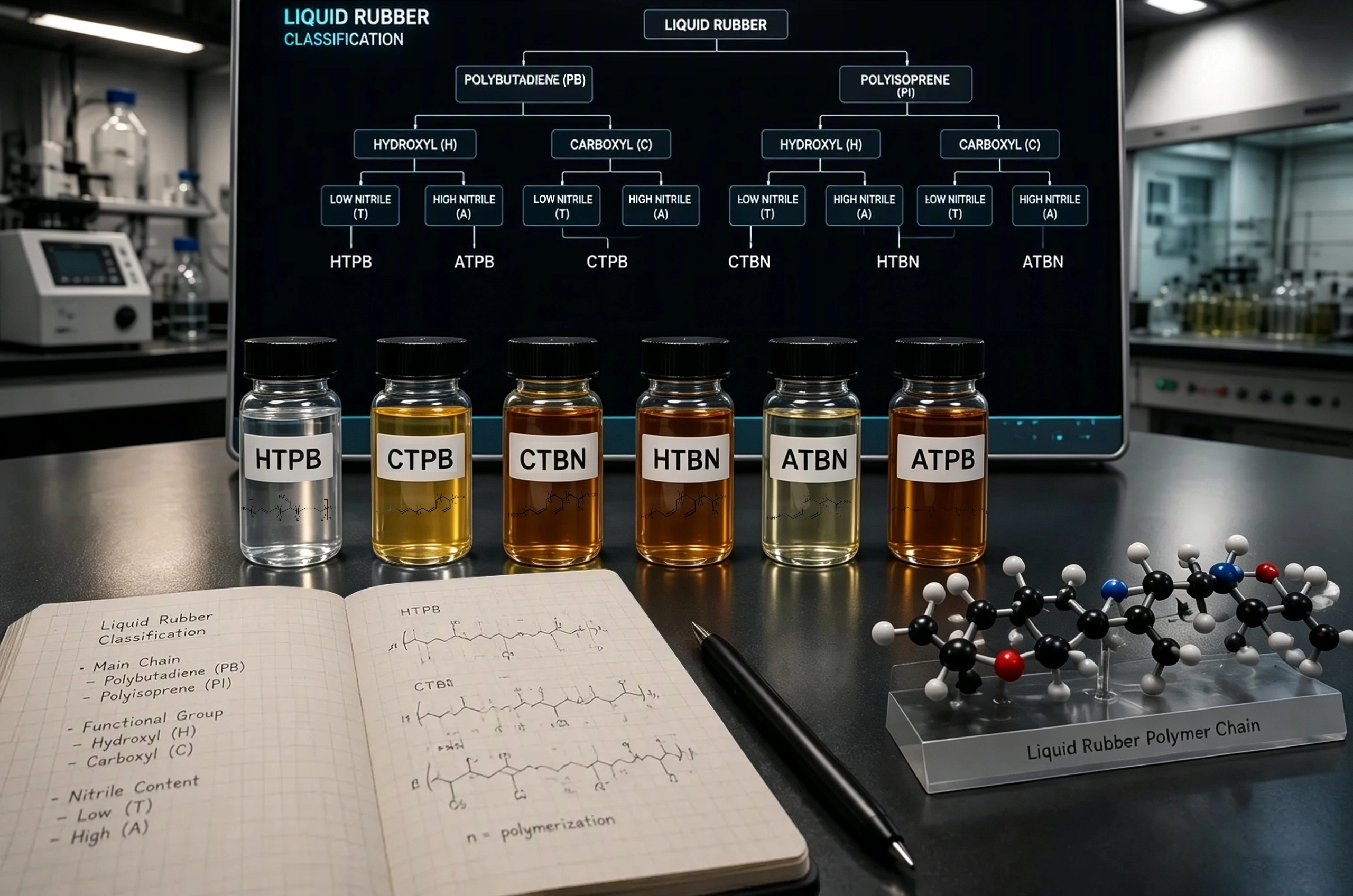
Molecular weight and viscosity are two important parameters when selecting hydroxyl-terminated polybutadiene (HTPB) for polyurethane formulations. They influence how the liquid polymer flows, how easily it can be mixed with other ingredients, and how consistently it can be processed before curing. Although these properties are closely related, they are not interchangeable, and neither should be evaluated in isolation.
For formulators, the practical challenge is finding an HTPB grade that offers the right balance of flow characteristics, hydroxyl functionality, and compatibility with the intended formulation. A lower-viscosity material may simplify mixing and degassing, while a different molecular weight or molecular weight distribution can affect both processing behavior and the properties of the resulting polymer network. Understanding how these variables interact makes it easier to compare technical data sheets and select a suitable grade.
How Molecular Weight Relates to HTPB Viscosity
HTPB molecular weight describes the average size of the polymer chains, while viscosity measures the material’s resistance to flow. In general, longer polymer chains create greater resistance to movement because of increased chain interactions and entanglement. As a result, molecular weight and viscosity often increase together when comparing materials with similar chemical structures under the same test conditions.
However, this relationship is not a universal rule that can be used to calculate viscosity from molecular weight alone. HTPB grades can differ in chain architecture, microstructure, molecular weight distribution, and functional group characteristics. These differences can produce noticeably different flow behavior even when two grades have similar average molecular weights.
It is also important to distinguish between the two molecular weight values commonly reported in polymer characterization:
· Number-average molecular weight ((M_n)) represents the average molecular weight calculated by counting polymer molecules.
· Weight-average molecular weight ((M_w)) gives greater weight to larger molecules and is therefore more sensitive to the high-molecular-weight portion of the distribution.
· Dispersity ((Đ=M_w/M_n)) describes the breadth of the molecular weight distribution. A broader distribution can influence rheological behavior, although its effect depends on the polymer structure and the distribution itself.
When comparing HTPB specifications, formulators should check which molecular weight parameter is reported rather than treating all molecular weight figures as equivalent. A value for (M_n) cannot be directly compared with a value for (M_w) as though both describe the same measurement.
The relationship between molecular weight and viscosity is best understood as a useful trend rather than a standalone selection rule. For a meaningful comparison, the materials should have comparable chemistry and their viscosities should be measured under equivalent conditions.
Factors That Affect HTPB Viscosity
Molecular weight is only one contributor to HTPB viscosity. Temperature, molecular structure, molecular weight distribution, and chemical modification can all influence how a particular grade flows.
Temperature is one of the most immediate influences. Like many liquid polymers, HTPB generally becomes less viscous as its temperature increases. A grade that is difficult to pump or mix at a lower temperature may flow more readily when warmed. This does not mean that increasing the temperature is always the best processing solution; the appropriate operating conditions depend on the material’s specifications, equipment, formulation stability, and process requirements.
Molecular structure also matters. Differences in the polymer backbone and the relative proportions of cis, trans, and vinyl structures can affect chain mobility and other physical properties. Molecular weight distribution may contribute to differences in flow behavior as well, so a single average molecular weight does not capture every characteristic relevant to processing.
Chemical modification introduces another variable. Research on HTPB-based polyurethane systems illustrates that changes in polymer chemistry can alter measured properties in ways that cannot be explained by molecular weight alone. For example, a study published in ACS Omega examined HTPB-based materials with different structural characteristics and reported changes in both molecular weight and viscosity. The results reinforce the need to evaluate the complete material rather than assuming that higher molecular weight always means higher viscosity.
See the published research on the physical properties of HTPB-based polyurethane for further context.
For commercial HTPB selection, this distinction is important. Data from chemically modified samples should not be treated as universal specifications for unmodified HTPB. The most useful comparison is between grades with clearly identified chemistry, molecular weight parameters, and test conditions.
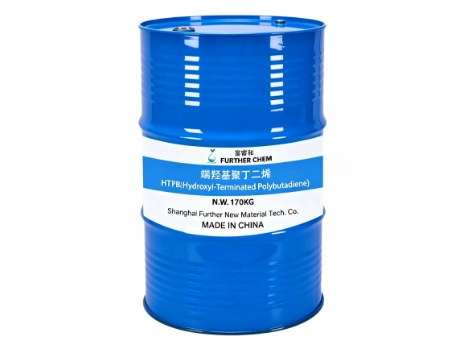
How Temperature and Test Conditions Affect Viscosity Readings
A viscosity value is meaningful only when its measurement conditions are known. HTPB viscosity at a specified temperature is more useful for grade comparison than a viscosity figure without a stated test temperature.
For example, two suppliers may report viscosity values for their HTPB grades at different temperatures. The lower reported value does not necessarily indicate a more readily processable material because the temperature difference alone may account for part of the variation. The same concern applies when comparing historical batch records with current incoming inspection results.
Before comparing viscosity data, check the following details:
Parameter | Why it matters |
Test temperature | Viscosity generally decreases as temperature rises, so measurements taken at different temperatures are not directly comparable. |
Measurement method and instrument | Different measurement setups may produce results that are not directly equivalent, particularly for materials with non-Newtonian behavior. |
Molecular weight parameter | (M_n) and (M_w) represent different averages and should not be treated as interchangeable. |
Sample identity and condition | Modified HTPB, neat HTPB, and mixtures containing other ingredients can have different viscosity profiles. |
Units and reporting basis | Confirm the units and the basis of the reported result before comparing supplier specifications or quality records. |
For incoming quality control, the best practice is to establish a consistent test procedure and compare results under the same conditions. If a batch appears to have a different viscosity, verify the temperature, sample handling, and measurement setup before concluding that the polymer itself has changed.
It is equally important to distinguish raw material viscosity from formulation viscosity. Once HTPB is blended with other ingredients, the mixture’s flow behavior may change significantly. The viscosity of the complete formulation is therefore a separate process parameter, not a substitute for the HTPB viscosity reported on the raw material data sheet.
Choosing HTPB by Molecular Weight, Viscosity, and Hydroxyl Value
Selecting HTPB for a polyurethane system requires more than choosing the grade with the lowest viscosity or the highest molecular weight. The right choice depends on the processing method, the formulation chemistry, and the required properties of the cured material.
For instance, a formulation that requires efficient mixing, degassing, and casting may benefit from an HTPB grade with suitable flow characteristics at the intended processing temperature. In contrast, viscosity alone may be less decisive when the formulation is designed around other specific processing requirements. The goal is to establish a workable balance rather than optimize a single specification.
Hydroxyl value is particularly important because it serves a different purpose from viscosity. It indicates the amount of hydroxyl functionality available per unit mass and helps determine the hydroxyl equivalent weight used in calculating the required isocyanate amount. Molecular weight and hydroxyl value are related through the polymer’s functional group characteristics, but they should not be used as substitutes for one another.
Functionality also matters because it affects the way polymer chains can form a network during polyurethane curing. These factors should be considered alongside viscosity and molecular weight, not inferred from them.
When comparing grades, formulators should therefore evaluate:
· Molecular weight and its reporting basis, to understand the polymer chain size and the limits of direct comparisons.
· Viscosity at the intended processing temperature, to assess handling, mixing, pumping, and casting requirements.
· Hydroxyl value and functionality, to support formulation calculations and assess the material’s suitability for the intended polyurethane network.
· Other relevant specifications, including moisture content and any grade-specific structural or quality parameters that influence the application.
For a closer look at the available material and its specifications, see HTPB for polyurethane applications. When functionality is a key selection criterion, the comparison of mono-OH and di-OH liquid polybutadiene in polyurethane formulations provides useful additional context.
What to Check in an HTPB Technical Data Sheet
An HTPB technical data sheet should provide enough information to determine whether a grade is appropriate for the intended process and formulation. Rather than focusing on one headline value, compare the specifications as a group and confirm that the data are reported on a consistent basis.
Specification | What formulators should look for |
Molecular weight | Identify whether the value represents (M_n), (M_w), or another reported parameter. |
Viscosity | Confirm the stated temperature, units, and test method where available. |
Hydroxyl value | Check the reported range and use the value appropriate for formulation calculations. |
Functionality | Review the stated value and its relevance to the intended polyurethane system. |
Moisture content | Confirm that the specification meets the requirements of the formulation and process. |
Batch consistency | Compare current results with the supplier’s agreed specifications and established incoming inspection criteria. |
If a supplier reports molecular weight and viscosity but does not provide sufficient test details, request clarification before making a direct comparison with another grade. Differences in test temperature, molecular weight characterization, or material chemistry can make apparently similar data misleading.
It is also useful to compare the technical data sheet with actual processing requirements. A material that meets the nominal specifications may still require evaluation under the intended mixing, degassing, and casting conditions. Laboratory trials can help determine whether its flow behavior is suitable for the equipment and formulation, while routine quality checks help establish whether the material performs consistently between batches.
Ultimately, HTPB molecular weight and viscosity should be evaluated together, but neither tells the whole story. Molecular weight helps characterize the polymer, viscosity provides a practical measure of flow under defined conditions, and hydroxyl value and functionality help determine how the material fits into a polyurethane formulation. Comparing these parameters systematically gives formulators a more reliable basis for selecting HTPB than relying on any single specification.

 English
 English
  Spanish
  Russian
  Arabic
  French
  German
  Portuguese
  Turkish
  Dutch
Dutch  Polish
  Korean
  Vietnamese
  Indonesian
 30. Jun, 2026