What Is Reactive Liquid Rubber and Why Functional Groups Matter
Reactive liquid rubber is a functional polymer modifier designed to improve flexibility, toughness, and durability in high-performance resin systems. Unlike conventional rubber additives that only physically mix with polymers, reactive liquid rubber contains active terminal groups that participate in chemical reactions during curing, allowing the rubber phase to become part of the final polymer network.
For material engineers and formulation developers, the selection of liquid rubber is closely related to the chemistry of the base resin. A modifier that performs well in one system may not provide the same benefits in another system. The key factor is not only the rubber backbone but also the functional groups attached to the polymer chain.Hydroxyl-terminated liquid rubbers such as HTPB rubber are mainly used in polyurethane systems because hydroxyl groups react with isocyanates to form flexible polyurethane structures. Carboxyl-terminated materials such as CTBN and CTPB are more commonly used in epoxy modification because carboxyl groups can interact with epoxy groups during curing.
For industrial manufacturers, choosing the correct reactive liquid rubber can directly influence production efficiency, product durability, and final application performance. A mismatch between modifier chemistry and resin system may lead to poor compatibility, unstable curing, or insufficient mechanical improvement.
Shanghai Further New Material Technology Co., Ltd. develops and supplies advanced liquid rubber materials for polyurethane, epoxy, adhesive, coating, and specialty polymer applications. Through controlled molecular design and production testing, the company helps customers select suitable materials according to their formulation requirements.
Functional Groups Determine Reaction Behavior
The performance of reactive liquid rubber mainly comes from the chemical activity of its terminal groups. These groups determine how the modifier interacts with the surrounding polymer matrix during curing.
In polyurethane systems, hydroxyl groups react with isocyanates through urethane formation. The reaction creates a crosslinked structure that combines the elasticity of polybutadiene chains with the strength of polyurethane networks.
In epoxy systems, carboxyl groups provide reactive sites that bond with epoxy groups. This chemical connection allows rubber particles to remain integrated within the resin structure rather than separating during service conditions.
The relationship between functional groups and polymer systems can be summarized as follows:
Reactive Liquid Rubber | Functional Group | Compatible Polymer System | Main Performance Improvement |
HTPB | Hydroxyl (-OH) | Polyurethane | Elasticity, flexibility, low-temperature resistance |
CTBN | Carboxyl (-COOH) | Epoxy resin | Impact resistance, fracture toughness |
CTPB | Carboxyl (-COOH) | Specialty polymer systems | Flexibility and reactive modification |
This chemical compatibility is the foundation of successful polymer modification. Before selecting a material, formulators need to understand the reaction mechanism rather than simply comparing basic physical properties.
How Reactive Liquid Rubber Improves Polymer Performance
The main advantage of reactive liquid rubber is its ability to improve toughness while maintaining the original characteristics of the polymer matrix. Many thermosetting polymers, especially epoxy resins, provide excellent strength and chemical resistance but suffer from brittleness after curing.
Adding a suitable reactive modifier changes the way the polymer responds to mechanical stress. Instead of allowing cracks to quickly travel through the rigid network, dispersed rubber phases absorb energy and slow crack propagation.
Chemical Bonding Creates a More Stable Polymer Structure
The difference between reactive and non-reactive rubber modifiers lies in how they interact with the polymer matrix.
A conventional rubber additive mainly relies on physical dispersion. Under long-term stress, temperature changes, or chemical exposure, the rubber phase may lose compatibility with the surrounding material.
Reactive liquid rubber forms chemical connections during curing. These bonds improve the stability of the modified structure and reduce the risk of phase separation.
For example, when HTPB reacts with isocyanates, the hydroxyl groups at both ends of the polymer chain become integrated into the polyurethane network. The resulting structure combines:
· Flexible polybutadiene segments
· Strong urethane bonding
· Controlled crosslink density
This balance allows polyurethane materials to maintain flexibility while achieving better mechanical strength.
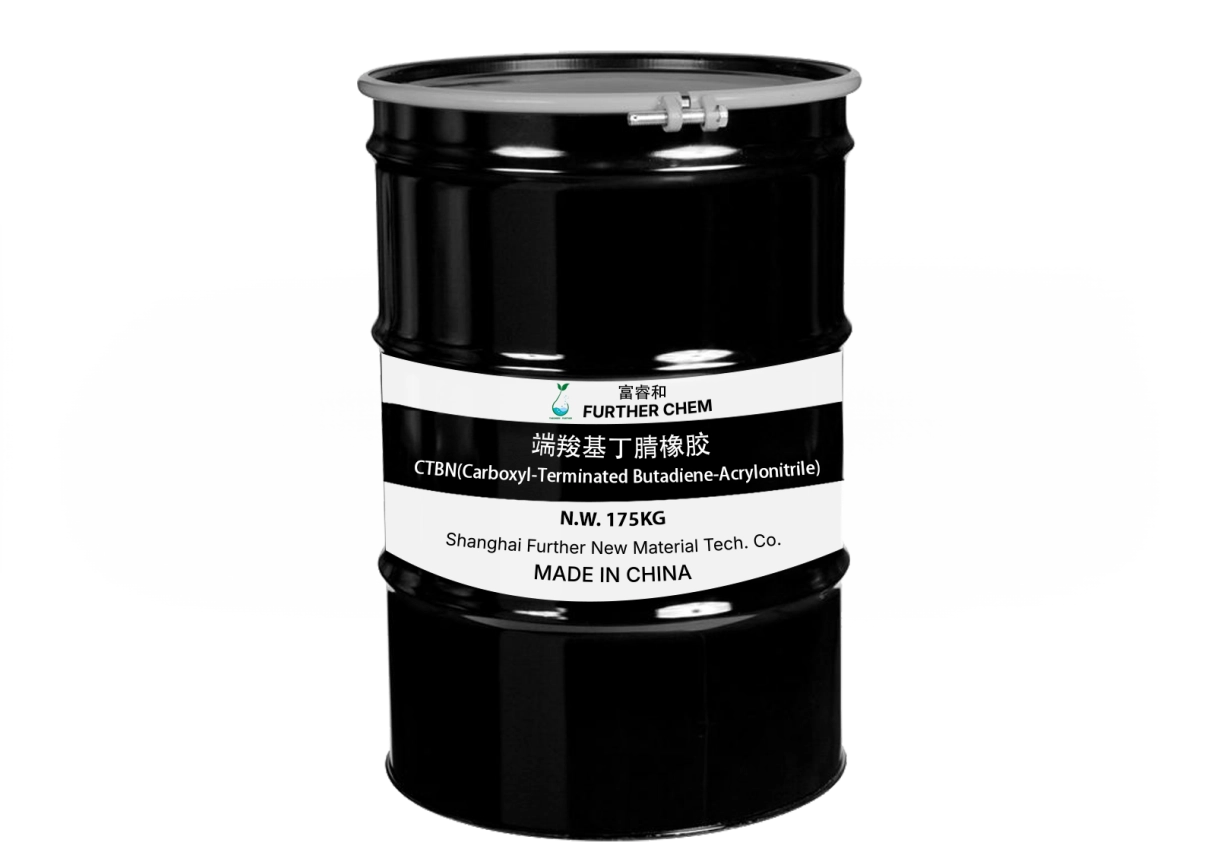
For epoxy systems, CTBN works through a different mechanism. The carboxyl groups react with epoxy components, creating a rubber-modified network that improves impact resistance without significantly reducing structural strength.
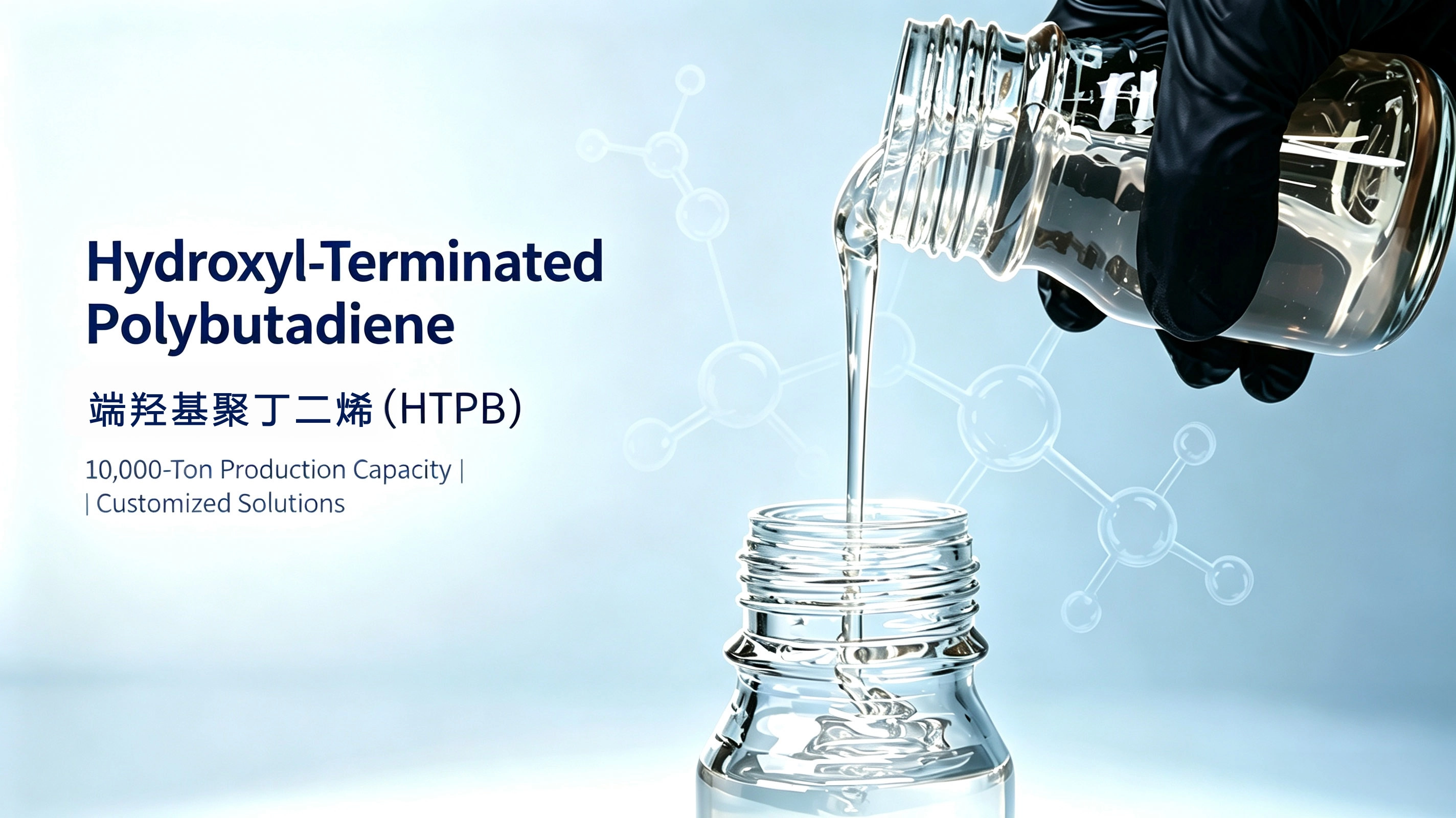
HTPB Rubber for Polyurethane Applications
HTPB is one of the most widely used hydroxyl-functional liquid rubbers in advanced polyurethane formulations. Its molecular structure contains hydroxyl groups at both chain ends, making it highly suitable for reaction with isocyanate compounds.
The basic reaction mechanism is:
Hydroxyl group (-OH) + Isocyanate group (-NCO) → Polyurethane network
This reaction forms a flexible elastomer structure with excellent resilience and resistance to mechanical deformation.
Why HTPB Works Well in Polyurethane Systems
The main advantage of HTPB comes from its polybutadiene backbone. Compared with rigid polymer segments, the flexible hydrocarbon chain allows molecular movement under stress.
This characteristic provides several benefits:
Improved flexibility
HTPB-based polyurethane materials can withstand repeated bending, compression, and impact without experiencing rapid cracking.
Low-temperature performance
The flexible molecular structure maintains mobility in cold environments, making HTPB suitable for applications where conventional rigid polymers become brittle.
Strong adhesion capability
The reactive hydroxyl groups allow HTPB-based systems to bond effectively with different substrates when properly formulated.
HTPB is commonly used in:
· Industrial coatings
· Flexible polyurethane elastomers
· Sealants
· Adhesive systems
· Specialty binder applications
However, selecting HTPB requires careful consideration of technical parameters. Hydroxyl value, molecular weight, viscosity, and moisture content all influence the final polyurethane performance.
Key Parameters Affecting HTPB Performance
In practical production, manufacturers do not evaluate HTPB based on a single specification. A balanced combination of chemical and physical properties determines whether the material is suitable for a specific application.
Parameter | Influence on Application |
Hydroxyl Value | Determines reaction activity with isocyanates |
Molecular Weight | Affects flexibility and mechanical properties |
Viscosity | Influences mixing and processing behavior |
Moisture Content | Impacts curing reliability |
For example, an adhesive manufacturer may require different HTPB characteristics compared with a coating producer. Lower viscosity may improve processing efficiency, while specific hydroxyl content may be needed to achieve the desired hardness and elasticity.
This is why technical support from a reactive liquid rubber supplier is important during material selection.
CTBN Toughening Agent for Epoxy Resin Modification
Epoxy resin is widely used because of its excellent strength, chemical resistance, and dimensional stability. However, its highly crosslinked structure also creates a major limitation: brittleness under impact or repeated stress.
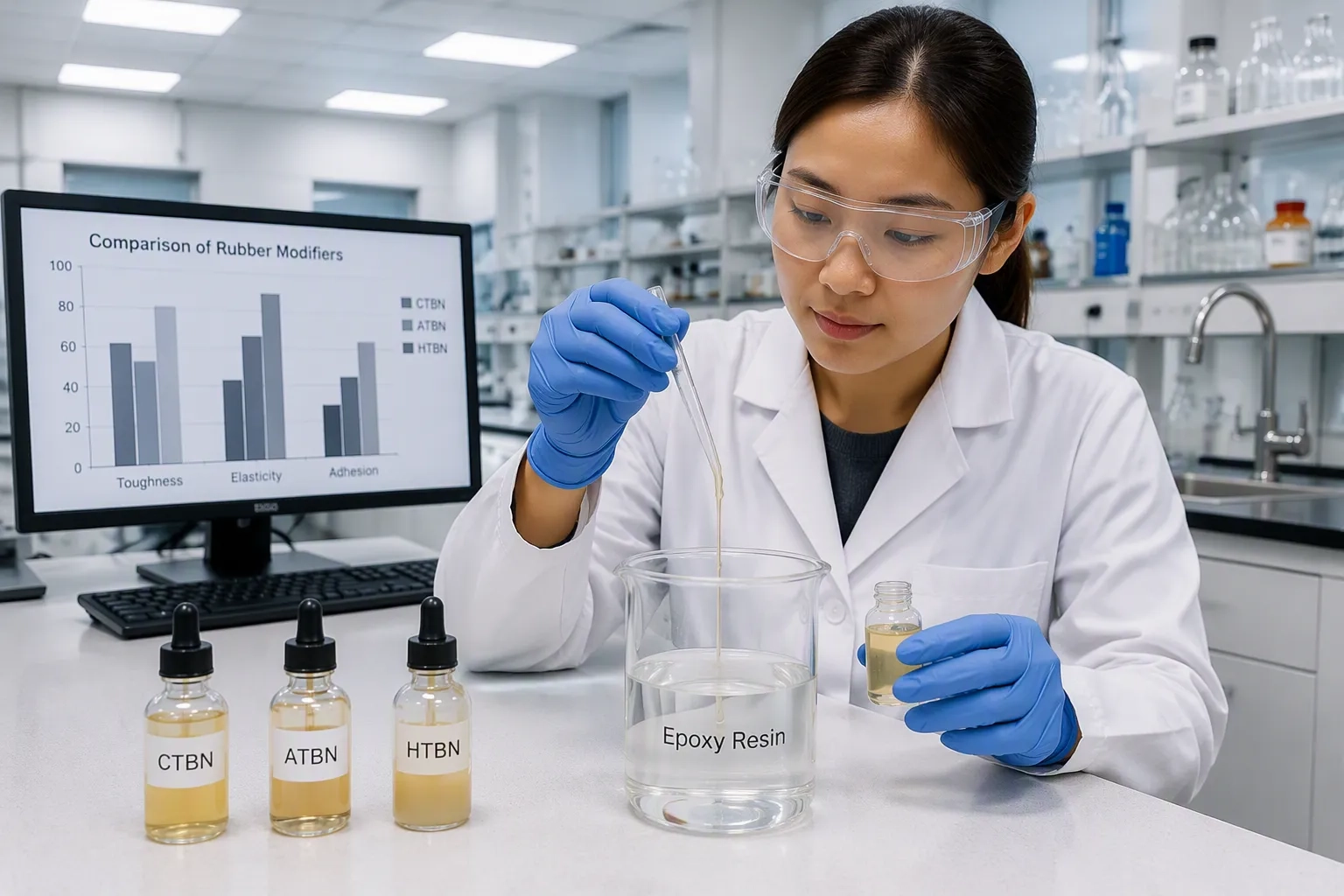
A CTBN toughening agent addresses this limitation by introducing a flexible rubber phase into the epoxy network.
How CTBN Improves Epoxy Toughness
CTBN contains carboxyl terminal groups that react with epoxy components during curing. This reaction allows the rubber phase to remain chemically connected to the resin structure.
During mechanical loading, the dispersed rubber domains absorb stress and prevent rapid crack expansion.
The toughening process involves several mechanisms:
· Rubber particles absorb impact energy
· Crack paths are redirected around flexible domains
· Local stress concentration is reduced
· Plastic deformation areas expand around cracks
Compared with unmodified epoxy systems, CTBN modified epoxy materials provide improved resistance against impact, vibration, and fatigue loading.
CTBN Modified Epoxy Performance in Industrial Applications
The value of a CTBN toughening agent is not limited to improving impact strength. In practical manufacturing environments, epoxy materials often face combined challenges including vibration, thermal cycling, moisture exposure, and repeated mechanical loading. A well-designed CTBN modified epoxy system helps maintain structural reliability under these conditions.
Crack Resistance Through Rubber Phase Dispersion
The toughening mechanism of CTBN depends on the formation of controlled rubber domains inside the epoxy matrix. During curing, the compatibility between CTBN and epoxy gradually changes, leading to phase separation at a microscopic level.
The size and distribution of these rubber domains directly affect the final performance. Properly dispersed particles create multiple energy absorption points throughout the resin structure. When external stress reaches the material, cracks encounter these flexible domains and require more energy to continue growing.
This mechanism improves:
· Fracture toughness
· Impact resistance
· Fatigue durability
· Adhesive reliability
For structural adhesives, this improvement is especially important because joints often fail from crack initiation rather than insufficient initial strength.
CTBN Selection Factors for Epoxy Systems
Different epoxy applications require different CTBN characteristics. A material suitable for aerospace bonding may not be the best choice for electronic encapsulation or industrial adhesives.
Key selection factors include:
Selection Factor | Effect on Epoxy System |
Acrylonitrile content | Influences compatibility with epoxy resin |
Carboxyl functionality | Determines reaction efficiency |
Molecular weight | Affects flexibility and mechanical balance |
Viscosity | Influences mixing and processing conditions |
A higher compatibility level can improve dispersion, while excessive compatibility may reduce the formation of effective rubber domains. Therefore, formulation optimization is necessary to achieve the right balance between toughness and strength.
CTPB and Other Carboxyl Terminated Liquid Rubber Applications
CTPB is another important type of carboxyl terminated liquid rubber used for polymer modification. Similar to CTBN, it contains carboxyl groups that provide reactive sites for chemical bonding with polymer systems.
The main difference between CTBN and CTPB is the molecular structure. CTBN contains acrylonitrile segments, which increase polarity and improve compatibility with certain resin systems. CTPB contains mainly polybutadiene segments, providing a more flexible and hydrophobic structure.
Choosing Between CTBN and CTPB
The selection depends on the required balance between compatibility, flexibility, and environmental resistance.
CTBN is often preferred when:
· Higher interaction with polar resin systems is required
· Epoxy toughening is the primary objective
· Improved impact resistance is needed
CTPB may be considered when:
· Higher flexibility is preferred
· A more hydrophobic rubber structure is beneficial
· Customized polymer modification is required
For polymer engineers, the choice between different liquid rubber types should always begin with the resin chemistry and final application requirements.
Manufacturing Experience Behind Reactive Liquid Rubber Quality
The performance of reactive liquid rubber depends heavily on production consistency. In industrial applications, customers need materials that deliver predictable results from one batch to another.
Shanghai Further New Material Technology Co., Ltd. focuses on controlling key production parameters because reactive polymer materials are sensitive to small variations in chemical structure.
Functional Group Testing and Quality Control
Functional group concentration is one of the most important indicators for reactive liquid rubber quality.
For HTPB products, hydroxyl value determines how effectively the material reacts with isocyanate components. Variations in hydroxyl content can influence curing speed, hardness, and elasticity.
For CTBN and CTPB products, acid value reflects the availability of carboxyl groups. This affects reaction efficiency with epoxy systems and directly influences final mechanical properties.
A typical quality evaluation process includes:
Testing Item | Purpose |
Hydroxyl Value Testing | Confirms HTPB reaction capability |
Acid Value Testing | Evaluates CTBN and CTPB functionality |
Molecular Weight Analysis | Controls mechanical performance |
Viscosity Testing | Ensures processing stability |
Moisture Analysis | Prevents unwanted curing reactions |
These measurements allow manufacturers to maintain product consistency and help customers achieve stable production results.
Why Viscosity Control Matters in Polymer Processing
Viscosity directly affects how liquid rubber behaves during storage, transportation, mixing, and application.
A material with excessive viscosity may create difficulties during:
· Resin blending
· Filler dispersion
· Pumping operations
· Automated production processes
However, viscosity cannot be considered separately from molecular weight and functionality. A lower viscosity product is not always better because the final polymer performance depends on maintaining the correct molecular structure.
Experienced suppliers evaluate these parameters together to ensure the material fits the customer's manufacturing process.
How to Select a Reactive Liquid Rubber Supplier
Choosing a reactive liquid rubber supplier requires more than comparing technical data sheets. Since these materials influence the entire polymer formulation, buyers should evaluate chemical expertise, quality consistency, and technical support capability.
Match Material Chemistry With Application Requirements
The first step is identifying the polymer system.
For polyurethane applications, hydroxyl-functional materials such as HTPB are generally selected because they create polyurethane networks through reaction with isocyanates.
For epoxy modification, CTBN is commonly used because carboxyl groups provide effective chemical interaction with epoxy systems.
A simple selection approach includes:
Application Requirement | Suitable Material Direction |
Flexible polyurethane elastomers | HTPB rubber |
Polyurethane coatings and adhesives | HTPB with controlled hydroxyl value |
Impact-resistant epoxy systems | CTBN toughening agent |
Specialty reactive modification | CTPB |
The correct material depends on the entire formulation, including curing agent, processing temperature, and required mechanical performance.
Evaluate Supplier Technical Capability
A reliable supplier should provide more than standard product specifications. For industrial buyers, technical support reduces development risks and shortens formulation adjustment cycles.
Important supplier capabilities include:
· Stable production batches
· Detailed quality documentation
· Application recommendations
· Technical communication during formulation development
Shanghai Further New Material Technology Co., Ltd. provides reactive polymer materials for customers developing advanced polyurethane and epoxy systems. By understanding application requirements rather than only supplying raw materials, the company supports more reliable material selection.
Common Mistakes When Selecting Liquid Rubber Modifiers
Choosing Materials Based Only on Cost
Reactive liquid rubber represents a small part of the overall formulation cost, but it can strongly influence product performance.
Selecting a lower-cost material without considering functional compatibility may create problems such as:
· Poor curing behavior
· Reduced mechanical performance
· Production instability
· Increased rejection rates
A suitable material should be evaluated based on total application value rather than purchase price alone.
Ignoring Compatibility With the Resin System
Different polymer systems require different reactive groups.
For example, HTPB performs effectively in polyurethane because hydroxyl groups react with isocyanates. CTBN is more suitable for epoxy systems because carboxyl groups interact with epoxy components.
Using the wrong modifier chemistry may result in limited improvement or unexpected formulation problems.
Adding Too Much Liquid Rubber
Higher modifier content does not always mean better performance.
Excessive rubber loading can reduce:
· Heat resistance
· Tensile strength
· Glass transition temperature
· Dimensional stability
The optimal loading level depends on the balance between toughness improvement and the original properties required by the application.
Reactive Liquid Rubber Applications in Advanced Polymer Industries
Reactive liquid rubber continues to play an important role in industries requiring durable and lightweight materials.
Polyurethane Elastomers and Protective Coatings
HTPB-based polyurethane systems are widely used where flexibility, adhesion, and environmental resistance are required.
Applications include industrial protective coatings, flexible sealants, and elastomer components exposed to repeated mechanical stress.
The combination of hydroxyl functionality and flexible polybutadiene chains allows manufacturers to produce materials that maintain performance under demanding conditions.
Structural Adhesives and Composite Materials
CTBN modified epoxy systems are commonly used in applications where high strength must be combined with improved toughness.
Industries such as aerospace, automotive, renewable energy, and electronics use rubber-toughened epoxy materials to improve resistance against vibration, impact, and fatigue.
The improved crack resistance helps extend service life and reduce maintenance requirements.
FAQ About Reactive Liquid Rubber
What is reactive liquid rubber used for?
Reactive liquid rubber is used to modify polymer systems by improving flexibility, toughness, and durability. Unlike non-reactive rubber additives, it contains functional groups that chemically bond with resin systems during curing. It is commonly used in polyurethane elastomers, epoxy adhesives, coatings, sealants, and composite materials.
What is the difference between HTPB and CTBN?
HTPB and CTBN are both reactive liquid rubber materials, but they serve different polymer systems. HTPB contains hydroxyl groups and mainly reacts with isocyanates to create polyurethane networks. CTBN contains carboxyl groups and is primarily used as an epoxy toughening modifier to improve impact resistance and fracture toughness.
Why is CTBN used as an epoxy toughening agent?
CTBN improves epoxy performance by forming a flexible rubber phase inside the rigid resin network. These rubber domains absorb mechanical energy, reduce crack growth, and improve resistance to impact and fatigue. This makes CTBN suitable for structural adhesives and composite applications.
How does HTPB improve polyurethane performance?
HTPB improves polyurethane performance by introducing flexible polybutadiene chains into the polymer structure. This increases elasticity, low-temperature flexibility, and resistance to mechanical deformation. HTPB is widely used where durable flexible materials are required.
How should companies choose a reactive liquid rubber supplier?
Companies should evaluate supplier capability based on product consistency, technical support, quality control, and application experience. A reliable supplier should provide detailed testing data and help customers select materials according to resin compatibility and production requirements.
Choosing the Right Polymer Modifier for Long-Term Performance
Reactive liquid rubber selection is ultimately a chemistry decision. HTPB, CTBN, and CTPB each provide different advantages because their functional groups determine how they interact with polymer networks.
HTPB is suitable for polyurethane systems requiring flexibility and elasticity. CTBN provides effective epoxy toughening through controlled rubber phase modification. CTPB offers additional options for specialty polymer applications where flexibility and reactive functionality are required.
For companies developing advanced polymer materials, working with an experienced supplier such as Shanghai Further New Material Technology Co., Ltd. helps reduce formulation uncertainty and improve production reliability.
The right liquid rubber modifier does not simply change one material property. It creates a more balanced polymer system with better durability, processing stability, and application performance.

 English
 English
  Spanish
  Russian
  Arabic
  French
  German
  Portuguese
  Turkish
  Dutch
Dutch  Polish
  Korean
  Vietnamese
  Indonesian
 23. Jul, 2026