What Are Polyisocyanate Crosslinkers in Industrial Adhesives
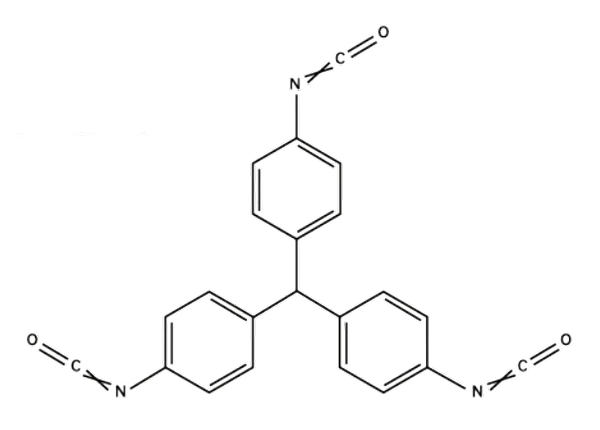
Polyisocyanate crosslinkers are reactive components used in selected industrial adhesive formulations to improve the performance of the cured adhesive layer. Their isocyanate groups (–NCO) react with suitable functional groups in the binder, most commonly hydroxyl groups (–OH), to form urethane linkages and, where the crosslinker has sufficient functionality, a more highly connected polymer network.
In adhesive formulations, the binder provides the primary film-forming or bonding structure, while the crosslinker modifies how that structure behaves after curing. Depending on the chemistry, crosslinking can improve cohesive strength, heat resistance, solvent resistance, and resistance to moisture-related degradation. The extent of improvement depends on the complete formulation rather than the crosslinker alone.
Polyisocyanate crosslinkers are used in several types of industrial adhesive systems, including selected polyurethane adhesives, rubber-based contact adhesives, and waterborne polyurethane dispersions. Their use is particularly relevant when the uncrosslinked adhesive meets initial bonding requirements but lacks sufficient durability under heat, humidity, chemical exposure, or sustained mechanical stress.
The choice of crosslinker must account for the binder chemistry and manufacturing process. A product suitable for a solventborne polyurethane adhesive may not disperse adequately in a waterborne formulation. Likewise, a crosslinker designed for heat-activated curing cannot automatically replace a conventional two-component hardener in a room-temperature process.
How Polyisocyanate Crosslinkers Improve Adhesive Performance
The main function of a polyisocyanate crosslinker is to modify the adhesive network. Understanding the relationship between this network and the required bond properties helps formulators avoid the assumption that a higher crosslinker concentration will always produce a better adhesive.
Crosslinking Reactions and Network Formation
Isocyanate groups react with hydroxyl groups to form urethane linkages. When a crosslinker contains multiple reactive NCO groups, it can connect different polymer chains or functional sites, increasing the connectivity of the cured structure.
The resulting network depends on several factors:
The number and accessibility of reactive groups in the binder.
The NCO content and functionality of the crosslinker.
The ratio of reactive groups and the extent of conversion during curing.
The presence of moisture and other components that may consume NCO groups.
The compatibility and distribution of the crosslinker within the adhesive.
These factors determine whether the crosslinker develops a sufficiently uniform network or introduces processing and performance problems. In practice, the nominal amount of crosslinker added does not directly establish the final crosslink density because reaction efficiency, side reactions, and network structure also matter.
Adhesion, Cohesive Strength, and Resistance to Heat and Chemicals
Crosslinking primarily changes the properties of the adhesive layer, particularly its cohesive behavior and resistance to environmental exposure. It does not automatically improve adhesion to every substrate.
An adhesive joint can fail at the substrate interface, within the adhesive, or within a weak surface layer on the substrate. If the primary problem is poor wetting or inadequate surface preparation, increasing crosslinker content may do little to improve bond strength. In some cases, excessive crosslinking can reduce the adhesive's ability to accommodate deformation and increase the risk of brittle failure.
When the binder and crosslinker are properly matched, a more developed network may improve:
Cohesive strength: resistance to deformation or failure within the adhesive layer.
Heat resistance: retention of bond performance at elevated service temperatures.
Chemical resistance: reduced swelling, softening, or degradation under suitable solvent and chemical exposure.
Durability under humid conditions: improved retention of mechanical performance when moisture resistance is a limitation of the original formulation.
These improvements are formulation-dependent. For example, crosslinking a waterborne polyurethane adhesive can improve heat resistance and aging performance, but it may not produce a corresponding increase in initial peel strength. The balance between initial bonding, heat resistance, and long-term durability must be established through testing.
Types of Polyisocyanate Crosslinkers and Their Adhesive Applications
Polyisocyanate crosslinkers differ in chemical structure, functionality, compatibility, and reactivity. These differences influence how they can be incorporated into an adhesive and which performance requirements they are best suited to address.
Aromatic Polyisocyanates
Aromatic polyisocyanates are used in selected adhesive and resin systems where their reaction characteristics and compatibility meet the formulation requirements. Their suitability depends on the specific chemical structure and the binder with which they are combined.
A key consideration is color stability. Aromatic isocyanate chemistry can be more susceptible to discoloration under light and weathering than suitable aliphatic alternatives. This can matter in transparent bonds, light-colored materials, and applications exposed to sunlight.
Aromatic crosslinkers should therefore be evaluated against the actual service environment rather than selected solely on the basis of initial bonding performance.
Aliphatic Polyisocyanates
Aliphatic and cycloaliphatic polyisocyanates are often considered when color retention and light stability are important. Hexamethylene diisocyanate (HDI)-based and isophorone diisocyanate (IPDI)-based crosslinkers are examples used in various reactive adhesive and polymer systems.
Within these families, different structures can provide different combinations of functionality, viscosity, compatibility, and reactivity. An HDI-derived crosslinker with a biuret structure, for example, should not be assumed to behave identically to an HDI-derived isocyanurate or uretdione.
The correct comparison is between the properties and application guidance of specific crosslinker grades under the intended formulation conditions, not simply between broad chemical families.
Solventborne, Waterborne, and Latent Crosslinking Systems
The adhesive's delivery and curing method are as important as the crosslinker chemistry.
Solventborne systems require attention to resin compatibility, solvent quality, moisture contamination, and the viscosity development of the mixed formulation. Only solvents suitable for the relevant isocyanate chemistry should be used; solvents containing reactive hydroxyl groups or excessive water can consume NCO groups.
Waterborne systems require additional attention to dispersion stability. Polyisocyanates intended for aqueous formulations are often modified to facilitate incorporation into the water-based binder. Their hydrophilicity, ionic character, and dispersion behavior influence compatibility and processing stability.
Latent or blocked polyisocyanates are designed to remain comparatively unreactive under specified storage or processing conditions until activated, often by heat. They can be useful in processes that require a longer storage window before curing, but the activation temperature and time must be compatible with the adhesive and substrates.
| Crosslinker type or system | Main selection consideration | Key performance checks |
|---|
| Aromatic polyisocyanate | Binder compatibility, reactivity, color requirements | Bond strength, heat resistance, discoloration |
| Aliphatic polyisocyanate | Light stability, functionality, processing behavior | Adhesion retention, aging, chemical resistance |
| Water-dispersible polyisocyanate | Compatibility with the aqueous binder and dispersion stability | Mixing stability, usable processing window, cured bond performance |
| Blocked polyisocyanate | Activation temperature and curing schedule | Storage stability, cure development, final bond properties |
These categories are not interchangeable product specifications. A suitable choice requires confirmation that the crosslinker is designed for the particular adhesive system.
How to Select a Polyisocyanate Crosslinker for an Adhesive Formulation
Crosslinker selection should start with the binder and the failure mode that needs to be addressed. Choosing a product because it has a high NCO content or belongs to a particular chemical family is not sufficient.
Match the Crosslinker to the Binder Chemistry
The first step is to establish which reactive groups are available in the adhesive binder. For hydroxyl-functional polymers, the hydroxyl value and binder solids content help determine the amount of reactive material present. The crosslinker's NCO content and supplied solids content are then used to calculate an initial addition level.
Compatibility must also be assessed. A crosslinker can have suitable reactive functionality but still perform poorly if it separates, disperses unevenly, or destabilizes the adhesive during mixing.
For waterborne polyurethane dispersions, the crosslinker must be appropriate for the dispersion's chemistry and ionic characteristics. A water-dispersible grade is not automatically compatible with every aqueous polymer, and mixing behavior should be checked in the actual formulation.
Balance Bond Performance with Flexibility
Increasing network connectivity can improve resistance to heat and solvents, but it can also reduce the adhesive's ability to deform under peel, impact, or cyclic loading. The best formulation is the one that meets the required performance balance, not necessarily the one with the highest crosslinker loading.
For rigid or heat-resistant bonding applications, the formulation may prioritize cohesive strength and retention of performance at elevated temperatures. For flexible laminates, films, textiles, or footwear, peel performance and deformation tolerance may be equally important.
Color stability, substrate sensitivity, and the permitted curing temperature can further narrow the choice. These requirements should be considered before screening individual crosslinker grades.
Consider Substrates and Production Conditions
The same adhesive can behave differently on different substrates because surface energy, contamination, porosity, and surface treatment affect wetting and interfacial bonding. Production conditions also influence the result, particularly where the adhesive must be coated, dried, reactivated, or pressed within a defined time window.
Before selecting a crosslinker, establish:
The binder type, solids content, hydroxyl value, and relevant formulation details.
The substrates, surface preparation, service environment, and dominant failure mode.
The application method, required working time, curing temperature, and production cycle.
This information helps distinguish a genuine crosslinking limitation from a problem involving surface preparation, film formation, or process conditions.
NCO Content, Mixing Ratio, and Pot Life: What Formulators Need to Control
The NCO content indicates the mass percentage of isocyanate groups in the supplied crosslinker. It is a key input for calculating dosage, but it does not independently determine the required amount or predict final adhesive performance.
Understanding NCO/OH Ratio and Crosslinker Dosage
For a hydroxyl-functional binder, an initial stoichiometric calculation can be made using the hydroxyl value of the resin and the NCO content of the crosslinker.
The approximate hydroxyl equivalent weight of a resin, expressed in grams per equivalent, is:
OH equivalent weight = 56,100 / hydroxyl value
Here, the hydroxyl value is expressed in mg KOH/g of resin solids.
The NCO equivalent weight of the crosslinker is:
NCO equivalent weight = 4,200 / NCO content (%)
The ratio of these equivalent weights, together with the mass of binder solids, provides a starting point for estimating the crosslinker requirement at a selected NCO/OH ratio.
The calculation must use consistent material bases. If the binder is supplied as a solution or dispersion, its solids content must be accounted for. The crosslinker's NCO content must likewise correspond to the supplied form used in the formulation.
A nominal NCO/OH ratio of 1.0 represents equal theoretical equivalents of NCO and OH. It is a calculation reference, not a universal optimum. The appropriate ratio depends on the binder, crosslinker structure, moisture content, reaction efficiency, and target performance. Some formulations may require a different ratio to reach the desired balance of properties.
For this reason, calculated dosage should be treated as the starting point for controlled formulation trials, not as a substitute for application testing.
Pot Life and Processing Stability
Pot life is the period during which a mixed adhesive remains suitable for its intended application. It may be defined by a viscosity limit, loss of dispersion stability, reduced coating quality, or another process-specific criterion.
In solventborne systems, the reaction between the crosslinker and the binder can cause viscosity to increase over time. Temperature, resin functionality, catalyst content, crosslinker loading, and moisture can all affect this change.
Waterborne systems require a different approach. The mixture may remain apparently fluid even while its stability or subsequent bond performance changes. Pot life should therefore be assessed through both processing behavior and the performance of adhesive films or joints prepared at different mixture ages.
Testing should reproduce the actual mixing method, batch size, temperature, and application conditions. A pot-life value measured in one binder formulation should not be transferred to another without validation.
Moisture Control and Storage
Isocyanate groups react with water, consuming NCO and potentially producing carbon dioxide through subsequent reactions. In adhesive formulations, uncontrolled moisture can interfere with the intended cure chemistry and may contribute to bubbles, voids, or inconsistent performance.
Practical controls include keeping containers tightly closed, protecting moisture-sensitive materials during transfer and mixing, and using compatible equipment and solvents. For waterborne systems, the intended dispersion chemistry must be distinguished from unwanted moisture contamination in materials or process stages where water is not part of the design.
When evaluating a formulation, record the NCO content, binder hydroxyl value, solids basis, mixing ratio, temperature, viscosity change, and usable processing time. These data make it easier to identify whether a performance issue originates from stoichiometry, compatibility, moisture, or processing conditions.
Testing and Troubleshooting Polyisocyanate-Crosslinked Adhesives
A crosslinker should be evaluated in the complete adhesive formulation. Its chemical structure and technical data sheet provide useful screening information, but they cannot replace bond testing under the intended application conditions.
The first step is to establish an unmodified or current-production reference formulation. Modified samples should be prepared with consistent mixing, coating, substrate preparation, curing, and conditioning procedures so that observed differences can be attributed more reliably to the formulation changes.
The test program should reflect the service requirements. Peel or lap-shear testing can help assess different aspects of bond performance, while heat-aging and humidity exposure can reveal whether the adhesive retains its properties after environmental conditioning. The test method and specimen geometry should match the intended application as closely as practical.
| Observed problem | Variables to investigate | Useful evaluation |
|---|
| Low initial bond strength | Surface preparation, wetting, mixing ratio, cure conditions | Initial adhesion test and failure-mode inspection |
| Short pot life | Temperature, binder chemistry, moisture, crosslinker dosage | Viscosity-versus-time measurement and application trial |
| Poor heat resistance | Network development, crosslinker compatibility, curing conditions | Heat-aging test and bond-strength retention |
| Reduced peel performance or flexibility | Excessive network rigidity, binder selection, bondline design | Peel test and deformation assessment |
| Bubbles or voids | Moisture, mixing, degassing, coating thickness | Visual inspection and cross-section examination |
| Poor aging performance | Interfacial failure, incomplete cure, moisture sensitivity | Conditioned adhesion testing and failure analysis |
An important distinction is whether failure occurs at the substrate interface or within the adhesive. Adhesive failure at the interface may point toward inadequate wetting, contamination, or substrate compatibility. Cohesive failure within the adhesive may indicate that the adhesive layer itself lacks sufficient strength or durability. Neither diagnosis should be made from bond-strength values alone when failure surfaces can be examined.
A useful troubleshooting process changes one major formulation or process variable at a time. Increasing the crosslinker level without identifying the cause of failure can introduce new problems, including shorter pot life, reduced flexibility, or poorer application stability.
Choosing a Crosslinker for the Complete Adhesive System
A suitable polyisocyanate crosslinker must meet four requirements: compatibility with the binder, the right balance of cured adhesive properties, a workable processing window, and curing conditions that fit the production process.
NCO content and functionality help define the starting formulation, while the binder chemistry and intended NCO/OH ratio determine the theoretical dosage. Actual performance must then be established through mixing trials, pot-life measurements, bond testing, and relevant aging evaluations.
The most reliable selection is therefore based on the complete adhesive system rather than on one crosslinker specification. By evaluating chemical compatibility, moisture control, application conditions, and the failure mode together, formulators can improve adhesive durability without sacrificing the processing and mechanical properties required in service.

 English
 English
 Spanish
 Russian
 Arabic
 French
 German
 Portuguese
 Turkish
 Dutch
 Polish
 Korean
 Vietnamese
 Indonesian
 24. Jun, 2026