Modern polymer materials are expected to deliver more than basic strength. Manufacturers across industries need materials with better flexibility, impact resistance, durability, and processing performance while maintaining reliable long-term stability. This demand has increased interest in reactive liquid rubber, a class of functional polymers designed to modify and improve the properties of advanced material systems.
Shanghai Further New Material Technology Co., Ltd. focuses on advanced polyurethane materials and functional polymer solutions, providing reactive liquid rubber materials including HTPB, CTBN, ATBN, HTBN, and other specialty polymers for industrial applications. Among these materials, HTPB and CTBN are two widely used solutions, but they serve different purposes in polymer modification.
The comparison of HTPB vs CTBN is not about determining which material is better. Instead, manufacturers need to understand their different chemical structures, reaction mechanisms, and application advantages to select the right material for specific polymer systems.
For polyurethane systems, HTPB is commonly selected as a flexible reactive component that improves elasticity and mechanical performance. For epoxy systems, CTBN is often used as a rubber toughening agent to enhance impact resistance and reduce brittleness.
Understanding the differences between these two reactive liquid rubber materials helps engineers make better decisions when developing adhesives, coatings, elastomers, composites, and other high-performance polymer products.
What Is Reactive Liquid Rubber?
Reactive liquid rubber is a type of functional polymer that remains in a liquid state while containing reactive groups that can participate in chemical reactions during curing or polymer modification. Unlike traditional solid rubber materials, reactive liquid rubber offers easier processing, better compatibility, and more flexible formulation options.
The main value of reactive liquid rubber comes from its ability to combine rubber-like flexibility with chemical reactivity. By introducing flexible segments into polymer networks, these materials can improve toughness, reduce cracking, and enhance resistance to mechanical stress.
Common reactive liquid rubber materials include:
| Material | Functional Group | Typical Application |
|---|
| HTPB | Hydroxyl (-OH) | Polyurethane elastomers, coatings, adhesives |
| CTBN | Carboxyl (-COOH) | Epoxy modification, structural adhesives |
| ATBN | Amino (-NH₂) | Epoxy and polyurethane modification |
| HTBN | Hydroxyl-functional nitrile rubber | Flexible polymer systems |
| CTPB | Carboxyl-terminated polybutadiene | Toughened resin systems |
Different functional groups determine how these materials interact with polymer matrices. Hydroxyl-terminated materials generally react with isocyanates, while carboxyl-terminated materials are widely used for epoxy toughening.
For manufacturers selecting liquid rubber for polymers, the key consideration is not only the rubber structure itself but also how it interacts with the target resin system.
HTPB and CTBN: Different Chemistry, Different Functions
Although both HTPB and CTBN belong to reactive liquid rubber materials, they are designed for different polymer systems.
HTPB (Hydroxyl-Terminated Polybutadiene) contains hydroxyl groups at both ends of the polymer chain. These active groups allow HTPB to react with isocyanates and participate in polyurethane formation. Because of its flexible polybutadiene backbone, HTPB provides excellent elasticity and low-temperature performance.
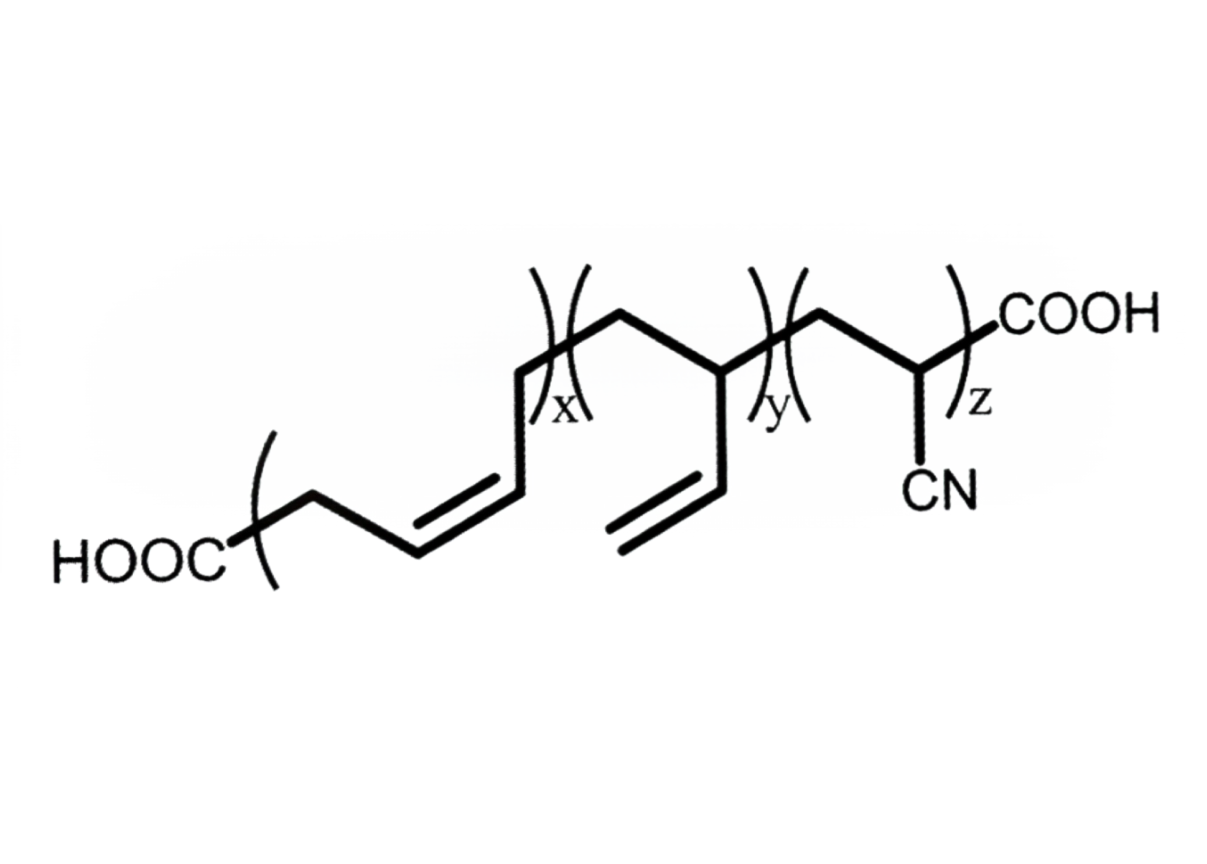
CTBN (Carboxyl-Terminated Nitrile Butadiene Rubber) contains carboxyl functional groups and nitrile components. This structure allows CTBN to interact effectively with epoxy resin systems, creating tougher polymer networks with improved impact resistance.
The basic differences are shown below:
| Feature | HTPB | CTBN |
|---|
| Full Name | Hydroxyl-Terminated Polybutadiene | Carboxyl-Terminated Nitrile Butadiene Rubber |
| Functional Group | Hydroxyl | Carboxyl |
| Main Polymer System | Polyurethane | Epoxy |
| Primary Function | Flexible polymer modification | Toughening and impact improvement |
| Main Benefit | Elasticity and flexibility | Crack resistance and toughness |
| Typical Role | Polyurethane modifier | Rubber toughening agent |
The choice between HTPB and CTBN depends largely on the polymer system being developed. Using the wrong reactive liquid rubber may not achieve the expected performance because the functional groups may not match the curing chemistry.

Why HTPB Is Used as a Polyurethane Modifier
Polyurethane materials are widely used because of their balance between strength, flexibility, and chemical resistance. However, some applications require improved elasticity, impact resistance, and low-temperature performance. This is where HTPB becomes valuable.
As a polyurethane modifier, HTPB introduces flexible molecular segments into polyurethane networks. Its hydroxyl groups react with isocyanates to form polyurethane structures while maintaining the flexibility of the polybutadiene chain.
The advantages of HTPB in polyurethane systems include:
- Improved elasticity and flexibility
- Better impact resistance
- Enhanced low-temperature performance
- Reduced risk of cracking under repeated stress
- Improved fatigue resistance
These characteristics make HTPB suitable for applications where materials experience dynamic loads or environmental changes.
Common applications include:
Polyurethane Elastomers
HTPB helps elastomers maintain flexibility while improving mechanical durability. This is important for components exposed to repeated compression, vibration, or impact.
Industrial Coatings
For protective coatings, HTPB can improve toughness and resistance against mechanical damage. HTPB-based systems are used when coatings need flexibility instead of becoming brittle after curing.
Adhesives and Sealants
Flexible bonding systems often require materials that can absorb movement between different substrates. HTPB contributes to better stress distribution and long-term bonding performance.
Shanghai Further New Material Technology Co., Ltd. supplies HTPB solutions for manufacturers developing high-performance polyurethane systems, including applications in elastomers, coatings, adhesives, and composite materials.
CTBN as a Rubber Toughening Agent for Epoxy Systems
Epoxy resin is known for its high strength, chemical resistance, and dimensional stability. However, highly crosslinked epoxy networks can become brittle, especially under impact or sudden mechanical stress.
CTBN addresses this limitation by acting as a rubber toughening agent. When incorporated into epoxy systems, CTBN creates flexible rubber domains inside the rigid resin structure. These domains help absorb energy and prevent cracks from spreading.
The main benefits of CTBN modification include:
- Higher impact resistance
- Improved fracture toughness
- Better resistance to mechanical shock
- Reduced brittleness
- Improved durability of epoxy systems
CTBN is commonly used in:
Structural Adhesives
Industrial adhesives often need both strong bonding and resistance to sudden impact. CTBN-modified epoxy adhesives can maintain adhesion while improving toughness.
Composite Materials
Advanced composites require a balance between stiffness and damage resistance. CTBN helps improve the ability of epoxy-based composites to withstand external stress.
Aerospace and Industrial Applications
In demanding environments, materials need to maintain performance after repeated loading. CTBN improves the durability of epoxy systems used in high-performance applications.
Shanghai Further New Material Technology Co., Ltd. provides CTBN materials for epoxy modification and advanced polymer applications, helping manufacturers improve toughness and long-term reliability.
HTPB vs CTBN in Different Polymer Applications
Selecting the right reactive liquid rubber depends on the final performance requirements of the polymer system. Although HTPB and CTBN both improve material performance, they solve different problems in industrial applications.
For manufacturers developing advanced polymer products, the decision should start with the base resin, processing method, and required properties rather than simply comparing material prices.
Polyurethane Elastomers and Flexible Systems: Choose HTPB
Polyurethane elastomers are widely used in applications requiring flexibility, abrasion resistance, and mechanical durability. These materials are often exposed to repeated deformation, vibration, and temperature changes.
In these systems, HTPB works as an effective polyurethane modifier because its hydroxyl groups can react with isocyanates to form flexible polyurethane networks.
HTPB is suitable when manufacturers need:
- Higher elasticity
- Better low-temperature flexibility
- Improved impact resistance
- Reduced material cracking
- Long-term mechanical stability
Typical applications include:
- Industrial elastomer components
- Flexible polyurethane materials
- Protective coatings
- Specialty adhesives
- Composite materials
For example, components used in outdoor equipment or industrial machinery may experience continuous stress during operation. A polyurethane system modified with HTPB can maintain flexibility while reducing performance degradation over time.
Epoxy Adhesives and Toughened Resin Systems: Choose CTBN
Epoxy materials are valued for their excellent strength and chemical resistance, but their rigid molecular structure can create brittleness issues.
When epoxy systems require improved toughness, CTBN is often selected as a rubber toughening agent.
CTBN introduces flexible rubber segments into epoxy networks, allowing the cured material to absorb more impact energy before failure.
CTBN is commonly selected for applications requiring:
- Higher fracture toughness
- Better impact resistance
- Improved crack prevention
- Enhanced durability under mechanical stress
Typical applications include:
- Structural adhesives
- Composite materials
- Aerospace components
- High-performance epoxy systems
Compared with traditional epoxy formulations, CTBN-modified systems can provide better resistance against sudden impact and repeated loading.
HTPB vs CTBN: How to Select the Right Reactive Liquid Rubber
When choosing between HTPB and CTBN, manufacturers should evaluate several factors.
| Selection Factor | HTPB | CTBN |
|---|
| Target System | Polyurethane | Epoxy |
| Main Purpose | Flexibility improvement | Toughness improvement |
| Functional Group | Hydroxyl | Carboxyl |
| Main Performance Benefit | Elasticity and resilience | Impact resistance and crack resistance |
| Suitable Applications | Elastomers, coatings, PU adhesives | Epoxy adhesives, composites |
The selection process can follow several simple principles:
Select HTPB When Flexibility Is the Priority
HTPB is a better choice when the final product needs:
- Elastic recovery
- Low-temperature performance
- Repeated deformation resistance
- Flexible polyurethane structures
For polyurethane manufacturers, HTPB provides a practical solution for improving mechanical performance without sacrificing flexibility.
Select CTBN When Toughness Is Required
CTBN is more suitable when the polymer system needs:
- Better impact resistance
- Reduced brittleness
- Improved fracture performance
- Stronger epoxy networks
For epoxy manufacturers, CTBN provides an effective approach to improving durability without significantly affecting the original strength of the resin system.
How Shanghai Further New Material Technology Co., Ltd. Supports Reactive Liquid Rubber Applications
Developing high-performance polymer materials requires more than selecting a chemical raw material. Manufacturers also need consistent quality, technical support, and reliable supply.
Shanghai Further New Material Technology Co., Ltd. provides advanced chemical material solutions for global industrial customers, including reactive liquid rubber, advanced polyurethane materials, adhesive intermediates, and specialty isocyanates.
The company’s reactive liquid rubber portfolio includes:
- HTPB (Hydroxyl-Terminated Polybutadiene)
- CTBN (Carboxyl-Terminated Nitrile Butadiene Rubber)
- ATBN (Amino-Terminated Nitrile Rubber)
- HTBN (Hydroxyl-Terminated Nitrile Rubber)
- CTPB (Carboxyl-Terminated Polybutadiene)
These materials support applications in:
- Polyurethane elastomers
- Epoxy resins
- Industrial adhesives
- Coatings
- Composite materials
- Rubber modification systems
By combining production capability with technical experience, Shanghai Further New Material Technology Co., Ltd. helps manufacturers select suitable liquid rubber for polymers based on their formulation requirements.
Future Development of Reactive Liquid Rubber in Polymer Engineering
The demand for advanced polymer materials continues to increase as industries require lighter, stronger, and more durable products.
Reactive liquid rubber will continue playing an important role because it provides a practical way to modify polymer performance without completely changing existing manufacturing processes.
Future development trends include:
- Higher-performance polyurethane modifiers
- More efficient epoxy toughening solutions
- Customized reactive polymers for specific applications
- Improved compatibility between rubber modifiers and resin systems
As polymer technologies continue evolving, materials such as HTPB and CTBN will remain important solutions for improving flexibility, toughness, and durability.
FAQ
What is the main difference between HTPB and CTBN?
HTPB and CTBN are both reactive liquid rubber materials, but they are designed for different polymer systems. HTPB is mainly used in polyurethane systems as a flexible modifier, while CTBN is commonly used in epoxy systems as a rubber toughening agent.
Can HTPB replace CTBN in polymer applications?
Generally, HTPB cannot directly replace CTBN because their chemical structures and reaction mechanisms are different. HTPB is optimized for polyurethane chemistry, while CTBN is designed for epoxy modification.
Why is HTPB used as a polyurethane modifier?
HTPB contains hydroxyl groups that react with isocyanates to form flexible polyurethane networks. This improves elasticity, impact resistance, and low-temperature performance.
Why is CTBN considered a rubber toughening agent?
CTBN creates flexible rubber phases inside epoxy networks, helping absorb impact energy and preventing crack propagation.
How do manufacturers choose reactive liquid rubber?
Manufacturers should consider the resin system, required mechanical properties, processing conditions, and final application environment. Polyurethane systems typically benefit from HTPB, while epoxy systems often require CTBN.
Selecting the Right Reactive Liquid Rubber for Your Application
HTPB and CTBN are both valuable reactive liquid rubber materials, but they solve different challenges in polymer engineering. HTPB improves flexibility and elasticity in polyurethane systems, while CTBN enhances toughness and impact resistance in epoxy applications.
For manufacturers selecting liquid rubber for polymers, understanding the differences between HTPB vs CTBN helps create more reliable and durable material solutions.
With expertise in advanced polyurethane materials and functional polymers, Shanghai Further New Material Technology Co., Ltd. provides reactive liquid rubber solutions that support global manufacturers in developing high-performance adhesives, elastomers, coatings, and composite materials.

 English
 English
  Spanish
  Russian
  Arabic
  French
  German
  Portuguese
  Turkish
  Dutch
Dutch  Polish
  Korean
  Vietnamese
  Indonesian
 07. Jul, 2026