You can create strong and flexible polyurethane elastomers by matching HTPB with the right isocyanate and calculating the correct NCO: OH ratio. The global market for HTPB in Polyurethane Elastomer Applications may reach up to 160 million USD by 2026, indicating strong demand across aerospace, defense, and industrial sectors.
· Calculate the NCO: OH ratio carefully. This ratio controls the strength and flexibility of your elastomer. A lower ratio gives more stretch, while a higher ratio increases strength.
· Choose the right isocyanate type. The isocyanate affects the curing speed and final properties of your elastomer. Match it to your product's needs for the best results.
· Consider additives and curing conditions. Additives can change the behavior of your elastomer. Control temperature and humidity during curing for consistent quality.
HTPB for Polyurethane Elastomer Applications: Key Matching Criteria
Image Source: pexels
Functional Group Equivalence (NCO: OH Ratio)
You need to pay close attention to the NCO: OH ratio when you make polyurethane elastomers. This ratio tells you how many isocyanate groups (NCO) react with hydroxyl groups (OH) from HTPB. If you change the NCO:OH ratio from 0.8 to 1.2, you will see big changes in the final product. When you increase the NCO: OH ratio, the tensile strength of your elastomer goes up, but the elongation goes down. This means your material becomes stronger but less stretchy. If you want a rubbery and flexible elastomer, you should keep the ratio lower. If you want more rigid and tough materials, you can raise the ratio. You control the mechanical properties by adjusting this ratio, so always calculate it carefully for your application.
Molecular Weight and Functionality
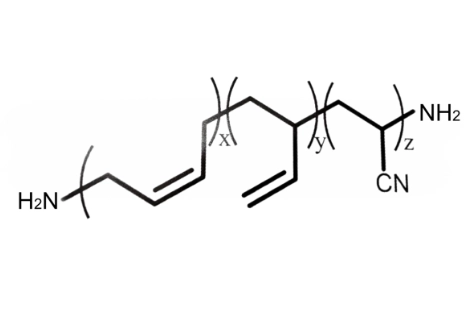
HTPB for Polyurethane Elastomer Applications has a special chemical structure. It is an oligomer of butadiene with hydroxyl groups at each end. This gives it a thick, syrup-like texture. The functionality of HTPB usually ranges from 2.4 to 2.6. This means each molecule has about 2.5 reactive sites, which helps you create strong, cross-linked networks in your elastomer. The table below shows some important properties:
Property | Description |
Chemical Structure | An oligomer of butadiene with hydroxyl functional groups at each end. |
Viscosity | Similar to corn syrup, indicating a thick liquid state. |
Functionality | Ranges from 2.4 to 2.6, allowing for stronger cured products. |
Applications | Used in rigid foam insulation, elastomeric wheels, bushings, adhesives, etc. |
When you choose HTPB with the right molecular weight and functionality, you get better control over the curing process and the final properties of your polyurethane elastomer.
Desired Elastomer Properties
You should always think about the properties you want in your finished elastomer. HTPB for Polyurethane Elastomer Applications offers many advantages over other polyols. It stays liquid at room temperature, so you can automate and speed up your production. The hydroxyl groups react smoothly with isocyanates, making it easy to form strong coatings and adhesives. You can also add reinforcing agents like glass fiber or white carbon black to make your elastomer even tougher.
Here are some key benefits you get when you use HTPB:
· Hydrophobicity (repels water)
· Excellent mechanical properties, even at very low temperatures (down to -70°C)
· High clarity and low color
· Strong resistance to hydrolysis and wear
· Good adhesion to many surfaces
Tip: If you want to make elastomers for aerospace, automotive, or defense, HTPB gives you the mechanical and thermal performance you need. The market for these materials is growing fast, especially in regions like Asia-Pacific and Latin America.
You can match HTPB with isocyanates like TDL or MDI to get the best results. The right mixing ratios, reaction temperatures, and curing times help you achieve the properties you want. Always consider your end-use and adjust your process to get the perfect polyurethane elastomer.
HTPB for Polyurethane Elastomer Applications: Step-by-Step Matching Process
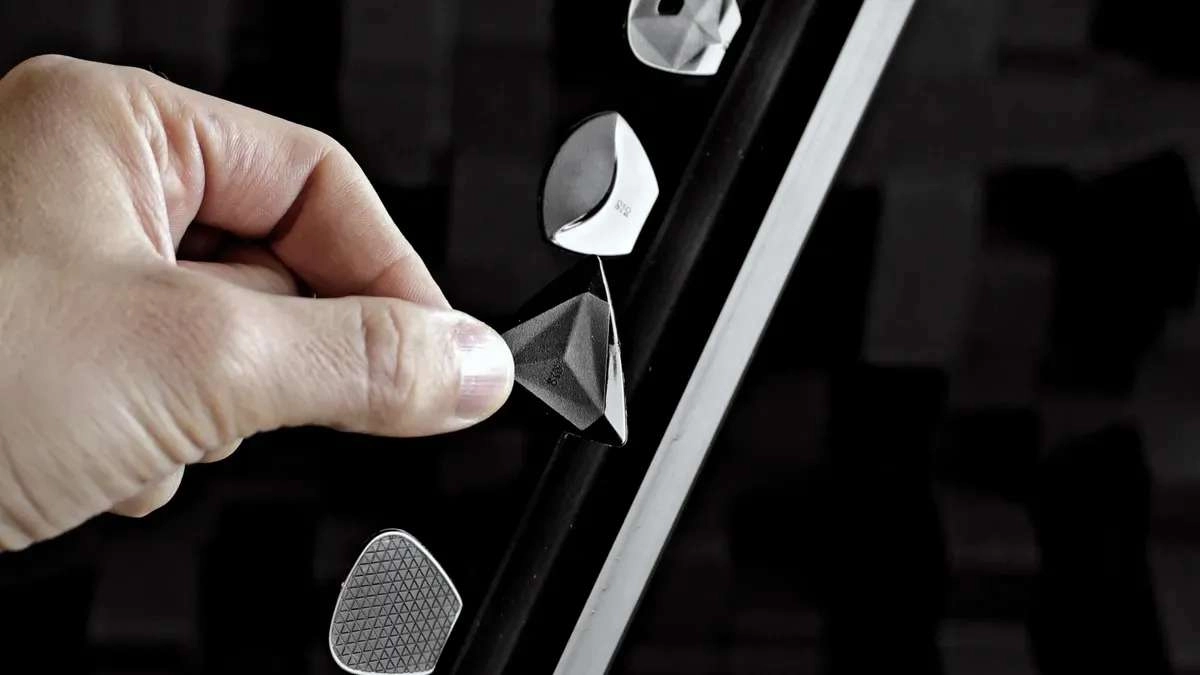
Image Source: pexels
Calculating the Correct NCO: OH Ratio
You need to calculate the NCO: OH ratio carefully when you work with HTPB for Polyurethane Elastomer Applications. This ratio controls how many isocyanate groups react with hydroxyl groups in your mixture. If you get this calculation wrong, you can face many problems during production. The table below shows what can happen if you do not use the correct ratio:
Issue | Description |
Excessive Shrinkage | Results from an imbalanced isocyanate index, leading to dimensional instability. |
Cracking | Caused by improper balance in the NCO:OH ratio, affecting structural integrity. |
Poor Adhesion | An incorrect ratio can lead to weak bonding in the final product. |
Inconsistent Foam Density | Variability in foam density due to incorrect formulation ratios. |
Brittle Foam Structures | Too high an isocyanate index results in brittleness. |
Unstable Foam Structures | Too low an isocyanate index leads to instability in foam properties. |
You can avoid these issues by measuring your ingredients and double-checking your math. Always use a precise scale and follow your formula. Regular testing helps you catch mistakes early. This step is important for making sure your polyurethane elastomer has the right strength and flexibility.
Tip: Use automated mixing systems if you want to reduce human error and improve consistency in your batches.
Selecting the Right Isocyanate Type
You must choose the right isocyanate for your HTPB for Polyurethane Elastomer Applications. The type of isocyanate changes how fast your mixture cures and what properties your elastomer will have. Aromatic isocyanates like TDI and MDI react quickly. They give you strong and tough elastomers. Aliphatic isocyanates react more slowly. They help you make products that resist yellowing and stay flexible.
The isocyanate you pick also affects the elasticity and hardness of your final product. If you want a soft and stretchy elastomer, you should use an isocyanate that forms longer chains. If you want a hard and rigid material, you should use one that creates more crosslinks. You can match the isocyanate to your needs by thinking about the end use of your product.
You should also check if your HTPB and isocyanate are compatible. Good compatibility gives you durable and long-lasting elastomers. If they do not match well, your product can lose strength and wear out faster.
Adjusting for Additives and Curing Conditions
You can fine-tune your HTPB for Polyurethane Elastomer Applications by adding plasticizers, fillers, or chain extenders. These additives change the way your elastomer behaves. For example, plasticizers lower the glass transition temperature. This makes your elastomer softer and more flexible. Fillers like glass fiber make your product stronger and tougher.
You also need to control your curing conditions. The temperature and humidity in your workspace can change how your elastomer sets. If you use the right curing process, you get a product with even strength and good durability.
Here are some main challenges you might face during the matching process:
· The mechanical properties of HTPB change with your choice of isocyanate and chain extenders. The degree of crosslinking affects the strength.
· Adding plasticizer changes the glass transition temperature and affects the network formation. This impacts most mechanical properties.
You can solve these challenges by following strict quality control steps:
· Follow international standards to make your products reliable.
· Test and inspect each batch to meet your requirements.
· Use ISO standards to keep your production consistent.
· Try advanced technology like precision mixing and automated systems to reduce defects.
By following these steps, you can make sure your HTPB for Polyurethane Elastomer Applications always meet your quality goals.
You can create high-quality polyurethane elastomers by matching HTPB with the right isocyanate and using the correct ratios. HTPB gives you:
· Superior flexibility and durability
· Resistance to extreme temperatures and chemicals
· High tensile strength and elongation
You will find these elastomers in aerospace pads, industrial rollers, and sports products.
FAQ
What is the best NCO: OH ratio for HTPB-based polyurethane elastomers?
You should use an NCO: OH ratio between 0.9 and 1.1 for most flexible elastomers. This range gives you a good balance of strength and stretch.
Can you add color to HTPB polyurethane elastomers?
Yes, you can mix pigments or dyes into your HTPB blend. This lets you create elastomers in many colors for different uses.
How do you store HTPB safely?
· Store HTPB in sealed containers.
· Keep it in a cool, dry place.
· Avoid sunlight and moisture to prevent changes in quality.

 English
 English
  Spanish
  Russian
  Arabic
  French
  German
  Portuguese
  Turkish
  Dutch
Dutch  Polish
  Korean
  Vietnamese
  Indonesian
 11. Aug, 2026