Polyurethane adhesives are valued across industries because they combine high bond strength with flexibility, durability, and excellent resistance to environmental aging. While the choice of polyurethane resin plays an important role, the performance of the final adhesive often depends on another critical ingredient—the crosslinker.
Among the specialty crosslinkers used in industrial formulations, Triphenylmethane-4,4',4''-Triisocyanate has earned a strong reputation for improving adhesion, increasing crosslink density, and extending the service life of polyurethane adhesives. Available commercially as Isocyanate RE, this aromatic trifunctional isocyanate has long been used in demanding applications such as rubber-to-metal bonding, footwear adhesives, conveyor belts, industrial rollers, elastomers, and protective coatings.
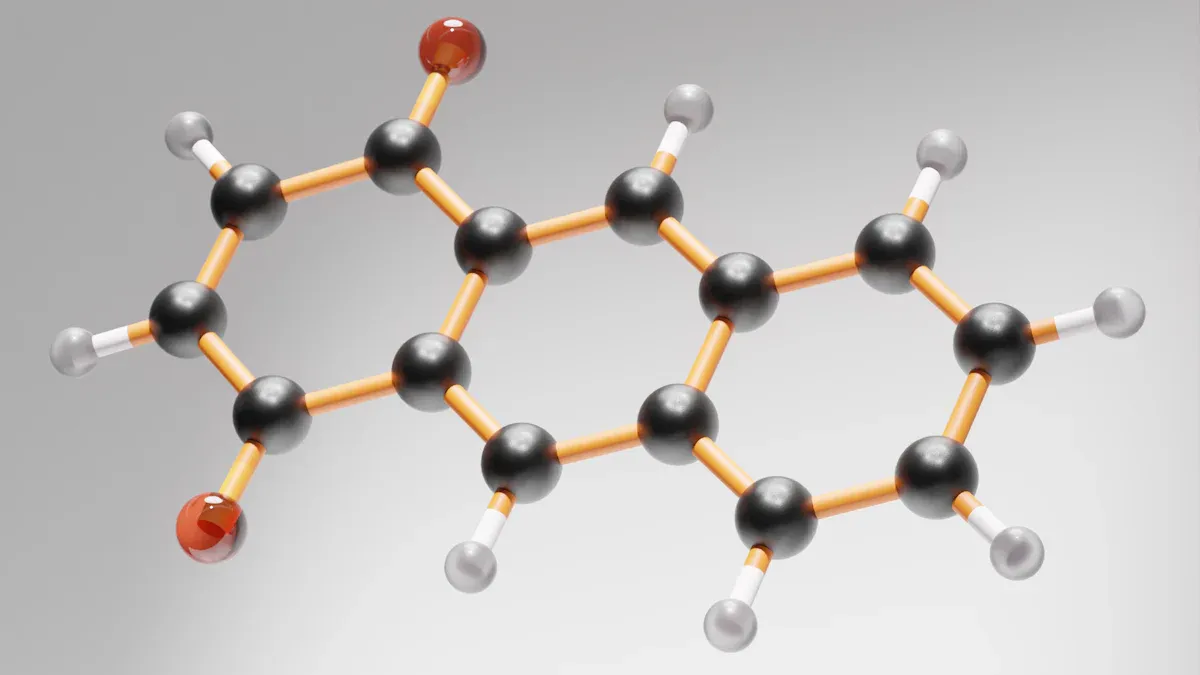
Unlike conventional diisocyanates, which contain two reactive isocyanate groups, Triphenylmethane-4,4',4''-Triisocyanate contains three highly reactive –NCO groups. This molecular structure allows it to create a three-dimensional polymer network during curing, producing adhesives with greater mechanical strength and improved resistance to heat, chemicals, abrasion, and long-term fatigue.
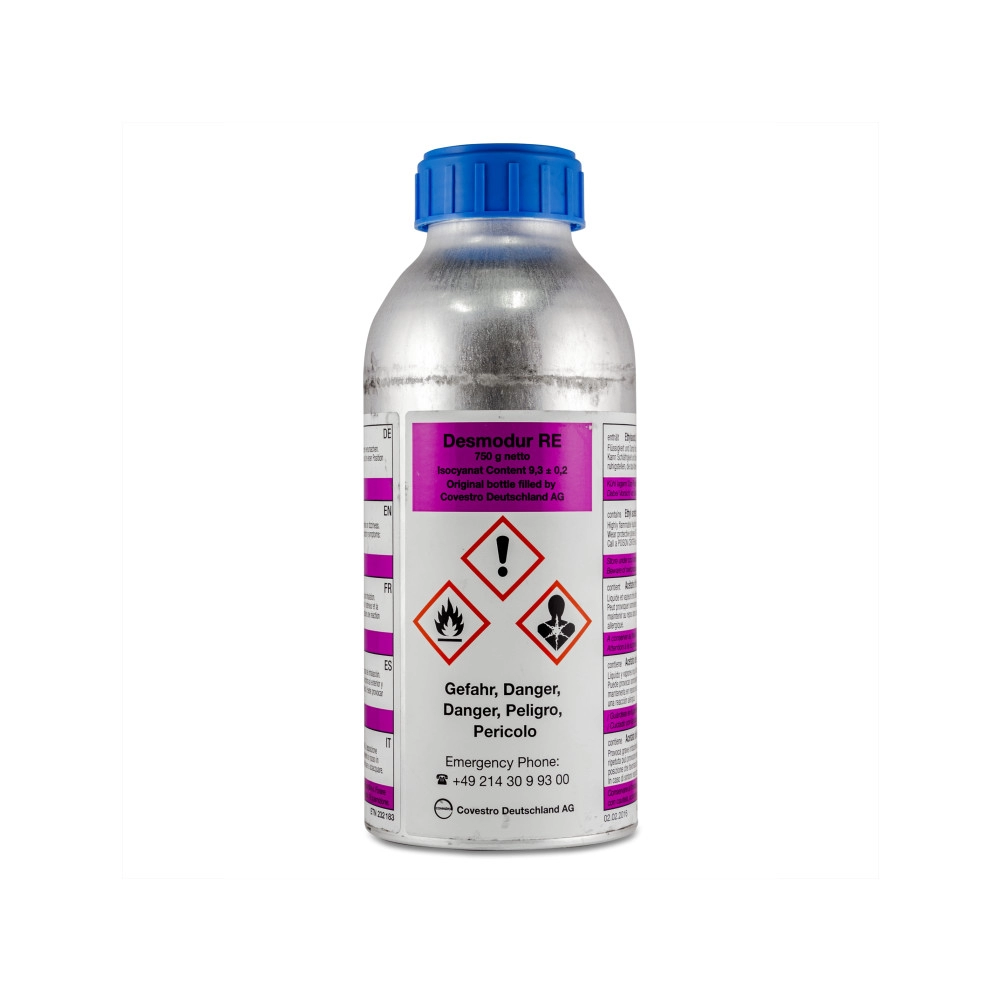
For manufacturers looking for a reliable alternative to Desmodur RE, it offers comparable curing performance while providing a stable supply and competitive production costs.
Understanding Triphenylmethane-4,4',4''-Triisocyanate
Triphenylmethane-4,4',4''-Triisocyanate is a trifunctional aromatic isocyanate widely used as a polyurethane crosslinker and curing agent. Commercial grades are typically supplied as a solution in ethyl acetate to simplify handling and improve compatibility with adhesive formulations.
Its primary function is not to act as the main resin but to react with hydroxyl-containing polymers and create permanent chemical bridges between polymer chains. These bridges dramatically improve the physical properties of cured polyurethane systems.
Typical product characteristics include:
Property | Typical Value |
Chemical Name | Triphenylmethane-4,4',4''-Triisocyanate |
CAS Number | 2422-91-5 |
Commercial Name | Isocyanate RE |
Function | Polyurethane crosslinker |
NCO Content | Approximately 9.3% |
Solvent | Ethyl acetate |
Main Applications | Polyurethane adhesives, rubber bonding, coatings, and elastomers |
Although the product itself represents only a relatively small percentage of a formulation, its influence on final adhesive performance is significant.
In many industrial adhesive systems, a formulation containing only a few percent of Triphenylmethane-4,4',4''-Triisocyanate can substantially increase bonding performance without requiring major formulation changes.
Why Polyurethane Adhesives Need Crosslinkers
Many engineers focus primarily on selecting polyurethane resins, yet the crosslinking stage is often what determines whether an adhesive succeeds or fails in real-world service.
Without sufficient crosslinking, polyurethane adhesives may initially achieve acceptable bonding strength but gradually lose performance after prolonged exposure to:
· Elevated temperatures
· Moisture
· Engine oil
· Plasticizers
· Dynamic mechanical stress
Crosslinkers solve this problem by chemically connecting polymer chains into a stable three-dimensional network.
Instead of behaving like individual polymer strands that can slide under stress, the cured material becomes an integrated structure capable of distributing mechanical loads more efficiently.
As a result, properly crosslinked polyurethane adhesives generally exhibit:
· Higher tensile strength
· Improved peel strength
· Better heat resistance
· Lower creep under continuous loading
This explains why industries such as automotive manufacturing, heavy machinery, mining equipment, and industrial footwear rarely rely on uncrosslinked polyurethane adhesive systems.
How Triphenylmethane-4,4',4''-Triisocyanate Works in Polyurethane Adhesives
The performance of Triphenylmethane-4,4',4''-Triisocyanate comes from its molecular structure.
Each molecule contains three reactive isocyanate groups capable of reacting with hydroxyl groups present in polyurethane prepolymers or hydroxyl-functional additives.
As curing progresses, these reactions generate urethane linkages that connect multiple polymer chains simultaneously.
Instead of creating a linear polymer structure, the reaction forms a highly interconnected three-dimensional network.
This network provides several important advantages:
· Greater structural integrity
· Reduced molecular mobility
· Increased resistance to solvent penetration
· Improved dimensional stability
· Better long-term mechanical performance
Because the reaction occurs efficiently at room temperature, manufacturers can often simplify production while maintaining excellent bonding performance.
For many industrial adhesive producers, this faster curing behavior translates into shorter production cycles and higher manufacturing efficiency.
Why Three Functional Groups Matter
One of the most overlooked differences between various isocyanates is molecular functionality.
Many standard industrial isocyanates contain two reactive groups.
Triphenylmethane-4,4',4''-Triisocyanate contains three.
That single additional reactive site dramatically changes the architecture of the cured polymer.
Rather than producing relatively simple chain extensions, it creates multiple crosslink junctions throughout the adhesive layer.
The result is a denser polymer network capable of withstanding far greater mechanical stress.
The practical benefits become particularly evident in applications involving continuous vibration, repeated impact, or cyclic loading.
Examples include:
· Rubber vibration dampers
· Automotive engine mounts
· Conveyor belt joints
· Industrial rollers
These components experience millions of loading cycles during their service life.
A higher crosslink density helps prevent gradual loss of adhesion and mechanical degradation over time.
Comparing Triphenylmethane-4,4',4''-Triisocyanate with Conventional Diisocyanates
Although many polyurethane systems can be formulated using standard diisocyanates, their performance differs significantly from formulations containing Triphenylmethane-4,4',4''-Triisocyanate.
Property | Triphenylmethane-4,4',4''-Triisocyanate | Conventional Diisocyanates |
Functional Groups | Three | Two |
Crosslink Density | High | Moderate |
Initial Bond Strength | Excellent | Good |
Heat Resistance | Excellent | Moderate |
Chemical Resistance | Excellent | Moderate |
Abrasion Resistance | High | Medium |
Long-Term Durability | Outstanding | Good |
Rubber-to-Metal Adhesion | Excellent | Moderate |
This comparison explains why specialty crosslinkers continue to be preferred in applications where failure is not acceptable.
A Factory Perspective: What Manufacturers Actually Evaluate
Technical datasheets often highlight properties such as NCO content, viscosity, or solid content.
However, inside a production facility, engineers evaluate materials very differently.
When selecting a crosslinker for commercial adhesive production, manufacturers usually focus on four practical questions:
· Will it improve production consistency between batches?
· Can it maintain stable curing under different seasonal temperatures?
· Will it reduce customer complaints related to bond failure?
· Does it provide long-term supply stability without excessive formulation adjustments?
These considerations directly affect manufacturing cost, production efficiency, and product reputation.
For example, a crosslinker that delivers slightly higher laboratory strength but suffers from inconsistent curing behavior may actually increase production waste.
Experienced formulators therefore evaluate not only laboratory data but also processing behavior during full-scale manufacturing.
This practical perspective is often missing from product brochures but plays a decisive role in industrial material selection.
Real Manufacturing Insight: Consistency Matters More Than Peak Performance
One misconception among new formulators is that the strongest adhesive measured in the laboratory is automatically the best industrial solution.
In reality, factories prioritize consistency.
Imagine two adhesive formulations.
The first achieves exceptionally high bond strength under ideal laboratory conditions but is highly sensitive to humidity.
The second delivers slightly lower peak strength but maintains nearly identical curing behavior throughout the year.
Most manufacturers will choose the second formulation.
Production stability reduces scrap rates, minimizes customer complaints, and simplifies quality control.
This is one reason why Triphenylmethane-4,4',4''-Triisocyanate remains widely used in industrial adhesive production. Its predictable curing behavior allows manufacturers to maintain reliable product quality across large production batches rather than optimizing only for laboratory performance.
In high-volume manufacturing, reproducibility is often more valuable than achieving the highest possible test result in a controlled environment.
Industrial Applications of Triphenylmethane-4,4',4''-Triisocyanate
The versatility of Triphenylmethane-4,4',4''-Triisocyanate comes from its ability to improve adhesion while maintaining flexibility and durability. Instead of being limited to one industry, it has become an important crosslinker across a wide range of polyurethane adhesive systems.
Although every formulation has different performance targets, the same chemical principle applies: increasing crosslink density improves the mechanical stability of the cured adhesive.
Today, manufacturers commonly use Triphenylmethane-4,4',4''-Triisocyanate in applications such as:
· Rubber-to-metal bonding for automotive mounts, vibration isolators, rollers, and industrial machinery.
· Footwear adhesives that require durable bonding between rubber soles, leather, EVA, TPU, and synthetic materials.
· Polyurethane elastomers where higher tear strength and abrasion resistance are required.
· Industrial coatings and sealants that benefit from improved chemical resistance and long-term durability.
Rather than replacing the polyurethane resin itself, the crosslinker upgrades the overall network structure, enabling adhesive systems to perform reliably in demanding service environments.
Why Rubber-to-Metal Bonding Places High Demands on Crosslinkers
Rubber-to-metal bonding is one of the most challenging adhesive applications because two completely different materials must function as one component throughout years of service.
Rubber continuously expands and contracts.
Metal remains dimensionally stable.
This difference creates repeated internal stress at the bonding interface.
Without sufficient crosslink density, the adhesive layer gradually becomes the weakest point of the assembly.
A properly formulated polyurethane adhesive containing Triphenylmethane-4,4',4''-Triisocyanate helps address this issue by creating a stronger three-dimensional polymer network capable of distributing stress more evenly across the bonded surface.
Manufacturers typically observe improvements in several key performance areas:
· Higher peel and shear strength
· Better fatigue resistance under cyclic loading
· Improved resistance to oil and grease
· Longer service life under vibration
These characteristics explain why this chemistry remains widely used in automotive, mining, rail transportation, industrial equipment, and heavy machinery.
Factory Case Study: Improving Conveyor Roller Production
A conveyor equipment manufacturer experienced intermittent bond failures between rubber lagging and steel rollers after several months of field operation.
Laboratory testing showed acceptable initial adhesion, yet returned products displayed adhesive failure around the edges after prolonged exposure to moisture and continuous vibration.
Instead of changing the polyurethane resin, engineers focused on the crosslinking system.
After evaluating several options, the production team adopted a formulation incorporating Triphenylmethane-4,4',4''-Triisocyanate as the primary crosslinker while keeping the rest of the adhesive formulation largely unchanged.
The revised system delivered several measurable improvements:
Production Indicator | Before Optimization | After Optimization |
Initial Bond Strength | Good | Excellent |
Heat Resistance | Moderate | High |
Edge Bond Stability | Moderate | Excellent |
Production Reject Rate | Higher | Lower |
Customer Warranty Claims | Frequent | Significantly Reduced |
Perhaps the most valuable improvement was not the increase in laboratory strength but the consistency achieved during large-scale production.
This illustrates an important lesson often overlooked in technical literature: successful industrial formulations are designed to produce stable quality every day—not just exceptional results under ideal laboratory conditions.
Optimizing Polyurethane Adhesive Formulations
Adding more crosslinker does not automatically produce a better adhesive.
In fact, excessive crosslink density can make an adhesive brittle, reducing its ability to absorb stress.
Experienced formulation engineers typically optimize several variables simultaneously:
· Crosslinker dosage, based on hydroxyl content and target mechanical properties.
· Resin selection, ensuring compatibility with the chosen crosslinker.
· Processing conditions, including mixing, viscosity, and application method.
· Environmental control, especially humidity and temperature during production.
The objective is to balance strength, flexibility, curing speed, and long-term durability.
This balance varies depending on the intended application. A footwear adhesive may prioritize flexibility, while an industrial roller adhesive may require maximum abrasion resistance.
Common Formulation Mistakes
Many adhesive failures are not caused by the crosslinker itself but by formulation or processing errors.
Several issues appear repeatedly in industrial production.
Using Excessive Crosslinker
More crosslinker increases crosslink density only up to an optimum level.
Beyond that point, excessive rigidity can reduce impact resistance and increase brittleness.
Ignoring Moisture Control
Like most aromatic isocyanates, Triphenylmethane-4,4',4''-Triisocyanate reacts readily with atmospheric moisture.
Exposure before mixing may consume reactive NCO groups and generate carbon dioxide, leading to:
· Reduced curing efficiency
· Bubble formation
· Lower bond strength
· Shorter shelf life
Proper storage and controlled production environments are therefore essential.
Inadequate Surface Preparation
Even the highest-quality adhesive cannot compensate for poorly prepared substrates.
Contaminants such as oil, mold release agents, dust, oxidation, or moisture significantly reduce adhesion.
Successful bonding depends on both adhesive chemistry and surface preparation.
Assuming All Polyurethane Systems Behave the Same
Different polyurethane prepolymers contain varying hydroxyl contents, molecular weights, and backbone structures.
A formulation optimized for one resin system may perform poorly with another.
For this reason, formulation validation should always be carried out using the actual production materials rather than relying solely on theoretical calculations.
Best Practices for Using Triphenylmethane-4,4',4''-Triisocyanate
Manufacturers seeking consistent production quality generally follow several practical guidelines.
Maintain Proper Storage Conditions
Store the material in its original sealed container below the recommended storage temperature.
Avoid prolonged exposure to moisture and direct sunlight.
Control Production Humidity
Because isocyanates react readily with water vapor, humidity control can significantly improve batch consistency.
Many factories use dehumidified production areas during adhesive preparation.
Verify Mixing Accuracy
Accurate weighing and thorough mixing ensure that reactive groups are distributed uniformly throughout the formulation.
Even small deviations may affect curing behavior.
Conduct Pilot Trials Before Scale-Up
Laboratory formulations do not always behave identically during industrial production.
Pilot-scale evaluation helps identify potential issues before full commercial manufacturing begins.
Why Many Manufacturers Choose Triphenylmethane-4,4',4''-Triisocyanate as an Alternative to Desmodur RE
As global supply chains continue to evolve, manufacturers increasingly evaluate alternative raw materials without compromising product quality.
One reason Triphenylmethane-4,4',4''-Triisocyanate has gained widespread acceptance is that it offers performance characteristics comparable to traditional Desmodur RE-type crosslinkers in many polyurethane adhesive applications.
From a manufacturing perspective, several factors influence this decision:
· Comparable crosslinking efficiency in properly designed formulations.
· Strong compatibility with common hydroxyl-functional polyurethane systems.
· Reliable performance in rubber-to-metal bonding and industrial adhesives.
· Greater sourcing flexibility and cost competitiveness.
Rather than focusing solely on replacing one commercial product, many manufacturers view it as an opportunity to improve supply stability while maintaining production quality.
Frequently Asked Questions
What is Triphenylmethane-4,4',4''-Triisocyanate?
It is a trifunctional aromatic isocyanate used primarily as a polyurethane crosslinker and curing agent for industrial adhesives, elastomers, coatings, and rubber bonding applications.
Why is it used in polyurethane adhesives?
Its three reactive isocyanate groups create a dense crosslinked polymer network that improves bond strength, heat resistance, solvent resistance, and long-term durability.
Is Triphenylmethane-4,4',4''-Triisocyanate suitable for rubber-to-metal bonding?
Yes. It is widely used in adhesive systems designed for rubber-to-metal applications because it enhances adhesion while maintaining resistance to vibration, fatigue, oil, and environmental aging.
Can it replace Desmodur RE?
In many industrial formulations, Triphenylmethane-4,4',4''-Triisocyanate can serve as an effective alternative, provided the formulation is properly optimized and validated under actual production conditions.
What factors affect its performance?
Performance depends on several variables, including resin compatibility, crosslinker dosage, substrate preparation, environmental humidity, curing conditions, and storage practices.
How should it be stored?
The material should be kept in tightly sealed original containers, protected from moisture, and stored in a cool, dry environment. Limiting exposure to humid air helps preserve NCO activity and maintain consistent product quality.
Selecting a polyurethane crosslinker involves more than comparing technical data sheets. In industrial manufacturing, long-term reliability depends on how consistently a material performs under real production conditions and throughout the product's service life.
Triphenylmethane-4,4',4''-Triisocyanate continues to be valued because it combines high reactivity with excellent compatibility across a broad range of polyurethane adhesive systems. Its ability to increase crosslink density helps manufacturers produce stronger, more durable bonds while meeting the demanding requirements of industries such as automotive, footwear, heavy equipment, and industrial machinery.
From a factory perspective, the most successful adhesive formulations are rarely those with the highest laboratory values alone. They are the formulations that deliver stable processing, repeatable quality, and dependable field performance. When properly formulated and handled, Triphenylmethane-4,4',4''-Triisocyanate provides precisely that combination, making it a trusted solution for manufacturers seeking durable polyurethane adhesive systems and reliable long-term production performance.

 English
 English
  Spanish
  Russian
  Arabic
  French
  German
  Portuguese
  Turkish
  Dutch
Dutch  Polish
  Korean
  Vietnamese
  Indonesian
 28. Sep, 2026