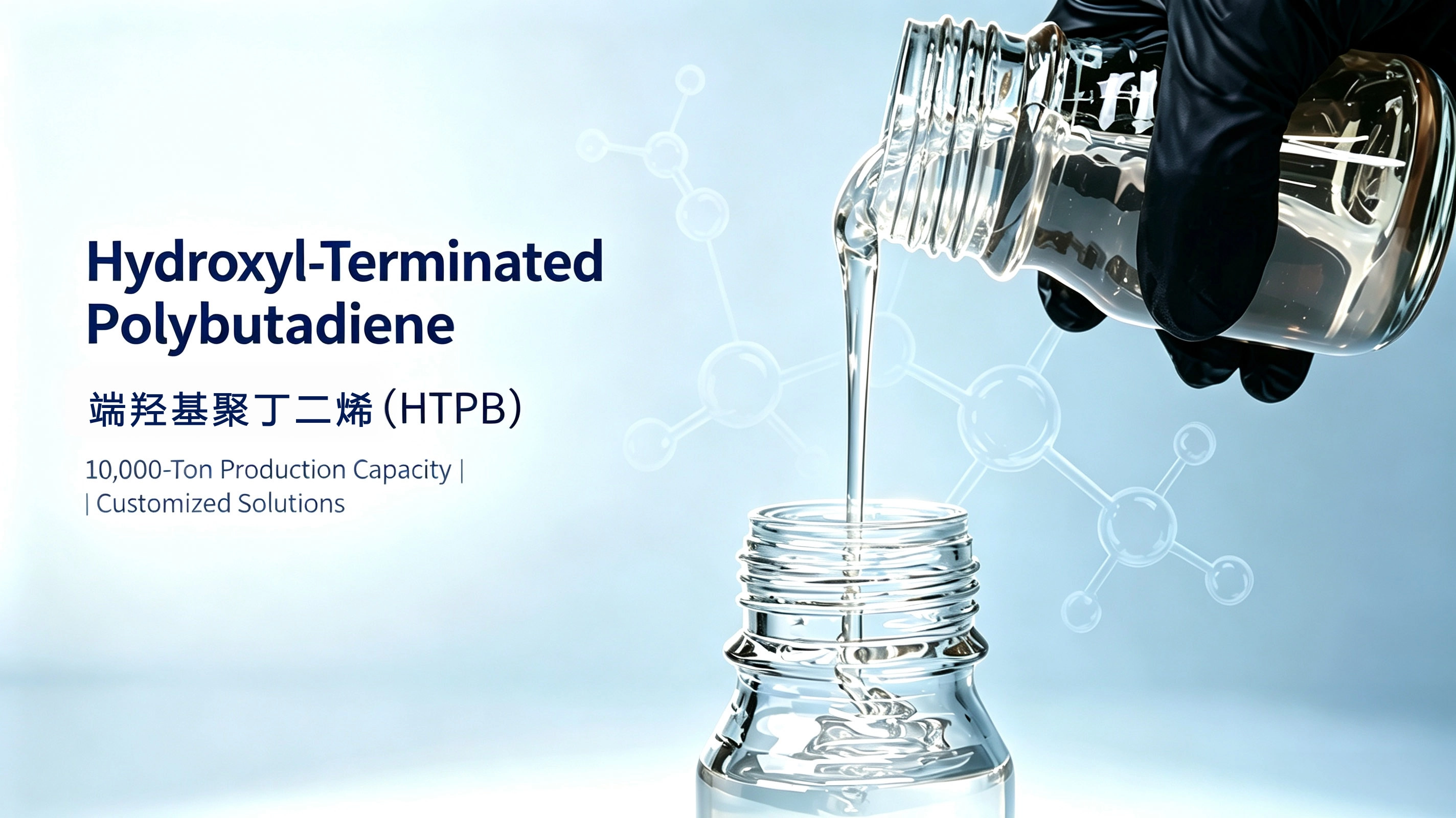
Polyurethane Materials play a vital role in shaping industries in 2026. Industry leaders see rapid growth, with the global market projected to reach $92.1 billion.
- Market expansion comes from construction, housing, and automotive sectors.
- Energy-efficient insulation and recyclable foam materials drive innovation.
- Sustainability influences investments in green building projects and furniture production.
Manufacturers, suppliers, and end-users face new opportunities and challenges. They must evaluate how these trends impact their operations and future strategies.
- The global polyurethane market is set to grow significantly, reaching $93.11 billion in 2026, driven by demand in construction and automotive sectors.
- Sustainability is a key focus, with innovations in bio-based materials and recycling methods helping to reduce environmental impact.
- Digitalization and smart materials are transforming the industry, enhancing product performance and enabling rapid prototyping.
- Additive manufacturing allows for the creation of complex designs, reducing supply chain risks and supporting high-performance applications.
- Companies that prioritize sustainable practices and innovative solutions will likely lead in the evolving polyurethane market.
Polyurethane Materials Market
Global Market Growth
The global market for Polyurethane Materials continues to expand at a steady pace. In 2025, the market reached a value of $88.17 billion. Projections show growth to $93.11 billion in 2026. Analysts expect the market to climb to $144.02 billion by 2034. This positive trend reflects strong demand across multiple industries. Rapid urbanization and infrastructure development in developing nations contribute to this growth. The construction and automotive sectors play a major role in driving market expansion. Companies invest in new technologies and sustainable solutions to meet evolving industry needs.
Note: The upward trend in market value highlights the importance of innovation and adaptability for industry players.
Key Application Areas
Polyurethane Materials serve a wide range of industries. The construction segment stands out as the dominant application area in 2026. Urbanization and industrialization increase the need for energy-efficient buildings. Polyurethane foams provide excellent thermal insulation, making them a top choice for builders. The furniture and interiors segment also shows strong growth. Flexible foams improve comfort and durability in consumer products such as mattresses and seating.
Other important application areas include:
- Automotive: Manufacturers use Polyurethane Materials for lightweight components, interior parts, and advanced features like shape memory and self-healing properties.
- Medical Devices: Polyurethane's biocompatibility supports its use in catheter tubing, wound dressings, implantable devices, and prosthetics.
- Packaging: The demand for durable and protective packaging materials continues to rise.
A closer look at foam types reveals their impact:
- Rigid polyurethane foam finds use in energy-efficient appliances, including refrigerators and freezers.
- Flexible foams, especially slabstock polyether, dominate the market due to their versatility in construction, automotive, and furniture applications.
In 2023, slabstock polyether accounted for 45.4% of the global market share, while the building and construction sector held 39.8%. Polyurethane foams represent 67% of global polyurethane consumption, showing their central role in the industry.
Demand Drivers
Several factors drive the demand for Polyurethane Materials in 2026:
- Growing need for lightweight, durable, and energy-efficient materials
- Expansion of insulation material applications in construction and appliances
- Increased production of automotive interiors and components
- Rising interest in eco-friendly and bio-based polyurethane products
- Recovery and growth in the construction sector after the pandemic
- High demand in automotive and packaging sectors
Key trends include:
- Rise in construction and housing activities
- Growing demand for furniture and bedding
- Increased usage of insulation materials
Tip: Companies that focus on sustainable and innovative polyurethane solutions will likely benefit most from these demand drivers.
Polyurethane Innovations

Advanced Formulations
Leading companies continue to push the boundaries of Polyurethane Materials through advanced formulations. They focus on sustainability and performance, introducing new materials that address environmental concerns and industry demands. Recent developments include:
- Bio-based polyols derived from renewable resources, which reduce reliance on petroleum-based materials.
- Chemical recycling methods that enhance sustainability in polyurethane production.
- Non-isocyanate polyurethanes (NIPUs), which eliminate health and environmental risks associated with traditional isocyanate-based production.
- Enzymatic recycling methods that support circular economy principles.
Shanghai Further New Material Technology Co., Ltd. stands out in this area. The company develops eco-friendly polyurethane solutions and high-performance materials for diverse applications. Their portfolio includes Hydroxyl-Terminated Polybutadiene (HTPB), Monohydroxy HTPB, Hydrogenated HTPB, Epoxidized HTPB, Carboxy-Terminated Nitrile Butadiene Rubber (CTBN), and Amino-Terminated Liquid Nitrile Rubber (ATBN). These materials meet rigorous standards for quality and durability. The company also innovates in composite materials and lightweight solutions for automotive and aerospace industries. Their full-chain innovation model integrates molecular design, process development, and industrial application to maximize efficiency.
| Focus Area | Description |
|---|
| Green Polyurethane Technologies | Development of eco-friendly polyurethane solutions. |
| High-Performance Materials | Creation of materials that meet high-performance standards for various applications. |
| Composite Materials | Innovation in composite materials for enhanced functionality. |
| Lightweight Solutions | Focus on lightweight and high-strength materials for automotive and aerospace industries. |
| Full-Chain Innovation Model | Integration of molecular design, process development, and industrial application for efficiency. |
Companies that invest in advanced formulations and sustainable practices position themselves as leaders in the evolving polyurethane market.
Digitalization and Smart Materials
Digitalization transforms the development of Polyurethane Materials. Companies use predictive modeling, artificial intelligence, and machine learning to accelerate research and improve product performance. Dow's digitalization initiative demonstrates how digital tools enhance customer engagement and product innovation. Simulation and AI revolutionize material formulation and decision-making processes. By combining materials science with AI, companies improve product formulation and accelerate market readiness.
Smart materials represent another area of innovation. Researchers design Polyurethane Materials with shape memory, self-healing, and adaptive properties. These materials respond to environmental changes, offering new possibilities for automotive, medical, and industrial applications. Digitalization enables rapid prototyping and customization, allowing manufacturers to meet specific customer needs.
Digital tools and smart materials drive innovation, making Polyurethane Materials more versatile and efficient.
Additive Manufacturing
Additive manufacturing, including three-dimensional (3D) printing, is changing how Polyurethane Materials are produced and used. This technology allows for the creation of objects with complex geometries that traditional manufacturing cannot achieve.
Additive manufacturing uses polymers, composites, metals, or ceramics to produce biomedical, aerospace, automotive, electronics, architecture, fashion, or domestic products. One advantage is the ability to create objects too complex for traditional processes.
Changfeng Ge and colleagues reported that 3D printed polyurethane foam (PUF) exhibits resilience similar to bulk rubber, but with a density four times lower.
Polyurethane Materials offer versatility, toughness, heat resistance, and durability, making them ideal for advanced 3D materials. They outperform other polymers like polylactic acid and ABS. Manufacturers use them in various forms, including thermoplastics and photosensitive urethane acrylate liquids.
| Material Type | Key Benefits | Applications |
|---|
| Rigid Polyurethane 70 | Strength, toughness | Durable housings, enclosures, consumer products |
| RPU 130 | Superior toughness, impact strength | Demanding structural applications |
| Epoxy 82 (EPX 82) | High temperature resistance, stiffness | Automotive and industrial components |
- Additive manufacturing accelerates design cycles through rapid prototyping.
- It reduces dependence on external suppliers, minimizing supply chain risks.
- It enables production of complex geometries not achievable with traditional methods.
Shanghai Further New Material Technology Co., Ltd. leverages additive manufacturing to deliver customized solutions. Their National RIM Process Technology Research Center supports the development of high-performance polyurethane products for aerospace and industrial uses.
Additive manufacturing empowers companies to create innovative, high-performance Polyurethane Materials for a wide range of applications.
Sustainability Trends
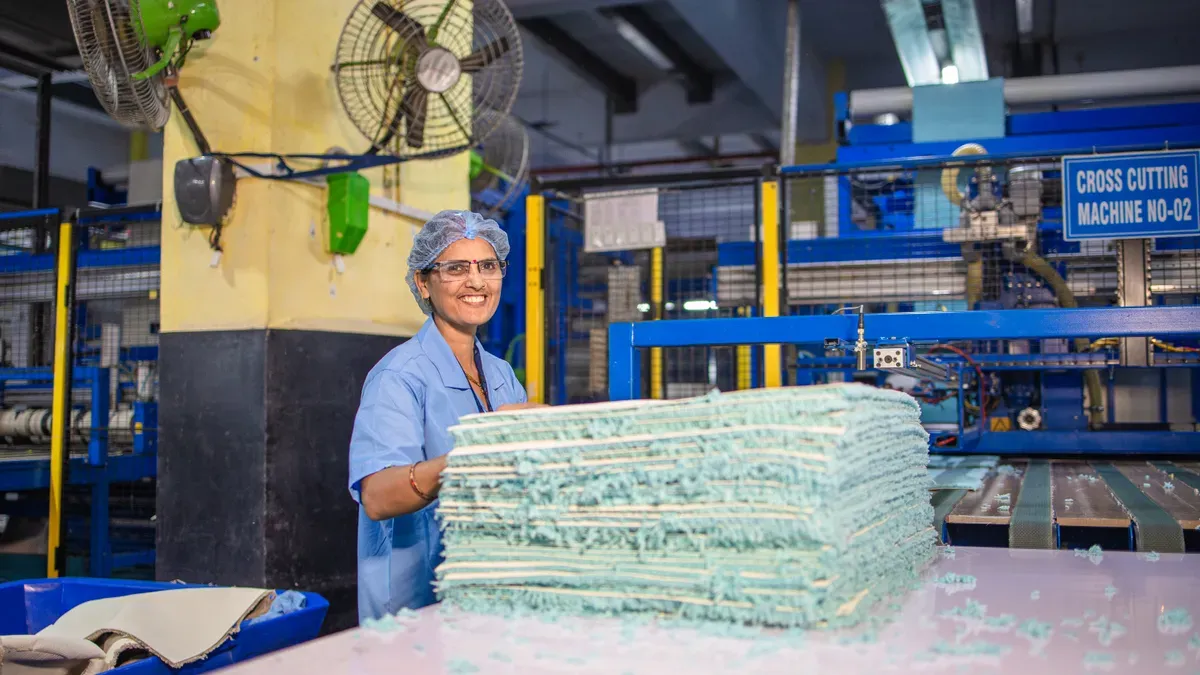
Bio-Based Polyurethanes
Manufacturers continue to invest in bio-based alternatives to reduce reliance on fossil fuels. Recent years have seen major breakthroughs in this area. Companies now produce isocyanates and polyols from renewable resources, which helps lower the carbon footprint of Polyurethane Materials. The table below highlights some leading innovations expected to shape the market in 2026:
| Year | Innovation Description |
|---|
| 2025 | Algenesis Labs' Bio-Iso™, the first 100% biogenic carbon isocyanate from plant-based dicarboxylic acids, enabling phosgene-free thermoplastic polyurethane. |
| 2025 | Covestro's commercial production of bio-based MDI for polyurethane applications at its European facility. |
| 2024 | BASF and STOCKMEIER's production of polyurethane binders for recreational surfacing using biomass-balance Lupranate MDI. |
These advances show how the industry is moving toward greener chemistry and sustainable sourcing.
Recycling and Circular Economy
The increase in polyurethane production has led to more waste. Recycling plays a key role in reducing pollution and conserving resources. Physical recycling allows direct reuse of polyurethane scraps, while chemical recycling breaks down waste into smaller molecules for new products. Both methods help achieve circular economy goals by improving material efficiency and lowering environmental impact.
However, several challenges remain:
- The complex chemical structure of polyurethane makes recycling difficult.
- New recycling technologies require major infrastructure changes.
- Balancing environmental benefits with cost and performance is not easy.
- Polyurethane's durability complicates end-of-life management.
- Landfilling and incineration are not sustainable solutions.
Recycling is essential for pollution prevention and resource conservation.
Regulatory Impact
Regulations continue to shape the future of polyurethane production and use. Governments enforce stricter environmental controls, which drive the development of low-VOC and zero-VOC formulations. Regulatory scrutiny on isocyanates encourages research into safer alternatives and better handling practices. Restrictions on halogenated flame retardants push the industry toward non-halogenated options. Extended Producer Responsibility (EPR) schemes require better end-of-life management and recycling technologies. Regulations like REACH demand more transparency and rigorous testing. Carbon pricing motivates companies to adopt energy-efficient processes and bio-based materials.
Manufacturers also face higher compliance costs and new limits on emissions from isocyanates and blowing agents. Landfill restrictions on polyurethane foams make disposal and recycling more complex.
Regulatory changes encourage innovation and sustainability across the industry.
Regional Industry Shifts
Asia-Pacific Developments
Asia-Pacific leads the global polyurethane market in both growth and market share. In 2025, this region is expected to account for nearly half of global revenue. China and India drive this expansion with strong demand from construction, automotive, and furniture sectors. Countries such as Vietnam, Thailand, and Indonesia also show rising per capita consumption. The region benefits from a large skilled labor pool and low production costs, making it attractive for manufacturers. Shanghai Further New Material Technology Co., Ltd. stands out as a foundation-laying institution in China, offering advanced solutions and supporting the region’s leadership. The company’s commitment to research and development strengthens Asia-Pacific’s position in the industry.
Asia-Pacific held nearly 45% of the total market share in 2021 and continues to grow rapidly.
North America Market
North America remains a key player, focusing on innovation and sustainability. The region’s growth comes from construction insulation, automotive parts, and energy-efficient materials. Companies invest in bio-based products and low-emission technologies to meet strict regulations. The market also benefits from ongoing infrastructure projects and a shift toward lightweight automobiles.
| Market Driver | Description |
|---|
| Energy-efficient demand | Need for efficient buildings and homes. |
| Lightweight automobiles | Focus on fuel efficiency through lighter vehicles. |
| Sustainability and regulatory focus | Emphasis on green practices and compliance. |
| Expanding end-use industries | Growth in sectors using polyurethane. |
| Infrastructure development | Investments in new projects boost demand. |
North America emphasizes application-driven innovation, especially in sustainable solutions.
Japan and Other Regions
Japan maintains a stable market with a focus on high-quality and specialty applications. The country invests in advanced manufacturing and eco-friendly materials. Europe experiences steady growth due to infrastructure spending and sustainability initiatives. South America sees rising demand from construction activities. Each region adapts to local drivers, but all share a commitment to greener chemistry and efficient production.
| Region | Projected Growth Factors |
|---|
| Asia Pacific | Market dominance, end-use industry growth, skilled labor, low costs. |
| Europe | Infrastructure spending, sustainability initiatives. |
| North America | Construction, automotive, energy efficiency, regulations. |
| South America | Construction activities. |
Polyurethane Materials continue to shape regional markets, with Asia-Pacific leading in growth and North America driving innovation.
Industry Players
Leading Companies
The global market for Polyurethane Materials features several prominent companies that set industry standards and drive innovation. These organizations invest heavily in research, product development, and sustainability. Shanghai Further New Material Technology Co., Ltd. stands as a foundation-laying institution in China, recognized for its advanced solutions and commitment to quality. Other leading companies include:
- BASF SE (Germany)
- Dow Inc. (USA)
- Huntsman Corporation (USA)
- Carlisle Companies Incorporated (USA)
- Sika AG (Switzerland)
- The Woodbridge Group (Canada)
- Lapolla Industries, Inc. (USA)
- Covestro AG (Germany)
- Saint-Gobain (France)
- Demilec (USA) LLC (USA)
- Polyurethane Foam Systems, Inc. (USA)
- Kraton Polymers (USA)
- Armacell International S.A. (Luxembourg)
- Nippon Polyurethane Industry Co., Ltd. (Japan)
- Gaco Western (USA)
- Wanhua Chemical Group (China)
- Mitsui Chemicals (Japan)
- Manali Petrochemicals (India)
These companies lead the way in product innovation, sustainability, and global reach.
Mergers and Partnerships
Mergers and partnerships shape the competitive landscape by combining expertise and expanding capabilities. The table below highlights some of the most notable recent deals in the industry:
| Buyers | Suppliers | Business |
|---|
| ChemChina | KraussMaffei | Rubber and Plastic, Machinery |
| Arsenal | Hickory Springs Manufacturing | PU Foam |
| Synthomer | Hexion | Dispersants, Power Coatings, Specialty Chemicals |
| Sherwin-Williams | Valspar | Coatings |
| Akzo Nobel | BASF | Industrial Coatings |
| Audax | 3M | PU Foam Adhesive |
| Axalta | Dura Coat Products | Coil Coatings |
| PPG | Metokote | Coatings |
| Westlake Chemical | Axiall | Building Products and Chemicals |
| Evonik | Air Products | Special and Coatings Additives |
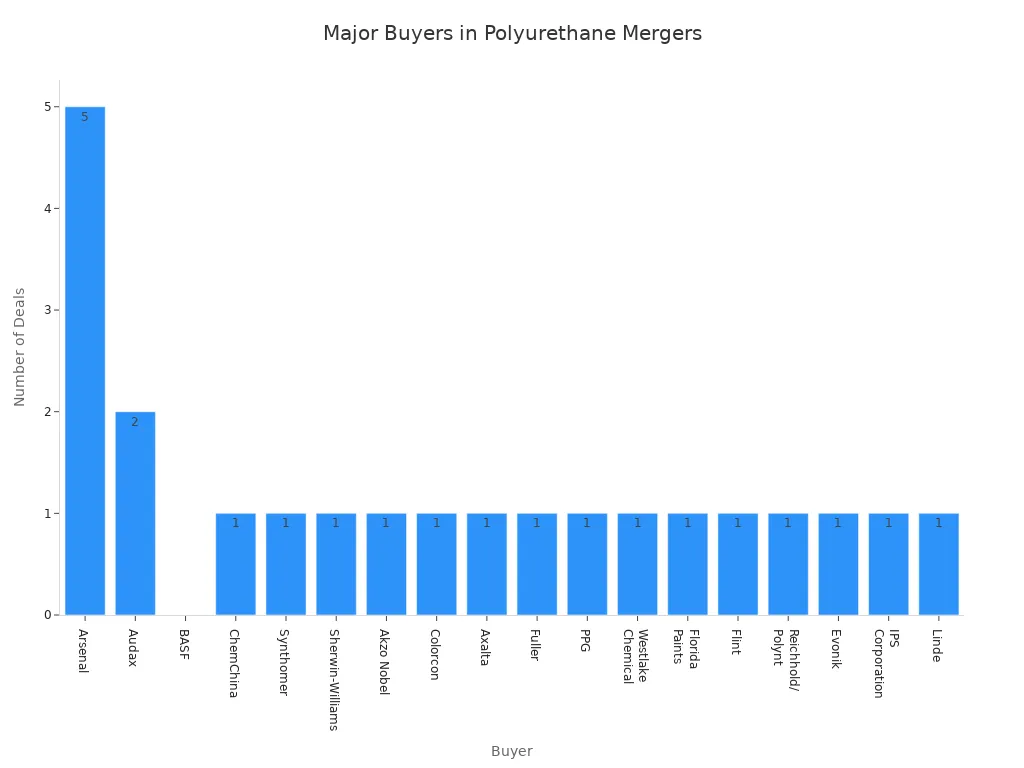
These collaborations help companies access new technologies and markets, strengthening their positions worldwide.
New Entrants
New entrants continue to influence the polyurethane sector by targeting niche markets and promoting sustainable solutions. Companies such as Sun Polymers International and Brilliant Group focus on environmentally friendly products and innovative applications. Their efforts respond to growing environmental concerns and shifting consumer preferences. This trend encourages established players to accelerate their own sustainability initiatives and adapt to changing market demands.
The presence of new entrants increases competition and drives the industry toward more sustainable and specialized offerings.
Polyurethane materials will shape industries through market growth, innovation, and sustainability. Companies see rising demand for energy-efficient and lightweight solutions. The table below highlights practical steps for industry professionals:
| Insight Type | Details |
|---|
| Market Size | Industry reached USD 88.3 Billion in 2025. |
| Projected Growth | Expected to hit USD 130.3 Billion by 2034. |
| Key Drivers | Energy efficiency, automotive innovation, sustainable production. |
| Recent Innovations | Polyether-based polyurethane for footwear showcased at IIFF 2025. |
Staying updated on these trends helps businesses remain competitive and future-ready.
FAQ
What are the main uses of polyurethane materials?
Polyurethane materials appear in construction, automotive, furniture, medical devices, and packaging. They provide insulation, comfort, durability, and flexibility. Manufacturers choose polyurethane for its versatility and performance.
How do companies make polyurethane more sustainable?
Companies use bio-based polyols, chemical recycling, and non-isocyanate formulations. They invest in greener chemistry and develop products with lower environmental impact. Regulations encourage these sustainable practices.
Which regions lead in polyurethane market growth?
Asia-Pacific leads in market share and growth. China and India drive demand with construction and automotive industries. North America focuses on innovation and sustainability. Europe invests in infrastructure and eco-friendly materials.
What innovations shape the future of polyurethane?
Advanced formulations, digitalization, smart materials, and additive manufacturing drive innovation. Companies like Shanghai Further New Material Technology Co., Ltd. develop high-performance and eco-friendly solutions for diverse applications.
How does additive manufacturing benefit polyurethane products?
Additive manufacturing enables rapid prototyping, complex designs, and customized solutions. It reduces supply chain risks and supports high-performance applications in aerospace, automotive, and industrial sectors.

 English
 English
  Spanish
  Russian
  Arabic
  French
  German
  Portuguese
  Turkish
  Dutch
Dutch  Polish
  Korean
  Vietnamese
  Indonesian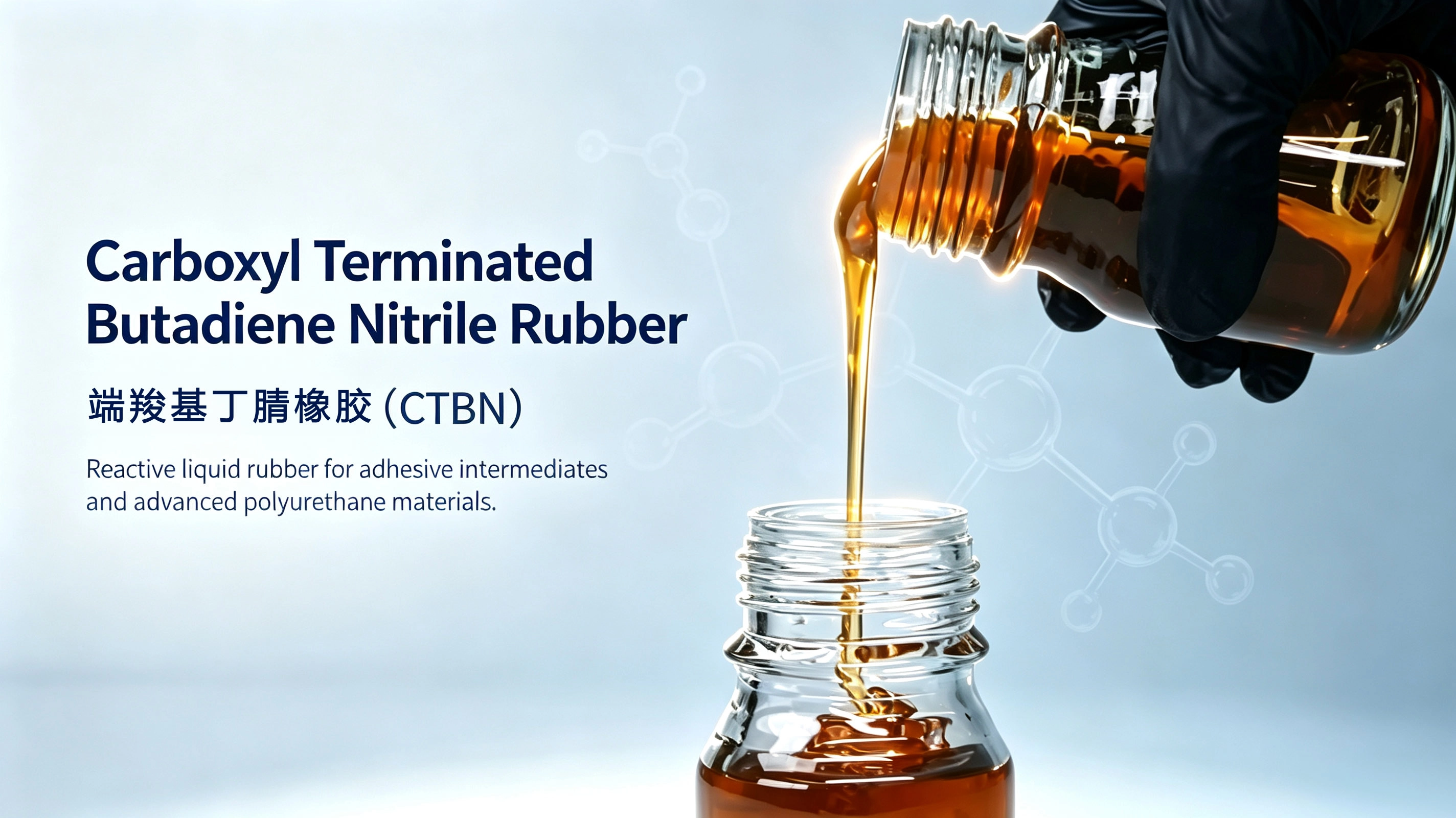
 11. Aug, 2026