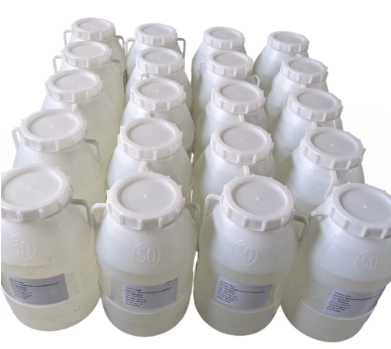
Can RE replace Desmodur RE? Many industrial users are searching for a Desmodur RE alternative to meet the demands of challenging applications. When considering RE vs Desmodur RE, both products are widely used in high-performance coatings, adhesives, and sealants, playing essential roles in industries such as automotive and construction. The following table highlights typical uses for each product:
Application Type | Description |
High-performance coatings | Utilized in automotive and industrial coatings for enhanced durability and performance. |
Adhesives | Delivers strong bonding capabilities across various adhesive formulations. |
Sealants | Perfect for construction sealants thanks to its superior weather resistance and adhesion. |
A technical comparison of RE vs Desmodur RE enables professionals to make informed decisions when selecting the right product for their needs.
Can RE Replace Desmodur RE?
Immediate Verdict
Industrial users often ask, can re replace desmodur re in demanding applications? The answer depends on the specific requirements of each process. Further’s Triphenylmethane -4,4',4'-triisocyanate (RE) offers a high-performance solution that matches many of the technical characteristics found in Desmodur RE. Both products serve as essential crosslinkers and curing agents in adhesives, coatings, and sealants. In most cases, RE can act as a desmodur re alternative, especially in applications that require strong bonding, rapid cross-linking, and excellent durability.
Note: Professionals should always evaluate the compatibility of RE with their unique formulations and processing conditions before making a full substitution.
Key Considerations
Several factors influence the interchangeability in the re vs desmodur re comparison. Users should review the following points before making a decision:
Chemical Structure and NCO Content
RE and Desmodur RE share similar chemical backbones and both deliver high NCO content. This property ensures effective crosslinking and strong adhesive performance.
Application Compatibility
RE demonstrates excellent results in rubber adhesives, rubber-to-metal bonding, and polyurethane coatings. These applications mirror the strengths of Desmodur RE, making RE a suitable desmodur re alternative in many industrial settings.
Processing and Handling
Both products require careful storage and protection from moisture. RE offers a shelf life of up to 12 months when stored below 32°C in sealed containers.
Performance in Harsh Environments
RE provides outstanding aging and solvent resistance. This feature supports its use in automotive, construction, and manufacturing sectors.
Cost and Availability
RE stands out as a cost-effective option. Many users find it easier to source, which can help reduce supply chain risks.
Tip: Always conduct small-scale trials when switching from Desmodur RE to RE. This approach helps confirm performance and compatibility in your specific process.
The re vs desmodur re debate centers on technical fit and application needs. By considering these key factors, professionals can make informed decisions about whether RE can replace Desmodur RE in their operations.
RE vs Desmodur RE: Technical Comparison

Chemical Structure & NCO Content
Triphenylmethane -4,4',4'-triisocyanate (RE) and Desmodur RE both feature aromatic triisocyanate structures. This similarity forms the foundation for their comparable performance in industrial applications. RE contains approximately 9.3% NCO content, which matches the typical range found in Desmodur RE. High NCO content supports efficient crosslinking and strong bonding. The presence of ethyl acetate as a solvent in RE ensures easy mixing and application. Both products require careful handling to avoid moisture exposure, as water can react with isocyanate groups.
Reactivity & Crosslinking
Reactivity plays a crucial role in determining the effectiveness of a crosslinker. RE demonstrates rapid crosslinking at room temperature, which allows for fast processing and short curing times. Desmodur RE also exhibits high reactivity, making both products suitable for time-sensitive manufacturing environments. The ability to form dense crosslinked networks gives adhesives and coatings their strength and flexibility. In a performance comparison, RE matches Desmodur RE in terms of reactivity and crosslinking efficiency.
Adhesion & Durability
Strong adhesion and long-term durability are essential for industrial adhesives and coatings. RE delivers excellent bonding strength, especially in rubber-to-metal and rubber-to-fabric applications. This property makes it a reliable desmodur re alternative for users who require robust performance under stress. Both RE and Desmodur RE resist aging, solvents, and environmental factors. These features ensure that bonded materials maintain their integrity over time. The re vs desmodur re debate often centers on these qualities, as users seek products that can withstand demanding conditions.
Tip: Users should always test new formulations to confirm compatibility and performance in their specific processes.
Performance in Industrial Applications

Rubber Adhesives & Rubber-to-Metal Bonding
Industrial users rely on adhesives for strong and reliable bonds. Triphenylmethane -4,4',4'-triisocyanate (RE) demonstrates excellent performance in rubber adhesives and rubber-to-metal bonding. Manufacturers use RE to achieve high-strength bonds in tires, vibration dampers, and seals. The product supports rapid cross-linking, which helps speed up production. Desmodur RE also performs well in these applications. Many companies consider RE a desmodur re alternative because it delivers consistent results and maintains durability under stress.
Polyurethane Coatings & Elastomers
Polyurethane coatings and elastomers require materials with high mechanical strength and flexibility. Both RE and Desmodur RE serve as effective crosslinkers in these systems. The following table compares performance metrics for polyurethane elastomer production using Desmodur RE with various polyols:
Property | Desmodur 0129m + Voranol 3003 | Desmodur 0129m + Capa 2201 | Desmodur 0129m + Daltocoat 4200 | Desmodur 0129m + Bayhydrol AXP 2705 |
Shore A Hardness | 75 | 82 | 88 | 68 |
Tensile Strength (MPa) | 18.2 | 32.5 | 36.1 | 14.3 |
Elongation at Break (%) | 420 | 380 | 320 | 390 |
Tear Strength (kN/m) | 65 | 92 | 105 | 58 |
Tg (DMA, tan δ peak, °C) | -25 | 15 | 28 | -10 |
Density (g/cm³) | 1.02 | 1.10 | 1.15 | 1.05 |
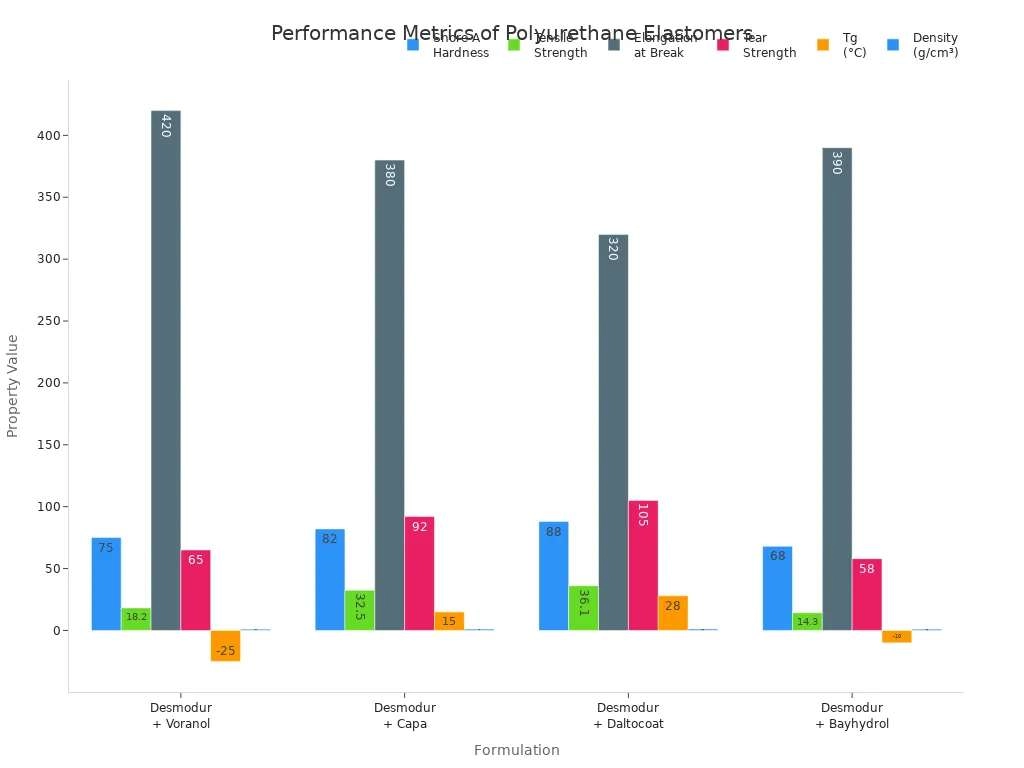
RE matches Desmodur RE in mechanical properties, making it suitable for elastomer and coating applications. Users often ask, can re replace desmodur re in these demanding environments? The answer depends on the specific formulation, but RE provides comparable performance.
Environmental & Aging Resistance
Adhesives and coatings must withstand harsh environments. RE and Desmodur RE both offer strong resistance to aging, solvents, and chemicals. The following points highlight their performance:
· UV Resistance: Desmodur N3600 prevents yellowing and maintains gloss retention, achieving over 90% gloss retention after 2,000 hours of UV exposure.
· Chemical Resistance: Both products form dense cross-linked networks, showing no blistering or delamination after 500 hours of exposure to 10% sulfuric acid and 10% sodium hydroxide.
RE supports long-term durability in automotive, construction, and manufacturing sectors. The re vs desmodur re comparison shows that both products protect materials from environmental damage and maintain performance over time.
Cost and Processing Factors
Cost-Effectiveness
Industrial users often compare the cost of RE and Desmodur RE when selecting a crosslinker. Further’s Triphenylmethane -4,4',4'-triisocyanate (RE) stands out as a cost-effective solution. Many manufacturers choose RE to optimize their production budgets without sacrificing performance. Desmodur RE, a well-established product, typically commands a premium price due to its brand reputation and widespread use. RE offers competitive pricing, making it attractive for companies seeking to reduce material costs in adhesives, coatings, and elastomers.
Companies can achieve significant savings by switching to RE, especially in large-scale operations. Lower material costs contribute to improved profitability and allow for greater flexibility in product development.
Processing & Storage
Proper handling and storage play a crucial role in maintaining the quality of both RE and Desmodur RE. Industrial users must protect these products from moisture, as exposure can trigger unwanted reactions. RE contains ethyl acetate, which supports easy mixing and application. Users should store RE in its original sealed container at temperatures below 32°C. This practice ensures stability and preserves the product’s effectiveness for up to 12 months. Desmodur RE also requires similar storage conditions, with an official shelf life of 12 months from the date of production.
Always check the product label for storage instructions. Keeping containers tightly closed and away from humidity helps maintain product integrity.
The following table summarizes cost, shelf life, and handling for both products:
Product | Cost Level | Shelf Life (Unopened, Ideal) | Handling Notes |
Further's RE | Competitive | 12 months | Store below 32°C, protect from moisture |
Desmodur RE | Premium | 12 months | Store below 32°C, protect from moisture |
Industrial users benefit from clear guidelines on storage and handling. Both RE and Desmodur RE deliver reliable performance when managed correctly. Choosing RE can help companies balance cost and operational efficiency while maintaining high standards in production.
Desmodur RE Alternative: Practical Implications
Application Suitability
Industrial users often evaluate the suitability of Further’s RE for their specific processes. RE performs well in rubber adhesives, rubber-to-metal bonding, and polyurethane coatings. Manufacturers in the automotive, construction, and footwear sectors rely on RE for high-strength bonding and rapid cross-linking. The product supports a sustainable polyurethane formulation, which appeals to companies seeking eco-friendly solutions. RE also shows compatibility with natural rubber, neoprene, and polyurethane materials. Users can apply RE in two-component coatings and elastomers, achieving reliable results across a wide range of applications.
Tip: Small-scale testing helps confirm that RE meets the requirements of each unique process.
Trade-Offs & Limitations
Switching from Desmodur RE to Further’s RE introduces several trade-offs. Polyurethane formulations using bio-based isocyanate display higher viscosity, measured at 10.5 Pa*s, compared to fossil-based isocyanate at 0.6 Pa*s. This increased viscosity shortens gel time, which affects the transition from sol to gel. Faster polymerization kinetics may cause more bubbles to form in polyurethane films, impacting mechanical properties. Industrial users must monitor these changes during production. Adjustments in mixing and curing procedures can help maintain product quality.
· Shorter gel time requires careful timing.
· Higher viscosity may affect flow and application.
· Bubble formation can influence final material strength.
Regulatory & Supply Chain Notes
Regulatory compliance remains important for industrial users. Both RE and Desmodur RE meet industry standards for safety and environmental protection. Further’s RE offers reliable supply, which helps companies reduce risks related to sourcing and logistics. Manufacturers benefit from clear labeling and storage guidelines. The product’s shelf life of 12 months supports inventory management. Companies can trust Further’s commitment to quality and consistent delivery.
Factor | Further's RE | Desmodur RE |
Regulatory Compliance | Meets industry norms | Meets industry norms |
Supply Chain | Reliable, cost-effective | Established, premium |
Shelf Life | 12 months | 12 months |
Note: Reliable supply and regulatory compliance help companies maintain smooth operations and meet customer expectations.
Further’s Recommendations
Summary Table: RE vs Desmodur RE
The following table provides a clear comparison of Further’s Triphenylmethane -4,4',4'-triisocyanate (RE) and Desmodur RE. This summary helps professionals quickly identify the key technical and practical differences.
Feature | Further’s RE | Desmodur RE |
Chemical Structure | Aromatic triisocyanate | Aromatic triisocyanate |
NCO Content | ~9.3% | ~9.3% |
Solvent | Ethyl acetate | Ethyl acetate |
Reactivity | Rapid crosslinking at room temperature | Rapid crosslinking at room temperature |
Adhesion Strength | Excellent (rubber, metal, polyurethane) | Excellent (rubber, metal, polyurethane) |
Durability | High aging and solvent resistance | High aging and solvent resistance |
Shelf Life | 12 months (sealed, <32°C) | 12 months (sealed, <32°C) |
Cost | Competitive | Premium |
Supply Chain | Reliable, flexible | Established, global |
Support & QA | Direct technical support, quality assurance | Standard industry support |
Guidance for End Users
Professionals seeking a Desmodur RE alternative can consider Further’s RE for a wide range of industrial applications. The product matches Desmodur RE in chemical structure, NCO content, and performance. Users in the automotive, construction, and manufacturing sectors can benefit from its strong adhesion and rapid crosslinking.
Recommended Steps for Switching:
Evaluate Compatibility:
Test RE in small batches with existing formulations. Confirm that the product meets performance targets.
Optimize Processing:
Adjust mixing and curing parameters if needed. Monitor viscosity and gel time during production.
Consult Further’s Experts:
Reach out to Further’s technical team for guidance. They provide support for formulation adjustments and troubleshooting.
Leverage Quality Assurance:
Rely on Further’s commitment to product consistency. Each batch undergoes strict quality checks.
Tip: Further offers documentation and technical resources to help users transition smoothly. Their support team responds quickly to inquiries and provides practical solutions.
By following these steps, companies can confidently adopt Further’s RE as a reliable and cost-effective alternative to Desmodur RE.
The technical comparison shows that Further’s RE can replace Desmodur RE in most industrial applications. RE matches Desmodur RE in chemical structure, NCO content, and performance. The following table highlights key advantages and trade-offs:
Criteria | Advantage | Trade-Off |
Performance | High mechanical strength | Not ideal for low-cost projects |
Cost-effectiveness | Competitive pricing | Higher raw cost than TDI/MDI |
Longevity | Excellent durability | Requires careful processing |
Professionals should test RE in their formulations. Further’s technical team offers support and resources for a smooth transition.
FAQ
What is the main difference between Further’s RE and Desmodur RE?
Further’s RE and Desmodur RE share similar chemical structures and NCO content. The main difference lies in cost and supply chain flexibility. Further’s RE offers competitive pricing and reliable sourcing, making it attractive for industrial users.
Can Further’s RE be used in all applications where Desmodur RE is specified?
Most industrial applications accept Further’s RE as a substitute for Desmodur RE. Users should conduct small-scale tests to confirm compatibility with their specific formulations and processing requirements.
How should Further’s RE be stored to maintain quality?
Store Further’s RE in its original sealed container below 32°C. Protect the product from moisture to prevent unwanted reactions. Proper storage ensures a shelf life of up to 12 months.
Does Further provide technical support for switching from Desmodur RE?
Further’s technical team offers direct support and quality assurance. They help users optimize formulations and troubleshoot processing challenges during the transition from Desmodur RE.
Is Further’s RE environmentally friendly?
Further’s RE supports sustainable polyurethane formulations. The product demonstrates compatibility with eco-f

 English
 English
  Spanish
  Russian
  Arabic
  French
  German
  Portuguese
  Turkish
  Dutch
Dutch  Polish
  Korean
  Vietnamese
  Indonesian
 05. Aug, 2026