Adhesive performance is often judged by tensile strength, lap shear strength, or peel strength measured under controlled laboratory conditions. These values are useful for comparing formulations, but they reveal only part of the story. In real applications, adhesive joints rarely experience a single, steadily increasing load. They are exposed to vibration, repeated impact, thermal expansion and contraction, cyclic bending, and continuous stress redistribution over months or years of service. Under these conditions, durability becomes far more important than peak strength.
Many adhesive failures occur even though the original bond strength met the design requirements. The reason is that most failures begin as microscopic damage long before they become visible. Tiny cracks form within the adhesive layer or at the bonding interface, gradually growing with every loading cycle until the joint can no longer distribute stress effectively. By the time a crack reaches a visible size, failure is often unavoidable.
This is why formulation engineers increasingly focus on reactive liquid rubber rather than conventional flexibility modifiers. Instead of simply making an adhesive softer, reactive liquid rubber becomes part of the cured polymer network. The result is not only improved flexibility but also a more stable mechanism for dissipating stress, slowing crack propagation, and extending the service life of bonded structures operating under dynamic conditions.
Dynamic Loading Creates Different Failure Mechanisms Than Static Testing
Static mechanical testing is designed to determine how much force an adhesive joint can withstand before failure. While these values are important for quality control, they rarely represent actual service conditions. An adhesive joining two steel components in industrial machinery, for example, may never experience its maximum design load. Instead, it endures millions of small stress cycles generated by vibration, equipment startup, shutdown, and minor structural movement.
Every loading cycle causes the adhesive layer to deform slightly. Although the deformation may be too small to detect, it changes the stress distribution inside the polymer network. Regions with higher stress concentration gradually become preferred locations for microscopic crack initiation. Once these microcracks appear, every subsequent loading cycle provides another opportunity for them to grow.
The same principle applies to electronic assemblies, automotive structures, railway components, and wind turbine blades. Their adhesive joints spend far more time resisting repeated movement than carrying maximum loads. For these applications, long-term fatigue resistance often determines service life more accurately than ultimate tensile strength.
Loading Condition | Typical Stress Behavior | Common Failure Mechanism |
Static loading | Continuous increasing load | Plastic deformation or fracture |
Cyclic loading | Repeated stress fluctuations | Fatigue crack growth |
Impact loading | Sudden high stress | Brittle fracture |
Thermal cycling | Expansion and contraction | Interface debonding and microcracking |
This distinction explains why two adhesives with similar tensile strength may perform very differently after several years in service. Their ability to withstand repeated stress depends not only on strength but also on how effectively the polymer network absorbs and redistributes mechanical energy.
Crack Growth Is Usually More Important Than Crack Initiation
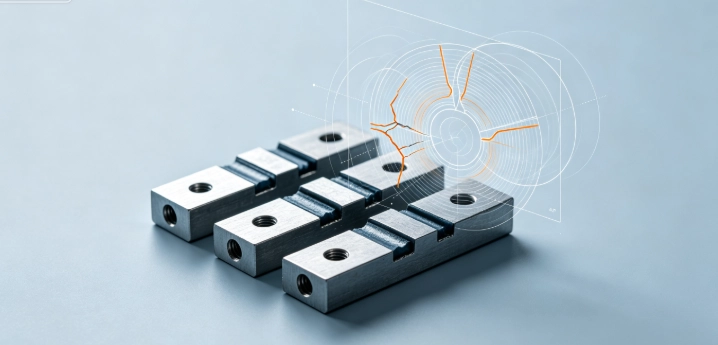
Engineering discussions often focus on preventing cracks from forming, but in practical adhesive systems, completely eliminating microscopic defects is almost impossible. Minor imperfections may originate from curing shrinkage, thermal mismatch, filler distribution, or unavoidable manufacturing tolerances. What determines long-term durability is not whether these tiny defects exist, but whether they are able to develop into critical cracks.
Every advancing crack creates a highly concentrated stress field at its tip. Without an effective toughening mechanism, this concentrated stress continues driving the crack through the cured adhesive until structural failure occurs. Reactive liquid rubber changes this process by modifying how stress is distributed around the crack tip.
Instead of allowing stress to remain concentrated within a narrow region, the rubber-modified polymer network spreads mechanical energy over a larger volume. This redistribution slows crack growth, increases the amount of energy required for fracture, and delays catastrophic failure. From an engineering perspective, extending crack propagation time is often far more valuable than attempting to eliminate every microscopic defect during manufacturing.
This is one reason why fracture toughness has become an increasingly important evaluation parameter for structural adhesives. It reflects the material's ability to resist crack growth rather than simply measuring the force required to create the first fracture.
Why Reactive Liquid Rubber Behaves Differently From Conventional Modifiers
Many conventional modifiers improve flexibility by physically blending with the resin. Although this approach can reduce brittleness, the modifier itself does not become an integral part of the cured polymer network. Under prolonged loading or elevated temperatures, physical migration, uneven phase distribution, or reduced compatibility may gradually decrease mechanical performance.
Reactive liquid rubber follows a different mechanism. Functional groups on the liquid rubber participate directly in curing reactions, allowing the modifier to become chemically incorporated into the crosslinked structure rather than remaining as an independent component. This chemical integration provides a much more stable microstructure throughout the service life of the adhesive.
Chemical bonding creates a stable polymer network
During curing, reactive liquid rubber forms chemical connections with the surrounding resin system. Instead of acting as a soft filler dispersed inside the adhesive, it contributes to the architecture of the polymer network itself. This distinction becomes particularly important when the bonded assembly experiences continuous mechanical cycling.
Because the modifier is chemically anchored within the cured structure, stress can be transferred more uniformly between the matrix and the dispersed rubber domains. The result is a polymer network capable of maintaining toughness without sacrificing long-term structural stability.
Energy absorption slows crack propagation
One of the greatest advantages of reactive liquid rubber is its ability to dissipate mechanical energy before cracks accelerate. As a crack encounters rubber-rich regions within the cured adhesive, part of the applied energy is consumed through localized deformation rather than being used to extend the crack.
Instead of travelling rapidly through a rigid polymer matrix, the crack is repeatedly deflected, slowed, or forced to change direction. These microscopic events require additional fracture energy, effectively increasing fatigue life even when static tensile strength changes very little.
This mechanism explains why many rubber-modified structural adhesives demonstrate substantially longer service life despite only moderate improvements in conventional mechanical test data.
Mechanical flexibility remains stable during repeated loading
Adhesives operating in vehicles, industrial equipment, aerospace structures, and renewable energy systems experience millions of deformation cycles throughout their lifetime. A modifier that merely softens the adhesive initially may gradually lose effectiveness if it does not remain fully integrated with the polymer network.
Reactive liquid rubber maintains flexibility through its participation in the cured structure rather than through temporary plasticization. As a result, the adhesive is better able to accommodate repeated deformation while reducing internal stress accumulation around rigid interfaces.
Different Applications Demand Different Toughening Strategies
Although fatigue is a common challenge across many industries, the source of dynamic loading varies considerably from one application to another. Selecting a reactive liquid rubber therefore requires understanding not only the adhesive chemistry but also the service environment.
· Automotive structures experience continuous vibration, road shock, and thermal cycling that repeatedly load bonded joints.
· Electronic assemblies undergo expansion and contraction caused by temperature fluctuations, creating internal stresses between materials with different coefficients of thermal expansion.
· Wind turbine blades are subjected to constant cyclic bending, where adhesive joints must survive millions of loading cycles throughout decades of operation.
· Rail transportation systems combine vibration, impact, and environmental exposure, placing exceptional demands on adhesive durability.
Rather than searching for a universal modifier, formulation engineers typically begin by identifying the dominant failure mechanism expected in service. That understanding provides the foundation for selecting the most appropriate reactive liquid rubber chemistry.
Selecting the Right Reactive Liquid Rubber for Different Adhesive Systems
Reactive liquid rubber is not a single material but a family of polymers with different functional groups and curing behavior. Their performance depends on how they interact with the resin system rather than on individual physical properties. For formulation engineers, selecting the right chemistry is usually more effective than increasing modifier loading or adjusting filler content later in development.
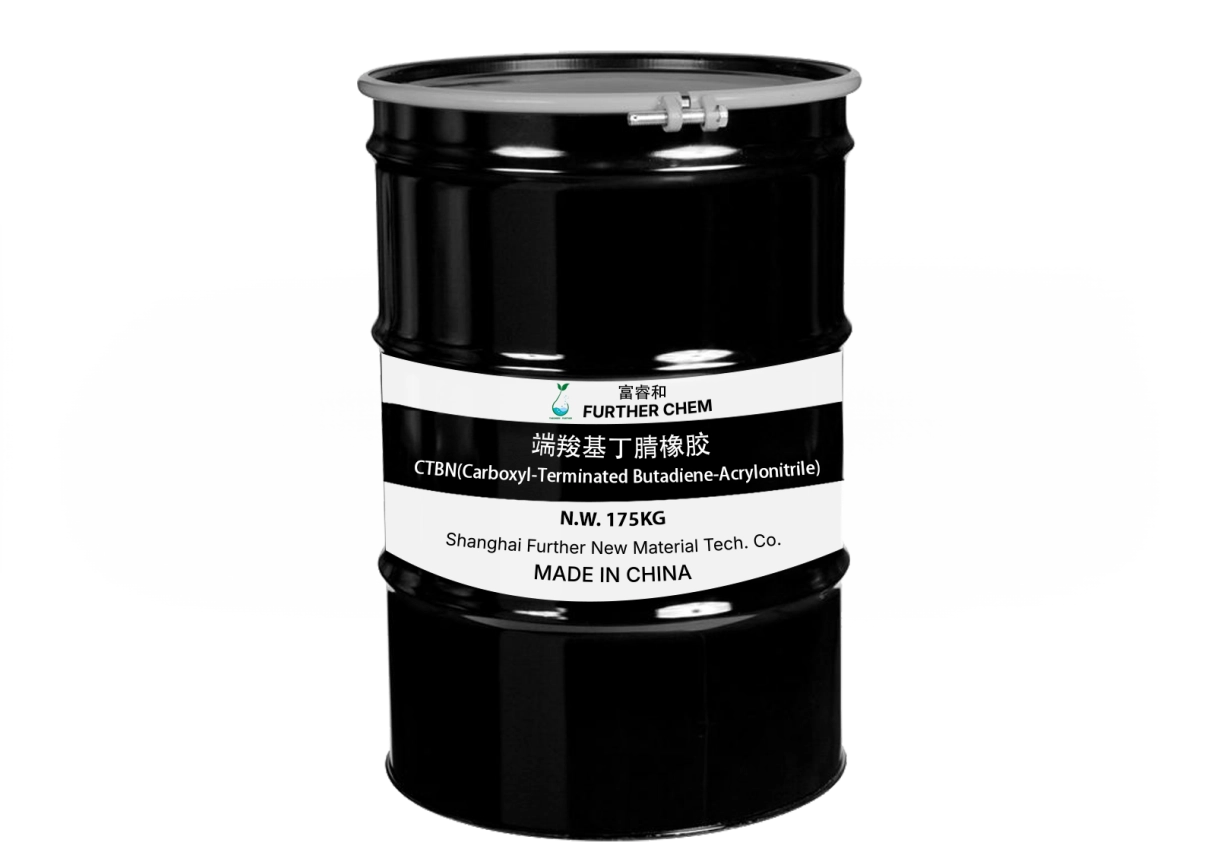
For epoxy structural adhesives, improving fracture toughness without sacrificing stiffness is often the primary objective. In these systems, CTBN (Carboxyl-Terminated Butadiene Nitrile Rubber) has become one of the most established toughening agents because its functional groups participate effectively in epoxy curing while promoting controlled rubber phase formation. Properly dispersed rubber domains absorb energy during crack propagation, significantly improving fatigue resistance under cyclic loading.
Polyurethane adhesives present a different challenge. Their flexibility is already built into the polymer backbone, so the focus shifts toward maintaining elasticity while improving long-term mechanical stability. HTPB (Hydroxyl-Terminated Polybutadiene) reacts directly with isocyanates to become part of the polyurethane network, helping the adhesive accommodate repeated deformation without excessive stress concentration.
Some adhesive systems require stronger interaction with polar substrates or improved compatibility within highly polar resin formulations. ATBN (Amine-Terminated Butadiene Nitrile Rubber) is frequently considered for these applications because its terminal amine groups increase chemical interaction with compatible resin systems while contributing additional toughness.
Where outdoor durability becomes equally important, hydrogenated liquid rubber grades provide additional resistance to oxidation and ultraviolet degradation. Although weather resistance may not directly increase fatigue life, maintaining polymer integrity over years of environmental exposure helps preserve the adhesive's original mechanical properties and delays age-related embrittlement.
Adhesive System | Primary Engineering Challenge | Suitable Reactive Liquid Rubber |
Epoxy structural adhesive | Crack propagation and fatigue | CTBN |
Polyurethane adhesive | Flexibility and cyclic deformation | HTPB |
High-polarity adhesive systems | Compatibility and adhesion | ATBN |
Outdoor adhesive applications | UV and oxidation resistance | Hydrogenated HTPB |
Selecting among these materials should always begin with the expected service environment rather than the product specification sheet. The same modifier can produce very different results depending on curing chemistry, substrate type, and loading conditions.
Formulation Decisions That Have the Greatest Impact on Adhesive Durability
Selecting a suitable modifier is only part of building a durable adhesive. Formulation decisions made during development often determine whether the potential benefits of reactive liquid rubber are fully realized.
Several issues appear repeatedly in failed formulation projects.
· Designing around tensile strength alone. Laboratory strength values are useful for comparison, but they provide limited information about fatigue performance. Adhesives subjected to continuous vibration often fail because of crack growth rather than insufficient ultimate strength.
· Creating an excessively rigid polymer network. Increasing crosslink density may improve hardness and heat resistance, but it also reduces the material's ability to redistribute stress. A highly rigid adhesive often develops localized stress concentrations that accelerate fatigue damage.
· Ignoring compatibility between modifier and resin. Even chemically reactive materials require suitable compatibility to produce a stable microstructure. Poor dispersion or uncontrolled phase separation can reduce toughness instead of improving it.
· Overlooking service conditions during development. Temperature fluctuations, humidity, mechanical vibration, and chemical exposure should all be considered before finalizing a formulation. Materials that perform well under laboratory conditions may respond very differently after years of field service.
Addressing these issues early in development usually shortens formulation cycles and reduces costly redesign work after prototype testing.
Durable Adhesives Are Designed Around Energy Management
A useful way to understand adhesive durability is to think less about strength and more about energy. Every vibration, impact, or thermal expansion event introduces mechanical energy into the bonded joint. If that energy remains concentrated within a small region, microscopic damage accumulates rapidly. If the polymer network can absorb, redistribute, and dissipate part of that energy, crack growth slows dramatically.
Reactive liquid rubber contributes to this process because it modifies the internal structure of the adhesive rather than acting only as a temporary flexibility enhancer. The cured network becomes more capable of accommodating repeated deformation while maintaining structural integrity over extended service periods.
For this reason, engineers increasingly evaluate adhesive systems using fracture toughness, fatigue life, and crack growth resistance alongside traditional tensile and shear strength measurements. These properties provide a more realistic indication of how the material will perform in demanding service environments.
Working with adhesive, polyurethane, and specialty polymer formulations, Shanghai Further New Material Technology Co., Ltd. supports customers in selecting reactive liquid rubber according to curing chemistry, processing requirements, and long-term application conditions instead of relying solely on standard material specifications.
Long-Term Reliability Begins at the Formulation Stage
The durability of an adhesive joint is determined long before the product reaches service. Material selection, compatibility, curing behavior, and network design all influence how the adhesive responds to years of cyclic loading. Reactive liquid rubber plays an important role because it changes the way the polymer network manages stress rather than simply increasing flexibility.
Whether the application involves industrial equipment, transportation, renewable energy, or electronic assembly, the most reliable adhesive formulations are those developed around realistic service conditions instead of isolated laboratory performance data. Selecting the appropriate reactive liquid rubber is therefore not simply a material choice—it is an engineering decision that directly affects fatigue resistance, crack propagation, and long-term structural reliability.
FAQ
Why do adhesives fail even when their tensile strength is high?
Tensile strength measures performance under a single increasing load. Most adhesive joints experience repeated vibration, thermal cycling, or impact, where fatigue crack growth rather than ultimate strength becomes the dominant failure mechanism.
How is reactive liquid rubber different from conventional plasticizers?
Reactive liquid rubber participates in the curing reaction and becomes part of the polymer network. Conventional plasticizers mainly improve flexibility through physical blending and may gradually migrate or lose effectiveness over time.
Which reactive liquid rubber is commonly used for epoxy structural adhesives?
CTBN is one of the most widely used reactive liquid rubbers for epoxy toughening because it improves fracture toughness and fatigue resistance while maintaining good compatibility with epoxy systems.
Can reactive liquid rubber improve adhesive durability without reducing strength?
Yes. When properly selected and formulated, reactive liquid rubber can increase fracture toughness and fatigue life while maintaining the mechanical strength required for structural applications. The improvement comes from better stress redistribution and resistance to crack propagation rather than simply lowering stiffness.

 English
 English
  Spanish
  Russian
  Arabic
  French
  German
  Portuguese
  Turkish
  Dutch
Dutch  Polish
  Korean
  Vietnamese
  Indonesian
 25. Aug, 2026