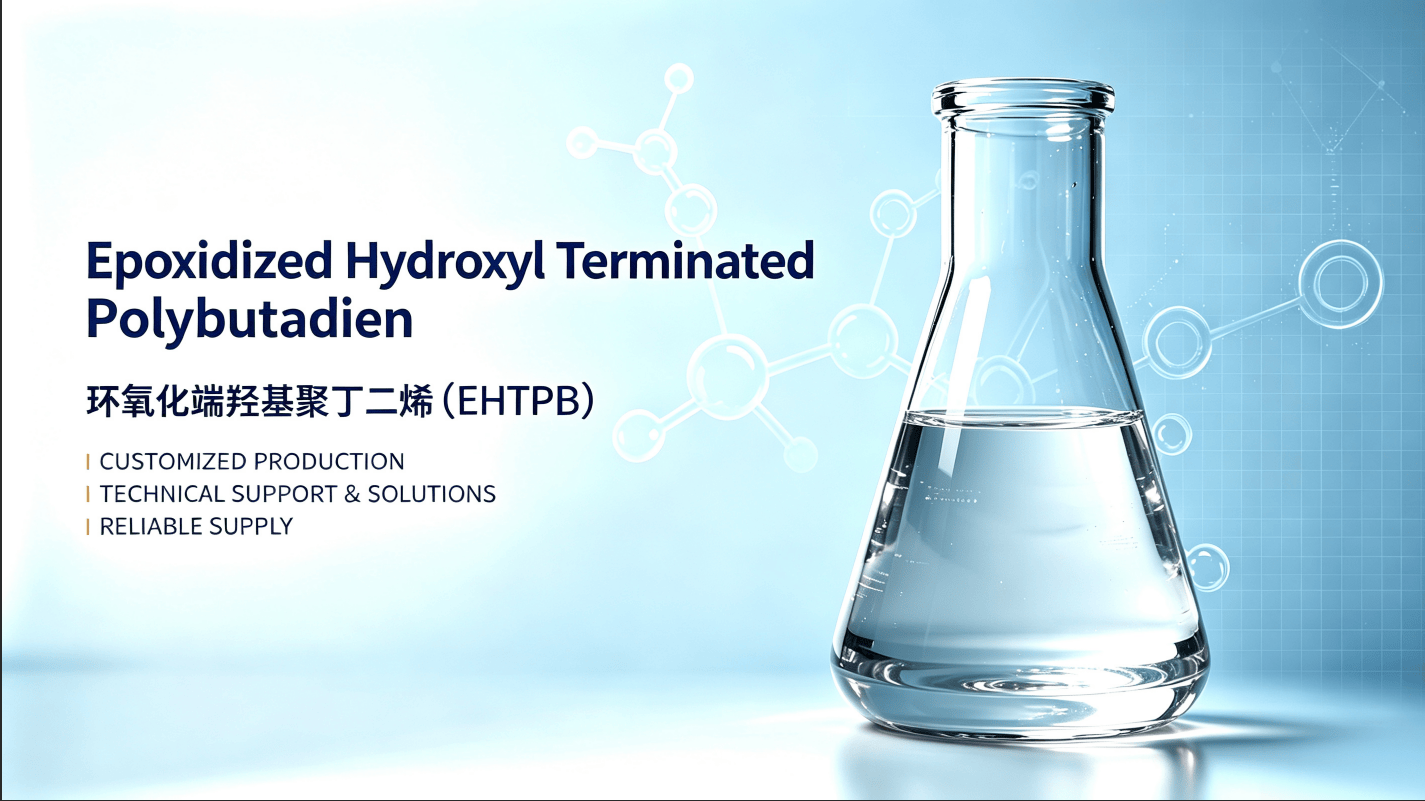
Selecting a liquid rubber is often treated as a product comparison exercise. Engineers compare viscosity, hydroxyl value, functionality, or molecular weight, then choose the material that appears to have the best specifications. In practice, this approach rarely produces the best formulation. Liquid rubber is not an independent material that works the same way in every system. Its performance is determined by how it interacts with the surrounding polymer network, the curing chemistry, the processing method, and the service conditions of the finished product.
The same liquid rubber may perform exceptionally well in one formulation and create processing problems in another. A modifier that significantly improves the toughness of an epoxy adhesive may contribute very little in a polyurethane elastomer. Likewise, increasing flexibility is not always the correct objective. In many applications, engineers are trying to slow crack propagation, improve fatigue resistance, reduce internal stress, or maintain mechanical stability after years of thermal cycling. These requirements demand different approaches to material selection.
For manufacturers developing adhesives, coatings, sealants, elastomers, and composite materials, the most important question is rarely "Which liquid rubber is the strongest?" It is "Which liquid rubber supports the way this polymer system is expected to perform?" Answering that question requires looking beyond product specifications and understanding the relationship between polymer chemistry and application performance.
Material Selection Begins With the Polymer System
Every high-performance polymer has its own curing mechanism, molecular structure, and failure mode. These differences determine how a liquid rubber behaves after it is incorporated into the formulation. Choosing a modifier before understanding the polymer system often leads to unnecessary formulation changes and longer development cycles.
An epoxy resin forms a highly crosslinked three-dimensional network during curing. This rigid structure provides excellent mechanical strength and chemical resistance, but it also makes the cured material susceptible to brittle fracture. Once a crack begins to grow, the network has limited ability to absorb mechanical energy. In these systems, liquid rubber is typically introduced to improve fracture toughness and reduce crack propagation rather than simply making the material softer.
Polyurethane systems behave differently. Their mechanical properties are controlled by the balance between soft segments and hard segments within the polymer chain. Depending on the formulation, polyurethane may already possess excellent flexibility. Here, the role of liquid rubber is often to improve low-temperature performance, fatigue resistance, or long-term durability without disrupting the balance between elasticity and strength.
Sealants and coatings introduce another set of considerations. Weatherability, UV resistance, dimensional stability, and adhesion to different substrates frequently become more important than maximum tensile strength. Selecting a modifier based only on laboratory mechanical data may therefore overlook the properties that determine long-term field performance.
For this reason, experienced formulation engineers usually begin by answering several practical questions before comparing products.
· What polymer system is being modified?
· What type of mechanical loading will the material experience?
· Which properties must remain unchanged after modification?
· Which failure mechanism needs to be prevented rather than simply delayed?
These questions establish the direction of formulation development and often eliminate unsuitable materials before laboratory work even begins.
The Best Liquid Rubber Is the One That Solves the Actual Engineering Problem
Material selection becomes much easier when the engineering objective is clearly defined. Unfortunately, many development projects start with a product rather than a problem. A customer requests better toughness, so additional rubber is added. Another requests greater flexibility, so a softer modifier is selected. While these changes may improve one property, they frequently create new compromises elsewhere in the formulation.
Consider two different adhesive systems. One joins steel components that experience constant vibration in industrial equipment. The other bonds transparent panels in electronic displays. Both require reliable adhesion, yet their priorities are completely different. The structural adhesive must resist fatigue and repeated mechanical loading, while the display adhesive must maintain optical clarity, dimensional stability, and resistance to yellowing. Expecting a single liquid rubber to optimize both systems would be unrealistic.
The same principle applies to polymer modification in general. Materials should be selected according to the problem they are expected to solve.
Engineering Objective | Primary Selection Consideration | Typical Performance Priority |
Improve fracture toughness | Rubber phase formation | Crack resistance |
Increase flexibility | Polymer compatibility | Elongation |
Reduce thermal stress | Low glass transition temperature | Dimensional stability |
Improve fatigue life | Energy absorption | Long-term durability |
Maintain low-temperature performance | Polymer mobility | Impact resistance |
A formulation designed around these objectives is generally more successful than one developed by comparing product datasheets alone.
Compatibility Determines Whether a Modifier Works or Fails
One of the least understood aspects of liquid rubber selection is compatibility. Two modifiers may have similar physical properties but behave completely differently once curing begins. This is because performance depends not only on the modifier itself but also on how it interacts with the growing polymer network.
During formulation, the liquid rubber is initially dispersed throughout the resin. As curing progresses, compatibility gradually changes. In some systems, microscopic rubber domains form naturally and become effective energy-absorbing regions that slow crack growth. In others, poor compatibility produces irregular particle sizes, unstable phase separation, or weak interfaces that actually reduce mechanical performance.
For formulators, this means compatibility cannot be evaluated simply by observing whether two materials mix together before curing. A homogeneous liquid mixture may still produce an undesirable microstructure after crosslinking has taken place.
Particle morphology is influenced by several variables working together.
· Polymer polarity
· Functional group chemistry
· Molecular weight
· Curing rate
· Processing temperature
· Mixing conditions
Changing only one of these factors rarely produces predictable results. Successful formulation therefore depends on understanding how the complete curing process affects the final polymer structure rather than treating liquid rubber as an isolated additive.
This is one reason reactive liquid rubber has become increasingly important in advanced polymer systems. Instead of remaining physically dispersed like conventional plasticizers, reactive materials become chemically integrated into the curing network, allowing the modifier to contribute to long-term mechanical performance rather than providing only temporary flexibility.

Different Liquid Rubber Chemistries Serve Different Polymer Systems
Although they are often grouped together, liquid rubber products have been developed to solve very different formulation challenges. Selecting the correct chemistry requires understanding both the polymer system and the performance target.
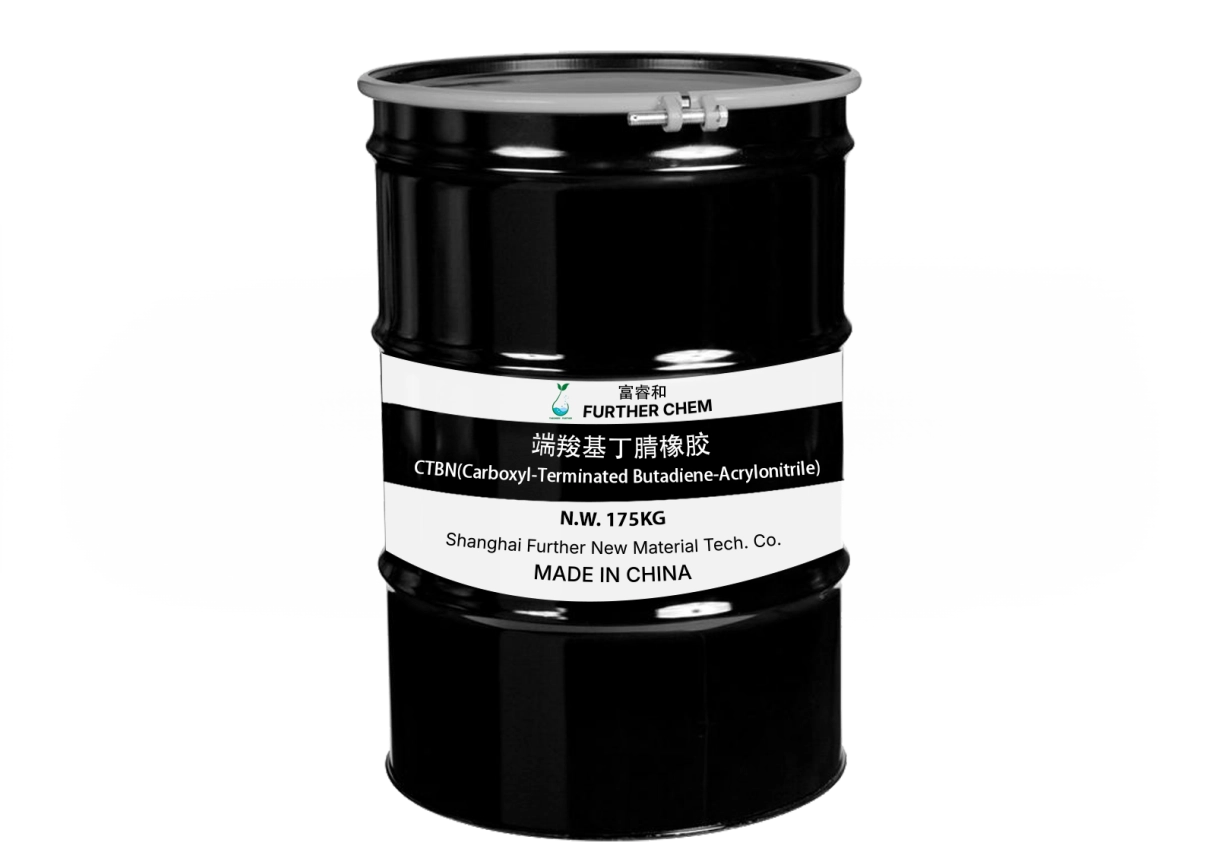
For epoxy formulations requiring improved fracture resistance, CTBN has become one of the most widely used solutions because its reactive carboxyl groups enable effective interaction with epoxy curing systems while promoting controlled rubber phase formation.
When polyurethane elastomers or flexible coatings require excellent elasticity together with low-temperature performance, HTPB is frequently selected because its hydroxyl functionality allows direct participation in polyurethane curing reactions while maintaining outstanding flexibility.
Some formulations demand greater polarity or stronger interaction with specific resin systems. In these situations, ATBN may offer advantages through improved compatibility with more polar polymers while still providing effective rubber toughening.
For applications exposed to prolonged outdoor service or elevated temperatures, hydrogenated liquid rubber grades are often considered because saturation of the polymer backbone improves resistance to oxidation, ultraviolet degradation, and long-term weathering.
Material selection therefore becomes less about identifying the "best" liquid rubber and more about matching polymer chemistry with application requirements.
Common Selection Mistakes That Slow Down Formulation Development
Many formulation projects take longer than expected, not because the polymer chemistry is particularly difficult, but because the wrong questions are asked at the beginning. Engineers often focus on comparing material specifications while overlooking the conditions that ultimately determine performance. A liquid rubber that appears ideal on paper may deliver disappointing results simply because the formulation objectives were never clearly defined.
One common example is selecting a modifier primarily by viscosity. Lower viscosity generally improves mixing and processing, but it says very little about how the material will behave after curing. A low-viscosity liquid rubber may disperse easily while providing limited improvement in fracture resistance, whereas a slightly higher-viscosity material with better chemical compatibility may produce a much tougher polymer network.
Another mistake is assuming that increasing modifier content will always improve performance. Rubber particles contribute to energy absorption only when their size, distribution, and interaction with the surrounding matrix remain balanced. Beyond a certain loading level, viscosity rises, curing behavior changes, and the modifier may begin to reduce heat resistance or stiffness without providing additional toughness.
Some development teams also overlook the service environment. A formulation that performs well under room-temperature laboratory testing may behave very differently after repeated exposure to moisture, UV radiation, fuels, hydraulic fluids, or continuous thermal cycling. These environmental factors often become the real cause of long-term failure rather than insufficient mechanical strength.
The most successful projects usually avoid these pitfalls by evaluating the complete formulation rather than optimizing a single material property.
Selecting the Right Chemistry for Different Applications
Different industries place very different demands on polymer systems, which explains why no single liquid rubber can satisfy every application. Understanding the operating environment often narrows the selection much more effectively than comparing technical data sheets.
Application | Main Performance Requirement | Recommended Liquid Rubber |
Structural epoxy adhesives | Fracture toughness and fatigue resistance | CTBN |
Polyurethane elastomers | Elasticity and low-temperature flexibility | HTPB |
Fuel and chemical resistant systems | Higher polarity and adhesion | ATBN |
Outdoor polyurethane coatings | UV and weather resistance | Hydrogenated HTPB |
Specialty binder systems | Customized functionality | CTPB / HTBN |
For structural adhesives, repeated mechanical loading is usually a greater concern than maximum tensile strength. The adhesive joint must continue absorbing stress throughout years of service without allowing cracks to propagate through the cured resin. In these systems, CTBN remains one of the most widely adopted modifiers because it improves fracture toughness while maintaining practical processing characteristics.
Polyurethane elastomers require a different balance. Flexibility is already part of the polymer design, so the objective is often to maintain elasticity over a broad temperature range while preserving mechanical stability. HTPB has become an important material in these formulations because its hydroxyl functionality allows it to react directly within polyurethane networks instead of behaving as an inert additive.
Where long-term weatherability becomes critical, particularly in outdoor applications, hydrogenated liquid rubber grades provide additional resistance to oxidation and ultraviolet degradation. These materials help maintain appearance and mechanical properties over extended service periods in environments where conventional unsaturated polymers may gradually deteriorate.
Material Selection Does Not End With the Product Specification
Selecting an appropriate liquid rubber is only one part of the development process. The ability of a supplier to provide technical support often has an equally important influence on project success.
Modern formulation work rarely follows standard recipes. Changes in curing agents, fillers, catalysts, processing temperatures, or manufacturing equipment can all affect the way a modifier behaves inside the polymer network. A material that performs well in one production environment may require adjustments when introduced into another.
For this reason, many manufacturers now evaluate suppliers according to their application knowledge rather than product availability alone. Technical discussions increasingly focus on questions such as:
· Can the modifier be customized for specific processing conditions?
· Has the material been validated in similar resin systems?
· Can the supplier assist with formulation optimization if compatibility issues arise?
· Is batch-to-batch consistency maintained through controlled manufacturing?
These questions often determine how efficiently a new formulation reaches commercial production.
Working with customers in adhesive, polyurethane, and specialty polymer applications, Shanghai Further New Material Technology Co., Ltd. approaches liquid rubber selection from an application perspective rather than recommending the same material for every formulation. Different polymer systems require different chemistries, and identifying those differences early in development usually produces more reliable long-term results than relying solely on laboratory specifications.
Building a Selection Strategy Instead of Comparing Products
Selecting liquid rubber for high performance polymer systems should never begin with a product catalogue. It should begin with understanding how the finished material is expected to perform after months or years of service.
The most effective selection strategy usually follows a logical sequence:
1. Define the polymer system and curing chemistry.
2. Identify the dominant failure mechanism.
3. Determine which properties must be improved without compromising others.
4. Evaluate compatibility between the modifier and the polymer network.
5. Confirm the formulation through processing and application testing rather than specification comparison alone.
Following this sequence helps avoid unnecessary reformulation and shortens development time because material selection becomes driven by engineering requirements instead of individual product properties.
As polymer systems continue evolving toward lighter structures, higher durability, and longer service life, the role of reactive liquid rubber will become increasingly important. Whether the application involves structural adhesives, polyurethane elastomers, composite materials, or specialty coatings, successful formulations will rely on selecting the right chemistry for the right environment rather than searching for a universal modifier.
Future articles in this series will examine individual liquid rubber families in greater depth, including how CTBN, ATBN, HTPB, Hydrogenated HTPB, and other reactive liquid rubbers are selected and optimized for specific polymer systems. These discussions build on the principles introduced here and provide more detailed guidance for engineers developing high-performance formulations.

 English
 English
  Spanish
  Russian
  Arabic
  French
  German
  Portuguese
  Turkish
  Dutch
Dutch  Polish
  Korean
  Vietnamese
  Indonesian
 31. Aug, 2026