Thermoset resins are valued for their high stiffness, dimensional stability, chemical resistance, and strong adhesion. Those same characteristics can make them vulnerable to brittle fracture. Once a crack forms, the highly crosslinked network has limited ability to deform around the crack tip, allowing the crack to propagate with relatively little additional energy.
Rubber modifiers change this behavior by introducing a flexible dispersed phase into the thermoset matrix. Their role is not simply to make a cured resin softer. When properly selected and dispersed, a rubber phase can alter the stress field around a growing crack, trigger local deformation, deflect the crack path, and dissipate mechanical energy before the crack can move through the matrix.
This is why rubber toughening of thermoset resins is fundamentally a fracture-control strategy. The effectiveness of the modifier depends on its functional groups, molecular structure, compatibility with the resin, particle morphology, loading level, and the interaction between the rubber phase and the surrounding thermoset network.
Rubber Modification Changes What Happens at the Crack Tip
In an unmodified thermoset, the crack tip is a highly concentrated region of mechanical stress. The crack does not need to break the entire material at once. Instead, the local stress concentration allows bonds and network structures immediately ahead of the crack to fail progressively.
Because a conventional epoxy or other rigid thermoset has limited plastic deformation, there may be only a small region around the crack tip capable of absorbing energy. Once the local fracture condition is reached, the crack can advance rapidly through the matrix.
A properly designed rubber phase changes the local response.
When a propagating crack encounters rubber particles or rubber-rich domains, the flexible phase can deform substantially more than the surrounding thermoset. Depending on particle size, interfacial adhesion, rubber content, and curing conditions, several mechanisms may occur at the same time:
· Rubber particles can undergo cavitation under high local stress.
· The surrounding thermoset can develop shear yielding and localized plastic deformation.
· The crack can be deflected, branched, or forced to travel around dispersed rubber domains.
· Rubber bridging and interfacial deformation can consume additional fracture energy.
The result is a more complicated fracture path and a larger region of material involved in energy dissipation. Instead of allowing the crack to move through a relatively direct path, the modified resin forces the fracture process to consume more energy.
Why Brittle Thermosets Allow Rapid Crack Propagation
The key issue is not necessarily low tensile strength. A thermoset can have high tensile strength while still exhibiting relatively poor resistance to crack propagation.
A pre-existing defect changes the situation. At the tip of that defect, stress is concentrated over a very small area. If the surrounding material cannot deform sufficiently, the crack can continue once the local fracture criterion is reached.
This distinction matters when evaluating a toughening system. A formulation that produces a higher tensile strength does not automatically provide better fracture toughness. Crack resistance must be evaluated using tests that specifically measure the energy or stress required to initiate and propagate a crack.
For engineering applications, the more useful question is therefore not simply whether a rubber modifier increases strength, but whether it changes the way the cured resin responds to a growing crack.
How a Rubber Phase Interrupts Crack Growth
A dispersed rubber phase acts as a series of local deformation sites within the rigid thermoset matrix. As the crack approaches a rubber domain, the mechanical conditions around the particle can become very different from those in an unmodified resin.
The rubber may deform first, creating a zone in which mechanical energy is absorbed. Depending on the formulation, this can initiate cavitation inside the rubber particle or debonding at the rubber-resin interface. The resulting stress redistribution can then promote deformation in the surrounding thermoset.
This creates a useful chain of events:
crack tip stress → rubber deformation → stress redistribution → matrix deformation → increased energy dissipation → slower crack propagation
The exact sequence depends strongly on the rubber chemistry and morphology. That is why simply adding a flexible polymer to an epoxy resin is not enough to guarantee effective toughening.
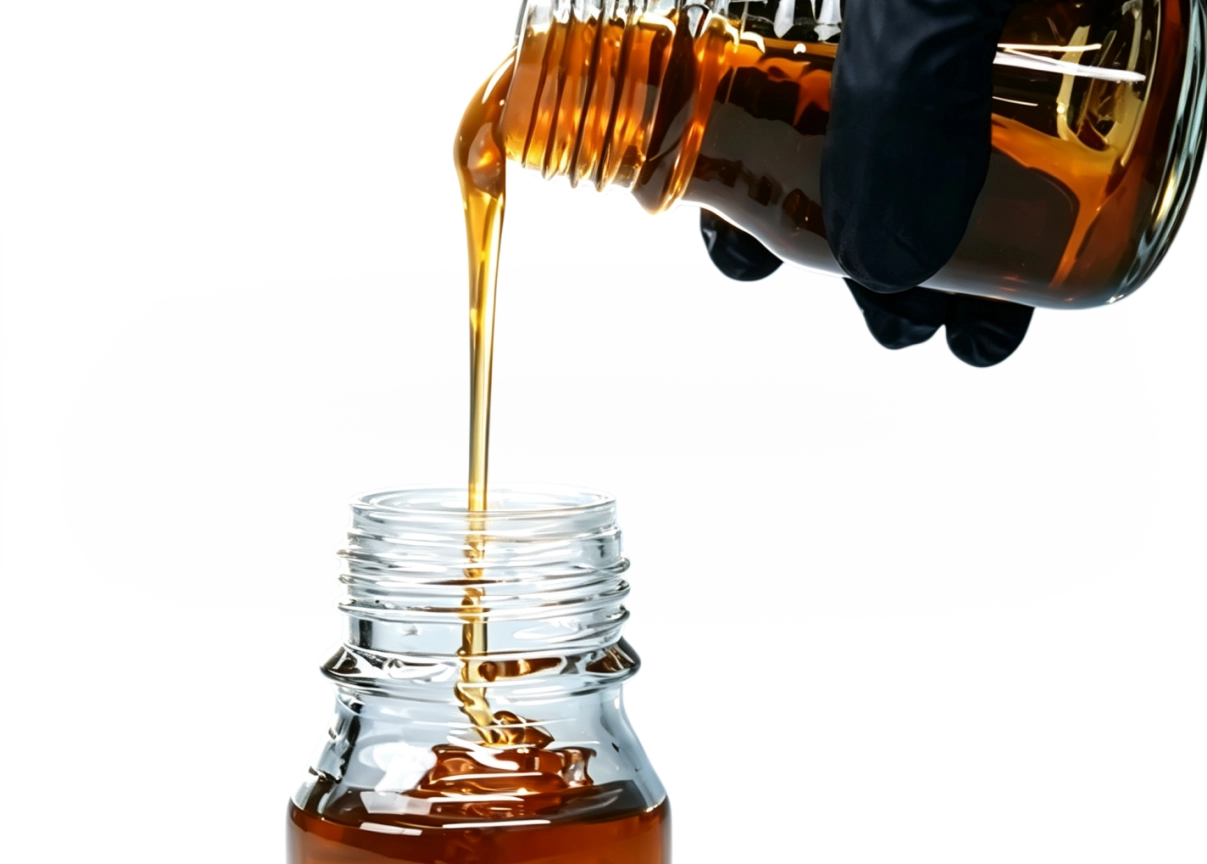
The Main Toughening Mechanisms Behind Rubber Modification
The performance of a rubber toughened thermoset resin comes from several mechanisms rather than one universal effect. Their relative importance depends on the rubber type, particle size, loading, curing system, and interfacial chemistry.
Rubber Particle Cavitation
Cavitation is one of the most widely discussed mechanisms in rubber-toughened epoxy systems.
When a rubber particle is subjected to sufficiently high hydrostatic stress near a crack tip, the particle can develop a cavity. This does not mean that the particle simply becomes a defect. The formation and growth of the cavity can change the surrounding stress field and promote deformation in the thermoset matrix.
That deformation consumes energy that would otherwise contribute directly to crack propagation.
The important point is that cavitation works together with matrix deformation. A rubber particle that cavitates without producing useful deformation in the surrounding resin may contribute much less to overall toughening than expected.
This is one reason the rubber-resin interface matters so much. The interface must be strong enough to transfer stress and generate the desired deformation, but not so strong that the rubber phase becomes incapable of responding to the stress state around the crack tip.
Shear Yielding in the Thermoset Matrix
Shear yielding can produce a much larger zone of energy dissipation than the immediate crack surface alone.
As rubber particles deform or cavitate, the surrounding epoxy matrix experiences a changed stress state. Localized shear deformation can develop between particles and around the crack tip. The matrix therefore absorbs additional energy through plastic deformation rather than allowing all of the applied energy to drive crack extension.
This is particularly important because the rubber phase itself is not necessarily responsible for absorbing all the fracture energy. Its role is partly to trigger a more energy-intensive response from the much larger volume of thermoset surrounding it.
For this reason, effective rubber toughening mechanisms in epoxy depend on the interaction between the rubber phase and the rigid matrix rather than on rubber flexibility alone.
Crack Deflection and Crack Pinning
A crack moving through an unmodified thermoset tends to follow the path of least resistance. Introducing well-dispersed rubber domains can disrupt that path.
The crack may curve around a particle, branch into several paths, or change direction after interacting with the rubber phase. Each deviation increases the complexity of the fracture process. More matrix material may need to deform before the crack can continue.
Crack pinning can also slow crack movement by forcing the advancing crack front to interact with dispersed domains rather than progressing uniformly.
This explains why rubber modified epoxy crack growth can differ substantially from that of the neat resin even when the overall rubber content is relatively low.
Rubber Bridging and Interfacial Effects
Rubber bridging can contribute to crack resistance when rubber-rich domains remain connected across or near the crack surfaces during propagation. The flexible phase can deform as the crack faces separate, providing an additional mechanism for energy absorption.
The interface has to be carefully controlled, however. An interface that is too weak may allow premature debonding and create defects rather than useful toughening sites. An interface that is excessively strong may restrict the deformation mechanisms needed to dissipate energy.
The objective is therefore not maximum adhesion between rubber and resin at any cost. It is controlled interfacial interaction that produces the desired fracture response.
Why CTBN Is Widely Used for Epoxy Toughening
Among reactive liquid rubbers, CTBN epoxy toughening has attracted particular attention because the chemistry of carboxyl-terminated butadiene acrylonitrile can be adapted to epoxy systems while providing a flexible rubber phase.
CTBN combines a butadiene-based flexible backbone with terminal carboxyl groups and acrylonitrile segments. This combination provides a useful balance between flexibility, polarity, and chemical reactivity.
Carboxyl Groups Improve Interaction with Epoxy
The carboxyl end groups provide reactive sites that can interact with epoxy curing systems. During formulation and curing, the rubber does not simply behave like an inert soft filler. Its chemistry influences how it integrates into the developing thermoset network.
This is particularly useful when designing a rubber modifier for epoxy resin, because the final morphology depends on both the initial compatibility and what happens during cure.
As curing proceeds, the system can develop a dispersed rubber phase within the increasingly rigid epoxy matrix. The resulting morphology determines how effectively the rubber particles participate in cavitation, shear yielding, and crack deflection.
A formulation that produces the right chemical reaction but poor phase morphology may therefore deliver disappointing fracture performance.
Acrylonitrile Content Changes More Than Oil Resistance
Acrylonitrile is often discussed in terms of improving oil and solvent resistance, but its role in reactive liquid rubber systems extends further.
Increasing acrylonitrile content changes the polarity of the rubber backbone. That can influence its compatibility with polar resin systems, phase separation behavior, viscosity, and the morphology formed during curing.
This creates a formulation trade-off. Higher polarity can improve interaction with certain thermoset systems, while excessive changes in backbone composition may reduce the low-temperature flexibility associated with a predominantly polybutadiene structure.
For engineers selecting CTBN, the relevant question is therefore not simply whether a grade contains acrylonitrile. The more useful question is how its acrylonitrile content, molecular weight, carboxyl functionality, and viscosity fit the target resin and curing process.
Further Chem's CTBN grades provide different combinations of carboxyl value and viscosity, allowing formulators to balance processing requirements with the desired cured properties.
Rubber Loading Is Not a Simple More Is Better Decision
Increasing the amount of rubber can increase the number of potential energy-dissipation sites, but that does not mean toughness will continue increasing indefinitely.
At low loading, there may not be enough dispersed rubber phase to significantly alter crack-tip behavior. At higher loading, the morphology can change substantially, and the flexible phase can begin to affect properties that were previously dominated by the rigid thermoset network.
Rubber loading | Typical effect | Main formulation concern |
Low | Limited change in crack propagation | Not enough rubber domains to dissipate significant energy |
Moderate | Stronger fracture resistance | Requires control of particle size and dispersion |
High | Greater flexible-phase content | Possible reduction in modulus, Tg, and processing stability |
What Happens When Rubber Content Is Too Low
When the rubber concentration is insufficient, the distance between rubber domains may be too large to create an effective toughening structure.
A crack can simply pass through the epoxy-rich regions without interacting with enough rubber particles. The resin may show a small improvement in impact resistance while its fundamental crack propagation behavior remains relatively unchanged.
This is why the optimum loading should be established through fracture testing rather than selected solely from a generic formulation guideline.
What Happens When Rubber Content Is Too High
Excessive rubber can create a different set of problems.
The cured resin may lose stiffness, while the glass transition temperature can shift depending on the formulation. Viscosity can also increase significantly before curing, affecting mixing, degassing, casting, and coating operations.
More importantly, excessive rubber may change the phase morphology from a controlled dispersed structure to one containing larger rubber-rich domains. Those domains can become defects rather than effective toughening sites.
The objective is therefore to find the point at which crack resistance improves without moving the resin outside its required mechanical and processing window.
Rubber Particle Size and Dispersion Can Decide the Result
The amount of rubber in a formulation is only one part of the equation. How that rubber is distributed throughout the thermoset can be just as important.
A well-designed formulation should produce a relatively uniform dispersed phase with controlled particle dimensions. If the particles are too large, too closely packed, or poorly bonded to the matrix, the expected toughening mechanisms may not develop as intended.
Particle Size Controls the Toughening Mechanism
Particle size affects how stress is transferred between the rubber and the thermoset.
Very large rubber domains can behave more like structural defects than controlled toughening particles. Extremely small domains, meanwhile, may not produce the same cavitation and matrix-yielding behavior under the relevant stress conditions.
The optimum morphology depends on the resin chemistry and curing system. There is no universal particle size that guarantees the highest fracture toughness for every epoxy or thermoset formulation.
What matters is the relationship between:
particle size + interparticle spacing + interface strength + matrix properties
These variables determine whether a crack interacts with the rubber phase in a controlled way.
Poor Dispersion Creates New Crack Initiation Sites
Poor mixing can undermine an otherwise well-selected modifier.
Large agglomerates create regions with different stiffness and stress distribution from the surrounding resin. Under mechanical loading, these regions can become preferred sites for crack initiation.
A formulation should therefore be evaluated after curing, not just after mixing. Microscopy of the fracture surface can reveal whether the rubber has formed the intended dispersed morphology or whether large domains and phase separation are present.
For production development, engineers should pay particular attention to:
· mixing temperature and shear history;
· viscosity changes during incorporation;
· cure temperature and reaction rate;
· final rubber particle morphology.
These factors can determine whether the same nominal rubber loading produces a toughened material or an inconsistent one.
How to Evaluate Crack Resistance After Rubber Modification
A rubber modifier should not be judged by tensile strength alone. The entire purpose of the modification is to change how the material behaves when a crack or severe defect is already present.
Tensile Strength Does Not Tell the Whole Story
Tensile testing measures the material's response to a relatively uniform applied load. Crack growth is fundamentally different because the stress is concentrated at the crack tip.
A formulation may retain most of its tensile strength while producing a substantial improvement in fracture toughness. Conversely, a formulation can show higher elongation but provide little improvement against crack propagation.
For this reason, development programs should examine fracture-related properties alongside conventional mechanical data.
Useful measurements include:
· fracture toughness
· critical stress intensity factor
· critical strain energy release rate
· impact resistance
· fatigue crack growth behavior
The appropriate test depends on the intended application, but the principle remains the same: measure the property that corresponds to the actual failure mode.
What to Look for in Fracture Testing
Fracture data become much more useful when they are combined with morphological analysis.
If fracture toughness increases, engineers should examine the fracture surface to determine why. Evidence of rubber particle cavitation, matrix shear yielding, crack deflection, and controlled debonding can help establish whether the intended toughening mechanism is actually operating.
At the same time, monitor properties that could be negatively affected by rubber addition. Tg, modulus, viscosity, cure behavior, and dimensional stability should be considered alongside fracture resistance.
This approach prevents a common formulation mistake: optimizing one mechanical number while creating a problem somewhere else in the production process.
Choosing a Rubber Modifier for a Thermoset Resin
The right modifier depends first on the resin and curing chemistry, not on which rubber has the highest nominal toughness improvement.
Modifier | Functional group | Main characteristic | Typical resin direction |
HTPB | Hydroxyl | Excellent flexibility and low-temperature performance | Polyurethane |
CTPB | Carboxyl | Flexibility and reactive toughening | Epoxy and thermosets |
CTBN | Carboxyl + nitrile | Epoxy compatibility and toughening | Epoxy systems |
HTBN | Hydroxyl + nitrile | Flexibility with improved chemical resistance | Polyurethane |
ATBN | Amine + nitrile | High reactivity and adhesion | Epoxy and composite systems |
For a broader comparison of these materials, the reactive liquid rubber portfolio provides a useful starting point for matching end-group chemistry with the target resin.
Match Functional Groups to the Curing System
The terminal functional group determines how the rubber participates in the formulation.
Hydroxyl-terminated materials are naturally suited to polyurethane chemistry. Carboxyl-terminated materials such as CTBN and CTPB are widely considered for epoxy toughening. Amine-terminated materials such as ATBN can provide direct reactivity with epoxy systems while also contributing to adhesion.
This is the first selection filter.
A rubber that has excellent mechanical performance in one resin system may be poorly suited to another because its functional groups do not provide the required reaction pathway or compatibility.
Consider Viscosity Before Making a Performance Decision
Reactive liquid rubbers are processed as liquids, but their viscosity can vary substantially with molecular characteristics and functionalization.
A grade that produces excellent fracture toughness in a laboratory formulation may still be impractical if it creates excessive mixing torque, poor dispersion, difficult degassing, or inconsistent coating behavior.
For production-scale formulation, processability is part of material performance.
The modifier has to work not only after curing but also during weighing, mixing, transfer, casting, coating, and curing.
Check the Phase Morphology After Curing
The final cured structure is the best evidence of whether the selected modifier is doing what it should.
A useful development program should compare the neat thermoset against several modifier concentrations and examine both mechanical properties and fracture morphology. This makes it possible to determine whether a higher fracture toughness actually corresponds to the expected rubber-phase mechanisms.
The goal is not to create as much rubber as possible. It is to create a controlled rubber phase that interacts with the crack tip in a predictable way.
Where Rubber-Toughened Thermosets Are Most Useful
The benefits of rubber modification become especially important when thermoset components experience impact, cyclic loading, thermal stress, or defects that cannot be completely eliminated during manufacturing.
Structural Adhesives and Composite Materials
Structural adhesives are exposed to peel and shear stresses that can create highly localized damage. A brittle adhesive layer may allow a crack to move rapidly once initiated.
Rubber-toughened epoxy systems can dissipate energy around the crack front and improve resistance to crack propagation. This is particularly useful when bonding dissimilar materials, where differences in thermal expansion can introduce additional stress into the adhesive layer.
For composite structures, the same principle applies to the epoxy matrix. Improving matrix fracture resistance can help reduce damage growth after impact or under cyclic loading.
Electrical and Industrial Encapsulation
Thermoset encapsulants and potting compounds can experience repeated thermal expansion and contraction during service. Even when the initial material is strong, thermal cycling can create internal stresses around interfaces, corners, and embedded components.
A controlled flexible phase can provide additional stress-relief mechanisms without requiring the entire material to behave like an elastomer.
The formulation challenge is to increase crack resistance while retaining the electrical, thermal, dimensional, and chemical properties required by the application.
Automotive and Lightweight Structures
Automotive structures increasingly combine metals, composites, and engineered plastics. These materials do not always expand and contract at the same rate, placing additional demands on adhesives and composite matrices.
Rubber modification can help the cured thermoset tolerate local deformation and repeated loading. In applications where oil, fuel, or other chemicals are present, nitrile-containing liquid rubbers can provide an additional advantage through improved chemical resistance.
The best choice therefore depends on both fracture behavior and service environment.
The Practical Limit of Rubber Toughening
Rubber modification is not a free improvement. Increasing fracture resistance can come with changes in other properties, and those changes have to remain acceptable for the final application.
A higher rubber content may improve toughness but reduce stiffness. A highly flexible modifier may increase impact resistance but lower Tg. A higher-viscosity grade may produce useful cured properties but complicate mixing and processing.
The same principle applies to compatibility. A rubber that is too incompatible may form oversized domains, while excessive compatibility can suppress the phase separation needed to create an effective dispersed rubber structure.
The most useful formulation is therefore the one that balances several variables at once:
fracture toughness + modulus + Tg + viscosity + phase morphology + chemical resistance
For this reason, selecting a rubber modifier should begin with the expected failure mode and processing conditions rather than with a target toughness number alone.
When the goal is to control crack growth in thermoset resins, the modifier must be evaluated as part of the entire formulation. Functional group chemistry determines reactivity, backbone composition affects compatibility, and the curing process establishes the final phase morphology. Together, these factors determine whether the rubber phase becomes an effective energy-dissipation mechanism or simply another source of variability.
FAQ
What does CTBN do to crack growth in epoxy?
CTBN can slow crack propagation by creating a dispersed rubber phase within the epoxy matrix. When a crack reaches the rubber domains, cavitation, matrix shear yielding, crack deflection, and other deformation mechanisms can consume additional fracture energy. The effectiveness depends strongly on CTBN loading, particle morphology, interfacial interaction, and the epoxy curing system.
Does adding more rubber always improve epoxy toughness?
No. Increasing rubber content can improve fracture resistance up to a formulation-dependent range, but excessive loading can reduce modulus or Tg, increase viscosity, and create unfavorable phase morphology. The optimum level should be established through fracture testing and analysis of the cured microstructure.
How do I choose between CTBN and ATBN for epoxy toughening?
Start with the curing chemistry and required processing behavior. CTBN provides carboxyl functionality and is widely used for epoxy toughening, while ATBN combines amine functionality with a nitrile-containing backbone and can provide strong reactivity and adhesion. The final choice should also consider viscosity, compatibility, cure speed, chemical resistance, and the required balance between toughness and stiffness.

 English
 English
  Spanish
  Russian
  Arabic
  French
  German
  Portuguese
  Turkish
  Dutch
Dutch  Polish
  Korean
  Vietnamese
  Indonesian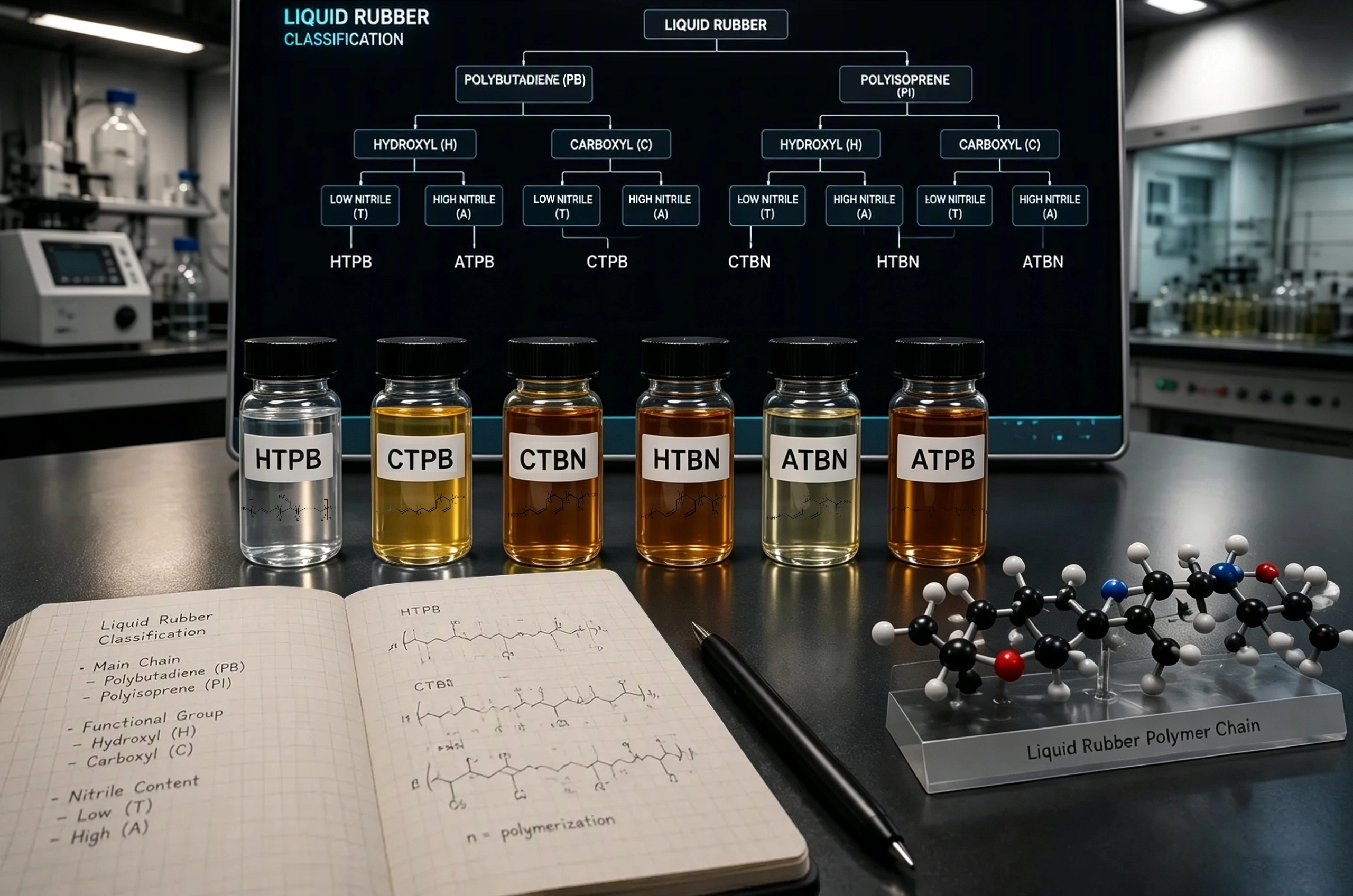
 25. Aug, 2026