Selecting a CTBN supplier for epoxy toughening is not simply a matter of comparing prices or checking whether a supplier can provide carboxyl-terminated nitrile butadiene rubber. In a production formulation, the supplier directly affects batch consistency, viscosity, curing behavior, rubber-phase morphology, and ultimately the balance between toughness and mechanical strength.
For epoxy formulators, the more useful question is whether a supplier can provide a CTBN grade that behaves predictably in the actual resin system. A material that looks suitable on a datasheet can still create problems if its acrylonitrile content, molecular weight distribution, carboxyl functionality, viscosity, or batch consistency is poorly controlled.
A reliable evaluation therefore needs to go beyond the product name. It should connect CTBN chemistry, formulation requirements, technical data, quality control, and supply capability.
CTBN Quality Starts with Consistent Polymer Chemistry
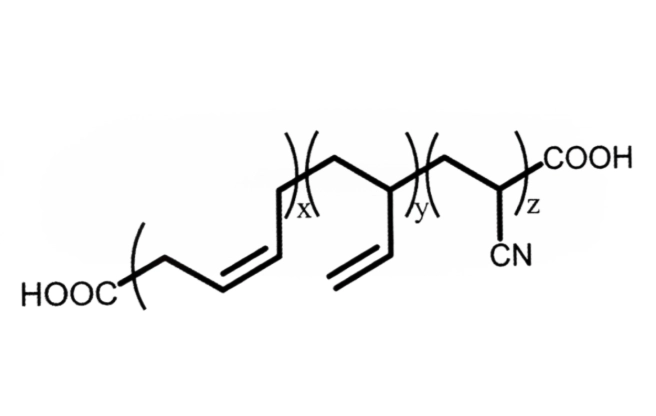
CTBN is widely used as a reactive liquid rubber for epoxy toughening because its carboxyl end groups can participate in reactions with epoxy systems while the rubber backbone provides a flexible phase. During curing, the modified epoxy can develop a dispersed rubber morphology that helps absorb and redistribute stress around a crack.
The effectiveness of this mechanism depends heavily on the characteristics of the CTBN itself. Two products both labeled “CTBN” may produce noticeably different results in the same epoxy formulation.
A supplier should therefore be able to provide controlled information on parameters such as:
CTBN parameter | Why it matters in epoxy formulations |
Acrylonitrile content | Influences polarity, compatibility, viscosity, and the interaction between CTBN and epoxy |
Carboxyl functionality | Affects chemical reactivity with the epoxy curing system |
Molecular weight | Influences viscosity, processability, phase separation, and toughness |
Viscosity | Determines mixing, handling, and processing requirements |
Acid value | Provides useful information about carboxyl functionality and batch consistency |
Appearance and moisture | Can affect storage stability and formulation reliability |
These parameters should not be considered independently. For example, increasing acrylonitrile content can improve polarity and compatibility with some resin systems, but it can also increase viscosity. A grade with excellent tensile properties may therefore be inconvenient for a high-solids adhesive process.
A good supplier understands these trade-offs rather than presenting CTBN as a one-size-fits-all toughening agent.
Match CTBN Grade to the Epoxy System
The right CTBN is determined by the resin and processing conditions it must work with. An adhesive designed for structural bonding does not necessarily require the same CTBN characteristics as a composite matrix or casting formulation.
Epoxy adhesive applications
For epoxy adhesives, the main concern is usually the balance between fracture toughness, bond strength, viscosity, and processing behavior. Excessive rubber modification can improve crack resistance while reducing modulus or increasing viscosity beyond practical limits.
The supplier should be able to discuss how a particular CTBN grade behaves with the customer's epoxy resin, curing agent, and intended loading level.
Composite bonding
Composite bonding introduces additional requirements. The modified adhesive must wet the substrate effectively, maintain adequate cohesive strength, and tolerate stress concentrations generated by differences in stiffness between the adhesive and composite materials.
In these systems, simply choosing the highest-toughness CTBN grade is rarely the best approach. The target should be a controlled rubber phase that improves crack resistance without undermining the adhesive's load-bearing properties.
For manufacturers evaluating CTBN for demanding epoxy formulations, CTBN Carboxyl-Terminated Nitrile Butadiene Rubber provides a useful starting point for reviewing the material's characteristics and potential applications.
A Good CTBN Supplier Should Explain Phase Behavior
One of the most important technical issues in rubber-modified epoxy is phase separation during curing.
CTBN is generally compatible with the uncured epoxy to some degree. As the epoxy network develops, the chemical environment changes and the rubber can become less compatible with the growing thermoset network. This can produce a dispersed rubber phase.
That phase structure is critical.
If the rubber remains excessively dissolved, the toughening effect may be limited. If phase separation occurs too early or produces overly large rubber domains, mechanical strength and other properties can suffer. The useful morphology lies between these extremes.
This is why a supplier's technical capability matters. A supplier should be able to help the formulator understand how CTBN molecular characteristics, acrylonitrile content, loading level, epoxy type, curing agent, and cure schedule influence the resulting morphology.
A supplier that only provides a drum of material and a generic technical data sheet offers much less value than one that can support formulation trials.
Batch-to-Batch Consistency Matters More Than a Single Good Sample
A laboratory sample can perform well and still fail to represent what happens after several production batches. For industrial epoxy adhesives, consistency is often more important than achieving an impressive result in one trial.
A CTBN supplier should have a defined quality-control system covering incoming raw materials, polymer production, intermediate testing, and final product release.
For procurement teams, several questions are worth asking:
· Are viscosity, acid value, acrylonitrile content, and other critical properties tested for every production batch?
· Are specifications controlled within agreed ranges rather than only reported as typical values?
· Can the supplier provide batch-specific certificates of analysis?
· Is there traceability from finished CTBN back to the production batch and raw materials?
· How are specification changes communicated to customers?
These questions are especially important when CTBN becomes part of a qualified adhesive formulation. A change in viscosity or functionality that appears small on paper can alter mixing behavior or curing performance at production scale.
Technical Data Should Be Detailed Enough for Formulation Work
A supplier's technical documentation reveals a great deal about how seriously the product is managed.
A useful CTBN technical data sheet should provide actual specification ranges or clearly defined typical values for the properties relevant to the customer's formulation. Depending on the grade, this may include viscosity, carboxyl content or acid value, acrylonitrile content, molecular characteristics, appearance, and storage information.
For development work, however, a datasheet is only the starting point.
A strong supplier should be able to provide additional technical information when required, such as compatibility guidance, recommended handling conditions, formulation experience, or comparative data between grades.
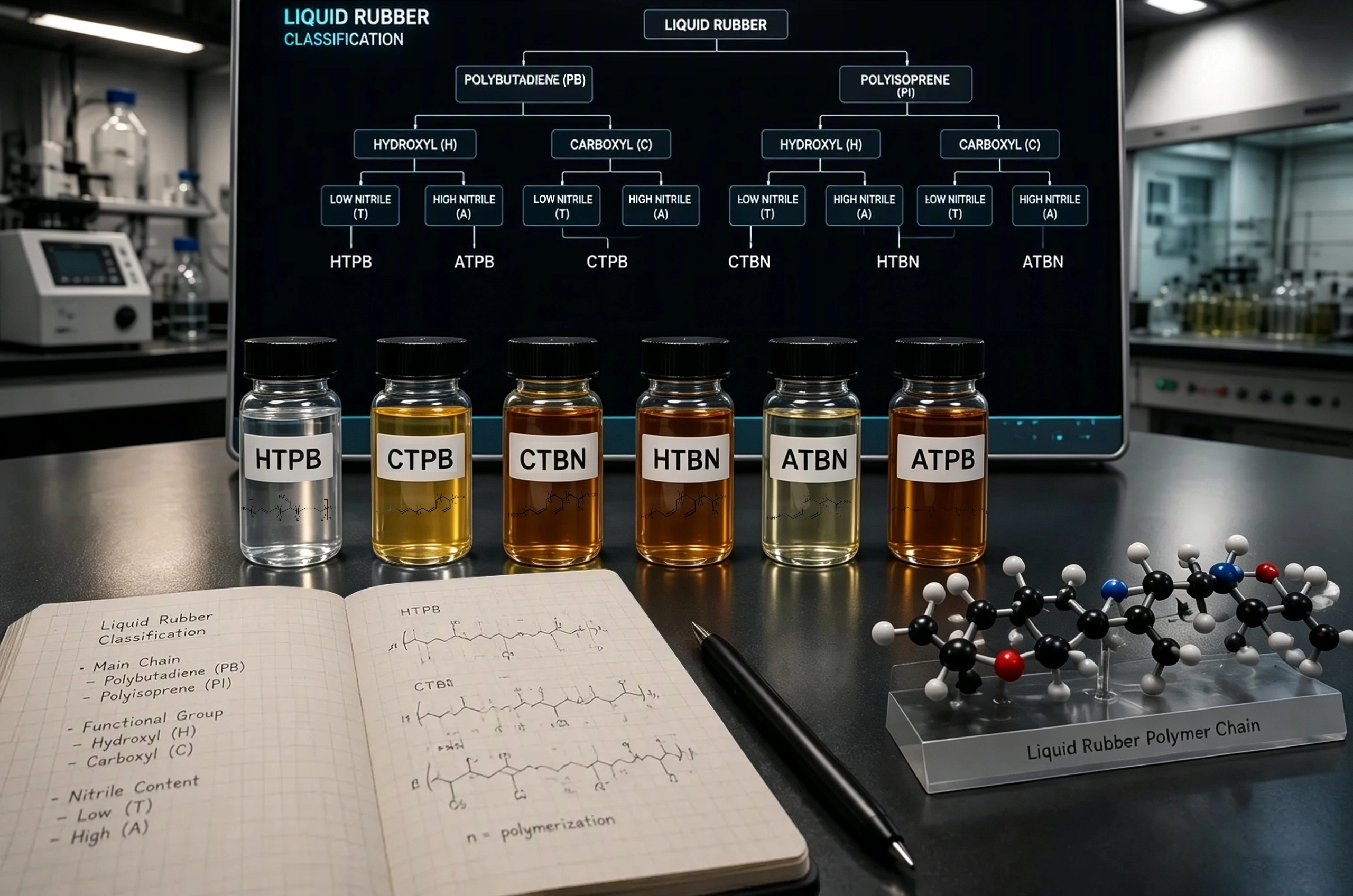
This becomes particularly important when the customer is deciding between different reactive liquid rubber technologies. For example, CTBN, ATBN, HTPB, and other liquid rubbers may all be described as toughening or flexibility modifiers, but their reactive groups and interactions with thermoset systems are different.
For epoxy applications, the distinction between CTBN and ATBN is especially relevant because the functional end group changes the way the modifier interacts with the resin and curing chemistry.
Processing Support Can Determine Whether a CTBN Grade Works at Production Scale
A CTBN formulation that works in a 500 g laboratory batch may behave differently in a 500 kg production mixer.
Viscosity is one obvious issue. Adding liquid rubber increases the viscosity of the resin mixture, which can affect dispersion, vacuum deaeration, mixing time, pumping, and filling.
The supplier should therefore be prepared to discuss processing rather than focusing exclusively on mechanical-property improvements.
Important variables include:
Processing factor | Potential effect on the formulation |
CTBN addition level | Changes toughness, modulus, viscosity, and phase morphology |
Mixing temperature | Influences viscosity and dispersion efficiency |
Mixing sequence | Can affect local concentration and dispersion |
Cure temperature | Influences phase separation and network development |
Cure time | Affects final crosslink density and morphology |
Resin viscosity | Determines whether the selected CTBN can be processed efficiently |
A technically capable supplier can help identify which variables should remain fixed during formulation screening and which should be adjusted when moving from laboratory development to production.
Supplier Capability Should Be Evaluated Alongside CTBN Performance
Price per kilogram is easy to compare. Supplier capability is not, but it can have a much larger impact on the total cost of an epoxy formulation.
For an industrial buyer, the evaluation should cover four areas: product consistency, technical support, manufacturing control, and supply reliability.
A practical supplier assessment can include:
1. Product control — defined specifications, batch testing, traceability, and stable production.
2. Technical capability — formulation support, grade selection, and troubleshooting based on actual application requirements.
3. Supply capability — predictable lead times, production capacity, packaging options, and communication during demand changes.
A supplier that performs well across these areas is usually a safer choice than one offering a lower initial price but limited technical documentation or inconsistent batches.
When to Request a CTBN Sample
Sampling should happen after the formulation requirements have been defined, not simply because a supplier offers a free sample.
Before testing, the buyer should establish the properties that matter most to the application. For an epoxy adhesive, that may include fracture toughness, lap-shear strength, peel resistance, viscosity, working time, and cured modulus. For composite bonding, interlaminar or bonded-joint performance may also be relevant.
The sample should then be evaluated under conditions that represent the intended production formulation.
A useful qualification sequence is:
CTBN specification → resin compatibility → processing behavior → cured morphology → mechanical testing → aging or environmental testing → production trial
This approach makes it easier to determine whether a CTBN grade is genuinely suitable rather than judging it from a single tensile or impact result.
The Best CTBN Supplier Is a Formulation Partner
A good CTBN supplier for epoxy toughening applications should provide more than consistent material. The supplier needs to understand how the modifier behaves inside a thermoset system and how its chemical characteristics translate into processing and final performance.
For procurement teams, the strongest indicators are straightforward: controlled polymer properties, reliable batch consistency, useful technical documentation, application-specific grade selection, and responsive technical support.
The final decision should be based on whether the CTBN can deliver the required crack resistance without sacrificing processability, adhesion, strength, or production consistency. That is the point where supplier quality becomes part of formulation performance rather than simply a purchasing consideration.

 English
 English
  Spanish
  Russian
  Arabic
  French
  German
  Portuguese
  Turkish
  Dutch
Dutch  Polish
  Korean
  Vietnamese
  Indonesian
 30. Jun, 2026