Liquid Polybutadiene Is a Formulation Material, Not Just a Flexible Rubber
Liquid Polybutadiene (LPB) is used in polymer formulations where a conventional solid rubber would be difficult to process or would require additional dispersion steps. Its liquid form allows formulators to introduce a flexible polybutadiene phase while retaining control over viscosity, mixing, curing, and final mechanical properties.
That makes grade selection more complicated than simply asking for “liquid rubber.” Two products may both be described as liquid polybutadiene while behaving differently in a formulation because of differences in molecular weight, vinyl content, functional groups, viscosity, and molecular structure.
The right choice therefore starts with the polymer system rather than the product name. A coating formulator may prioritize flow and flexibility, while an adhesive manufacturer may be more concerned with compatibility and stress relaxation. A sealant formulation may place greater emphasis on elongation and low-temperature movement.
For manufacturers evaluating several liquid rubber materials, these differences determine whether a material integrates into the formulation or creates new processing and performance problems.
Which Liquid Polybutadiene Properties Matter Most?
The most useful way to compare grades is to connect each specification with something that happens during processing or service.
Property | Influence on formulation | What the formulator should check |
Molecular weight | Affects viscosity, flexibility and mechanical behavior | Whether processing equipment can handle the selected grade |
Viscosity | Determines mixing, pumping and application behavior | Viscosity at the actual processing temperature |
Vinyl content | Influences polymer structure and chemical reactivity | Compatibility with the intended curing route |
Functional groups | Determines whether the polymer can participate in a reaction | Match between terminal functionality and resin chemistry |
Molecular structure | Influences flexibility and temperature response | Required balance between elasticity and strength |
Unsaturation | Provides sites for further chemical modification or reaction | Long-term stability and curing requirements |
Liquid polybutadiene viscosity deserves particular attention in industrial production. A material that looks attractive on a technical data sheet may still be difficult to process if its viscosity is too high for the plant's pumps, mixers, or dispensing equipment. On the other hand, selecting a very low-viscosity material solely to simplify processing can change the amount of polymer needed to achieve the desired mechanical effect.
Molecular weight also needs to be considered together with viscosity rather than independently. The relationship between molecular structure and flow behavior affects how easily the material can be incorporated into a resin and how the modified polymer behaves after curing.
For this reason, liquid polybutadiene properties should be evaluated as a group. Looking at one number in isolation rarely gives enough information to predict formulation performance.
Why Molecular Structure Matters at Low Temperature
Low-temperature performance is often discussed as if it were simply a question of whether a polymer remains “flexible.” In practice, the situation is more complicated.
When temperature falls, polymer chain movement becomes increasingly restricted. A formulation that performs well at room temperature can become harder and less capable of absorbing deformation when exposed to a colder environment. This is particularly important for adhesives, sealants, coatings and elastomeric materials subjected to repeated expansion, contraction or impact.
The molecular structure of liquid polybutadiene can help maintain a flexible rubber phase within the cured material. Instead of relying entirely on a rigid resin network to absorb mechanical stress, the formulation can use the rubber component to dissipate part of that stress.
The benefit depends on the complete formulation, however. Increasing the rubber content does not automatically produce better low-temperature performance. Excessive modification can reduce hardness, strength or chemical resistance. The objective is usually a controlled balance between flexibility and structural integrity.
This is why low temperature rubber selection should be connected to the intended application temperature, loading pattern and resin system rather than treated as a standalone material category.
Choosing Liquid Polybutadiene for Coatings
In coatings, liquid polybutadiene can be considered when the cured film needs greater flexibility, crack resistance or resistance to repeated deformation.
A coating exposed to outdoor temperature changes may expand and contract repeatedly. If the coating is too rigid relative to the substrate, internal stress can accumulate and eventually produce cracking or loss of adhesion. A suitably selected liquid polybutadiene for coatings can introduce a more flexible polymer phase and modify the way stress is distributed through the film.
The selection should still account for coating viscosity, curing chemistry, substrate adhesion and required surface properties. A grade that improves flexibility but interferes with curing or produces an unacceptable change in viscosity is unlikely to be useful commercially.
For this type of formulation, the practical questions are more important than a generic claim that the material “improves performance”:
· What viscosity can the production line handle?
· Does the LPB remain compatible with the base resin during storage and mixing?
· Will the modified coating retain sufficient hardness and adhesion after curing?
The answers determine whether the material is suitable for the formulation.
Liquid Polybutadiene in Adhesive Formulations
Adhesives face a different mechanical problem because the bond line often experiences combinations of tension, shear, impact and peel forces.
A rigid adhesive can provide high initial strength but may have limited ability to absorb repeated deformation. Under dynamic loading, stress can concentrate around defects, interfaces and geometric discontinuities. A flexible polymer phase can help redistribute some of this stress.
This is where liquid polybutadiene for adhesives becomes interesting. Rather than treating LPB simply as a plasticizing ingredient, formulators can use it as part of a designed toughening or flexibility strategy.
The actual result depends heavily on compatibility with the adhesive resin. If the liquid rubber separates too early, forms excessively large domains or interferes with network formation, the expected improvement may not appear. Conversely, a controlled rubber phase can contribute to energy dissipation without completely sacrificing the strength of the cured adhesive.
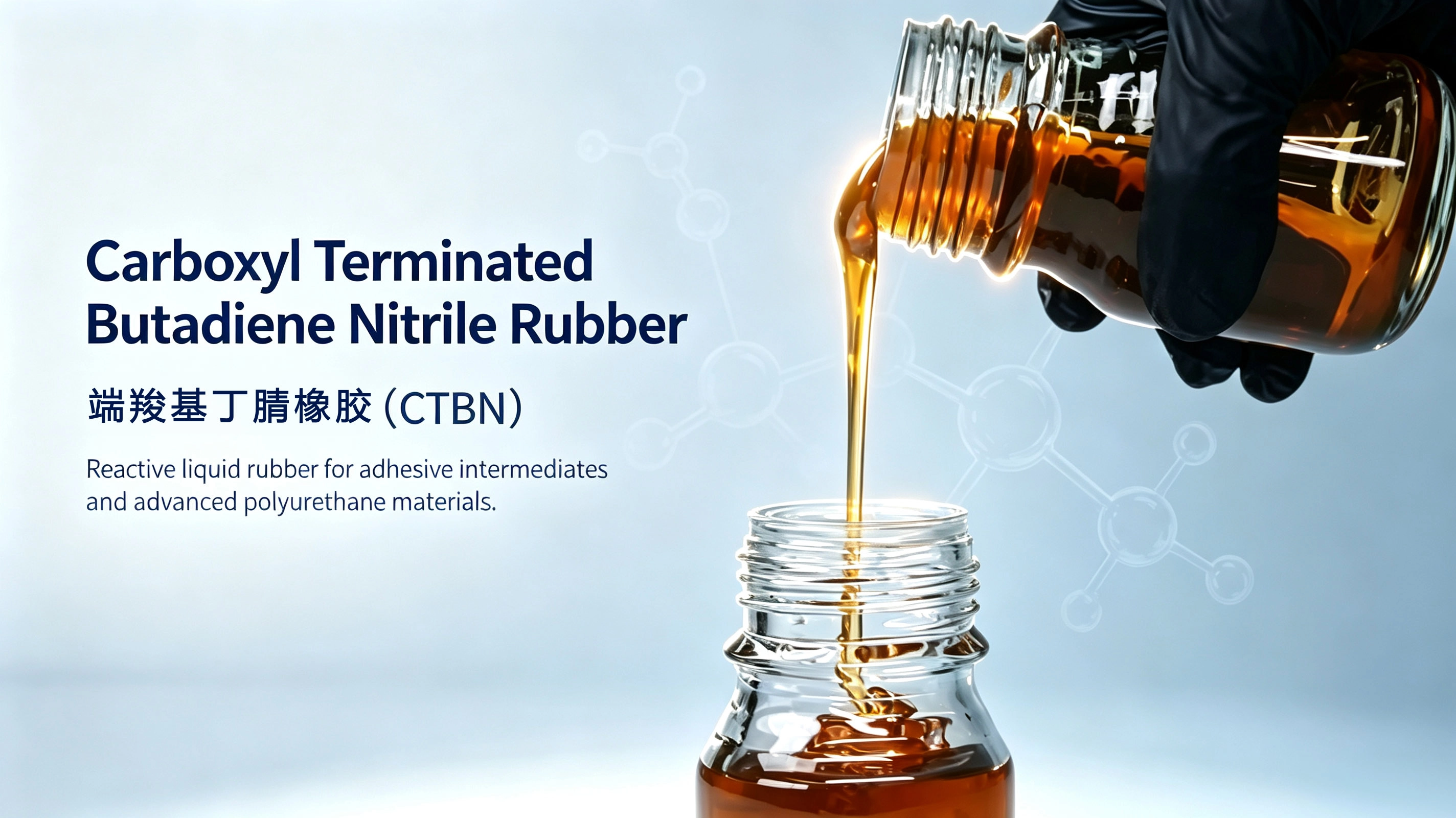
For epoxy systems where toughening is the primary objective, CTBN is often a more directly relevant option because its carboxyl termination is suited to specific epoxy curing systems. CTBN Carboxyl-Terminated Nitrile Butadiene Rubber is therefore worth considering when the formulation requires a reactive nitrile rubber rather than an unmodified liquid polybutadiene structure.
Liquid Polybutadiene for Sealants and Flexible Materials
Sealants must accommodate movement rather than simply resist it. Joint expansion, vibration and substrate movement can repeatedly deform the cured material.
For a liquid polybutadiene for sealants formulation, elongation and low-temperature flexibility may be more important than achieving maximum hardness. The polymer also needs to work within the selected curing system without creating unacceptable changes in viscosity or storage stability.
A sealant intended for a cold outdoor environment, for example, may experience substantial movement when the substrate contracts. A formulation that becomes excessively stiff at low temperature can lose its ability to follow that movement, increasing the risk of cracking or adhesion failure.
LPB can therefore be useful where the formulation requires a flexible polymer component, but the exact grade still needs to be matched to the curing chemistry and service conditions.
When High Vinyl Liquid Polybutadiene Makes More Sense
Not all liquid polybutadienes have the same molecular architecture. High vinyl liquid polybutadiene represents a different structural option from grades selected primarily for flexibility and low-temperature behavior.
Vinyl content can influence the chemical reactivity and resulting network structure of the polymer. This becomes important when the formulation relies on subsequent reactions involving the unsaturated polymer chain.
For manufacturers considering a high-vinyl grade, the relevant question is not simply whether higher vinyl content is “better.” It is whether that structure matches the intended curing mechanism and the properties required from the finished polymer.
For applications where this balance is important, LPB High Vinyl Liquid Polybutadiene provides a specific material route rather than treating all liquid polybutadienes as interchangeable.
Liquid Polybutadiene Compared with HTPB and CTBN
Liquid rubber materials are often grouped together during initial material searches, but their terminal functionality can lead to very different formulation behavior.
Material | Main functionality | Typical formulation role | Common direction |
LPB | Unsaturated polybutadiene structure | Flexible polymer or reactive modifier | Coatings, adhesives, sealants |
HTPB | Hydroxyl termination | Reactive binder or polyurethane component | Polyurethane elastomers, binders |
CTBN | Carboxyl termination | Reactive epoxy toughening agent | Epoxy adhesives and composites |
ATBN | Amino termination | Reactive modification and toughening | Epoxy and composite systems |
HTPB is particularly relevant when the formulation is based on polyurethane chemistry because its hydroxyl groups can participate in reactions with isocyanates. Hydroxyl-Terminated Polybutadiene HTPB is therefore not simply another substitute for LPB; it belongs to a different reactive formulation strategy.
Likewise, CTBN for epoxy resin should not be treated as interchangeable with LPB when the epoxy system depends on carboxyl functionality. The reactive end groups can influence phase separation, curing behavior and the structure of the final rubber-modified epoxy.
For amino-functional modification, ATBN Amino-Terminated Nitrile Rubber provides another route for introducing a reactive elastomer phase into selected resin systems.
The distinction is useful during procurement because it prevents a common mistake: selecting a liquid rubber based on viscosity or price while overlooking its chemical functionality.
Selecting a Grade Based on the Actual Formulation
A practical selection process starts with the formulation and works backward to the material specification.
For most industrial applications, the key questions are:
1. What resin or binder is being modified?
Epoxy, polyurethane, coating resin and sealant systems impose different compatibility and curing requirements.
2. Is the liquid rubber expected to react or mainly modify the physical properties?
This determines whether terminal functionality and reactive sites are critical.
3. What processing conditions are available?
Mixing temperature, equipment, pumping capacity and target viscosity can eliminate otherwise suitable grades.
4. What mechanical problem needs to be solved?
Flexibility, impact resistance, crack resistance, fatigue performance and low-temperature movement do not necessarily require the same material structure.
5. What happens after curing?
The selected rubber phase must improve the target property without causing an unacceptable loss of strength, hardness, adhesion or chemical resistance.
This approach is more reliable than choosing a product from a generic “liquid rubber” category.
Why Supplier Data Matters in Liquid Polybutadiene Selection
Once the formulation requirements have been defined, supplier data becomes particularly important. Commercial liquid polymers should not be compared only by product name because two grades with similar descriptions can have different specifications and processing behavior.
For a serious evaluation, a buyer should request current technical data covering viscosity, molecular characteristics, functionality, appearance, storage conditions and batch consistency. Small specification differences can become significant when a formulation is produced at scale.
This is also where laboratory trials should be connected to production conditions. A grade that performs well in a small laboratory batch may behave differently when transferred to a large mixer because heat transfer, shear, residence time and addition sequence change.
Shanghai Further New Material Technology Co., Ltd. supplies a range of advanced polymer materials, including liquid rubber products intended for different formulation requirements. Its Advanced Polyurethane Materials range includes LPB, HTPB, CTBN, ATBN, HTBN and related liquid polymer materials, allowing formulators to compare different reactive structures within the same material category.
The Right Liquid Polybutadiene Depends on the Job
There is no single “best” liquid polybutadiene for every polymer formulation.
A coating may need a balance between flexibility, viscosity and film integrity. An adhesive may require controlled stress dissipation without excessive loss of bond strength. A sealant may prioritize elongation and movement at low temperature. A reactive polymer system may instead depend on the chemical functionality and structure of the liquid rubber.
That is why material selection should begin with the required performance and curing chemistry, then move to molecular structure, viscosity and grade specifications.
For manufacturers comparing LPB with other reactive liquid rubber materials, the important question is not simply which liquid rubber has better properties, but which polymer structure can solve the specific formulation problem without creating a new one.

 English
 English
  Spanish
  Russian
  Arabic
  French
  German
  Portuguese
  Turkish
  Dutch
Dutch  Polish
  Korean
  Vietnamese
  Indonesian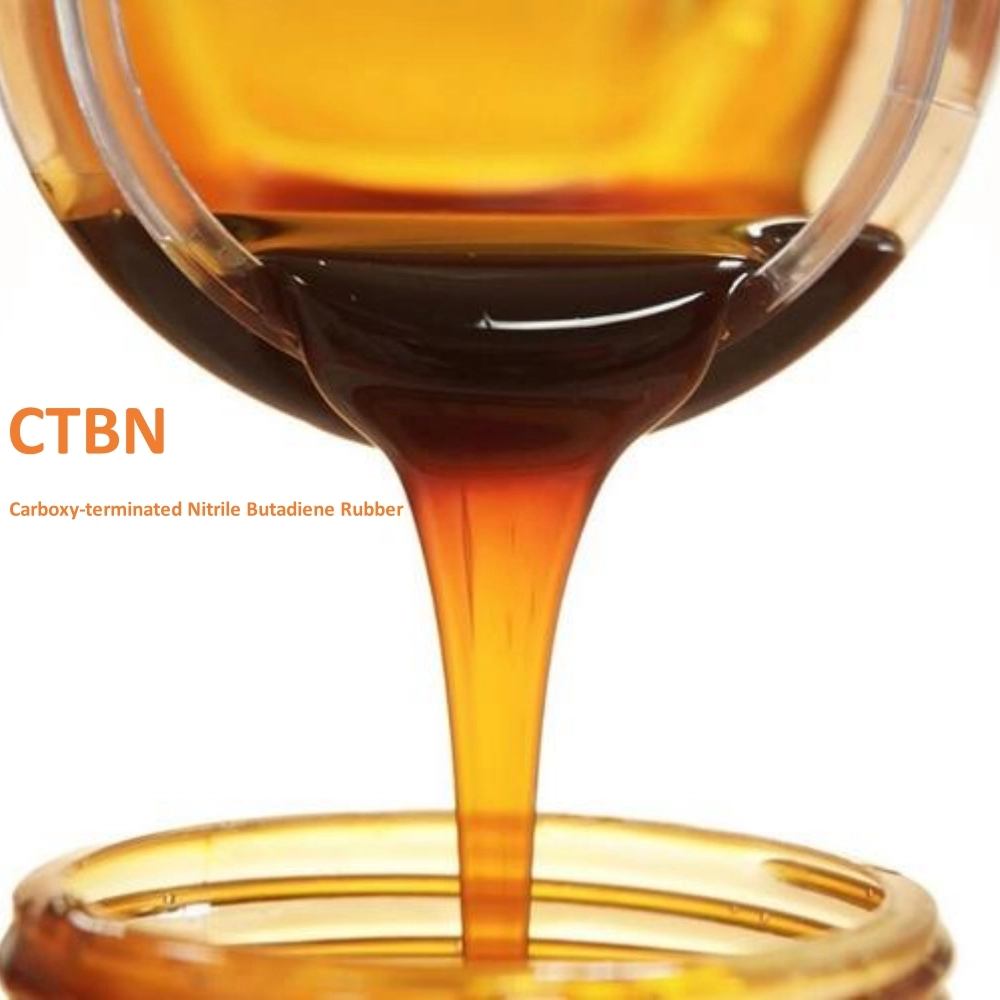
 30. Jul, 2026