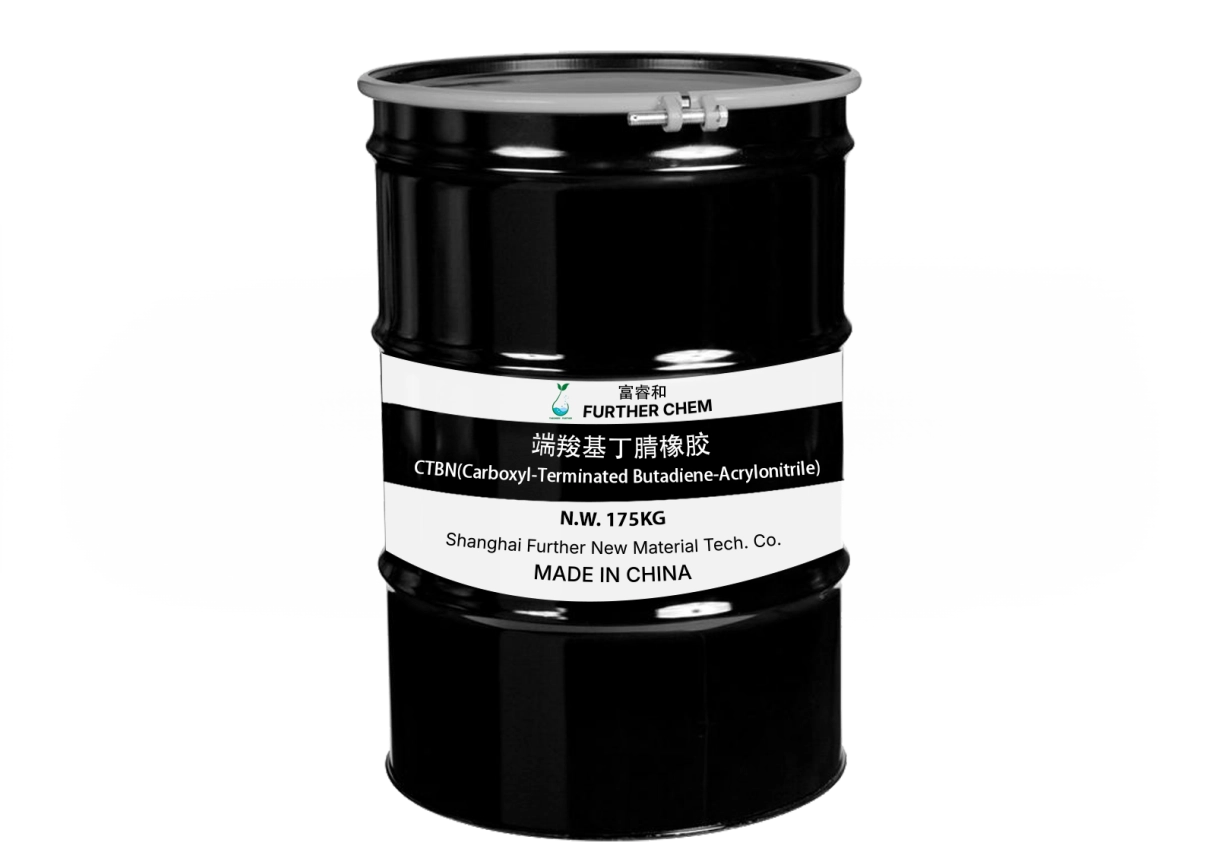
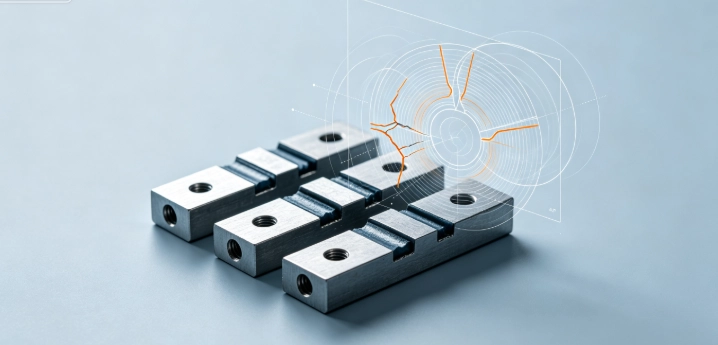
Carboxy-Terminated Nitrile Butadiene Rubber (CTBN, CAS No. 25265-19-4) functions as a superior ctbn toughening agent. Formulators choose ctbn for epoxy resin modification because this versatile reactive liquid rubber transforms brittle polymers into durable networks. Terminal carboxyl groups bond directly with epoxide rings, triggering reaction-induced phase separation. This process advances the toughening of epoxy resins by forming discrete micro-domains.
Adding 10% to 15% CTBN improves overall resin performance, boosting impact strength by over 300% alongside superior lap shear and peel strength.
These specialized toughening agents maximize fracture toughness and low-temperature impact resistance. Modern epoxy resin development relies on such toughening mechanisms to prevent crack propagation. Modified epoxy resins deliver high mechanical toughness, serving critical roles in aerospace adhesives, electronic potting, and wind turbine blades.
Chemical Mechanisms of CTBN Toughening Agent in Epoxy
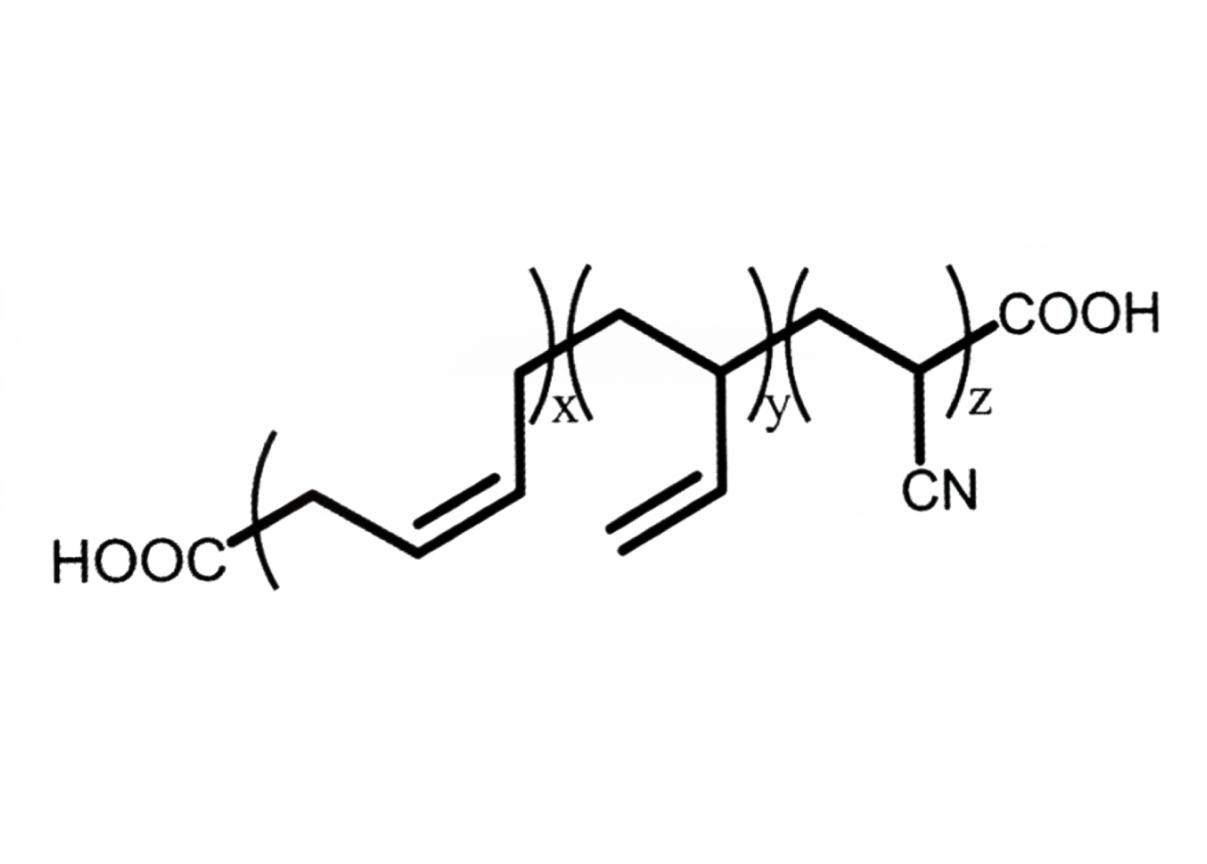
Carboxy-Terminated Nitrile Butadiene Rubber (CTBN, CAS No. 25265-19-4) functions as a telechelic copolymer. The molecular structure features terminal carboxyl group endings on a butadiene-acrylonitrile main chain. The butadiene segments supply outstanding low-temperature flexibility, while acrylonitrile units provide structural polarity and oil resistance. Formulators select CTBN as a reactive liquid rubber modifier to enhance mechanical integrity.
CTBN Polymer Structure:
HOOC — [(CH2-CH=CH-CH2)x — (CH2-CH(CN))y]z — COOH
|__________________| |______________|
Butadiene Acrylonitrile
(Flexible Backbone) (Polarity & Oil Resistance)
Carboxyl Reaction with Epoxide Groups
Esterification Chemistry and Catalysis
The primary reaction mechanism involves esterification between terminal carboxyl group endings (-COOH) and oxirane rings on the polymer backbone. Polymer chemists use tertiary amines, triphenylphosphine, or quaternary ammonium salts as catalysts to accelerate this ring-opening addition.
Catalyzed esterification links soft rubber chains directly into the rigid network, establishing high fracture toughness through covalent bonding.
The reaction forms stable beta-hydroxy ester linkages without generating volatile byproducts. This chemical attachment enables successful rubber modified epoxy matrix synthesis, preventing the liquid rubber from bleeding out during thermal curing cycles.
CTBN-Epoxy Adduct Synthesis Protocols
Direct mixing of liquid rubber with unmodified resins often leads to uncontrolled phase separation. Formulators utilize specialized pre-reaction protocols (adducting) to synthesize stable pre-adducts prior to final curing.
Pre-Adduction Process:
CTBN Liquid Rubber + Excess Epoxy Resin + Catalyst (100–150°C)
↓
Stable CTBN-Epoxy Pre-Adduct (Prevents Macro-Phase Separation)
Engineers react excess resin with CTBN grades at elevated temperatures ranging from 100°C to 150°C. Common commercial grades include CTBN-1 through CTBN-5, which differ in acrylonitrile content and viscosity. Pre-adduct synthesis transforms the liquid rubber into epoxy-terminated prepolymers, avoiding macro-phase separation and maximizing total fracture toughness.
Phase Separation Dynamics
Acrylonitrile Content and Resin Compatibility
Acrylonitrile (AN) content controls the miscibility between the elastomer and the epoxy resin base. Lower AN concentrations reduce solubility in the liquid formulation, whereas higher AN levels improve initial resin compatibility.
Acrylonitrile (AN) Content Level | Domain Compatibility / Miscibility | Phase Separation Dynamics | Resulting Particle Morphology |
Higher AN Content | Enhances solubility and miscibility with the epoxy matrix. | Delays phase separation, requiring a higher degree of cure; increased matrix viscosity slows down CTBN diffusion and particle growth. | Produces finer, nano-sized rubber particles with diminished agglomeration. |
Lower AN Content | Results in poor compatibility/miscibility with the surrounding resin. | Triggers earlier phase separation during curing due to lower threshold solubility. | Yields larger, micron-sized rubber particle domains. |
Selecting the correct grade optimizes matrix interactions. Proper selection advances toughening modification methods across high-performance applications.
Thermodynamics of Domain Formation
Curing converts the liquid mixture into a rigid thermoset network. Reaction-induced phase separation (RIPS) drives domain formation during crosslinking. As the epoxy resins cure, molecular weight increases, lowering the thermodynamic entropy of mixing. The hydrophobic rubber backbone eventually precipitates out of the polar liquid resin matrix, creating distinct spherical micro-domains embedded in the cured network.
Controlling Morphology and Domain Size
Micro-Phase Dispersion Parameters
Controlling particle size remains crucial for successful rubber modified epoxy formulations. Ideal rubber domains measure between 0.1 and 5.0 microns in diameter. These phase-separated rubber particles disperse evenly throughout the epoxy resin network.
Proper domain distribution allows the matrix to absorb dynamic energy without reducing matrix strength. Formulators evaluate these morphological parameters to advance overall toughening of epoxy resins.
Viscosity Effects on Curing Kinetics
Liquid rubber additions alter formulation viscosity, impacting curing reaction kinetics. The prepolymer addition increases initial mixture viscosity, which slows down molecular diffusion during network formation. Formulators balance cure temperatures and hardener choices to maintain structural resin flow.
Proper viscosity management allows precise control over phase separation timing, ensuring optimal domain sizes in high-performance resin systems.
Modern epoxy resin development relies on these physical mechanisms to achieve superior toughness. Understanding these fundamental toughening mechanisms helps formulators design advanced epoxy adhesives and composites. Commercial toughening agents transform brittle thermosets into durable materials, improving operational performance in demanding environments.
Energy Dissipation Mechanics of Reactive Liquid Rubber
Unmodified thermoset polymers fail under low mechanical strain. Adding reactive liquid rubber transforms rigid epoxy resins into flexible, durable materials. Dispersed rubber particles trigger efficient toughening mechanisms during dynamic stress events. These micro-structures absorb heavy impact force and dissipate mechanical stress.
Micro-Mechanical Deformation
Rubber particles alter stress fields inside the cured resin matrix during deformation. Three core damage modes explain micro-mechanical energy dissipation in a rubber toughened epoxy system:
· Plastic shear band formation: Localized shear yielding initiated around the elastomer particles.
· Plastic void growth: Cavitation and expansion of voids triggered by rubber particle cavitation.
· Crack-tip resin plastic deformation: Widespread non-recoverable deformation of the matrix resin surrounding the crack-tip zone.
Rubber Particle Cavitation
Applied mechanical loads concentrate triaxial tension around soft phase domains. These stress states induce internal void formation within the elastomer phase. Rubber particle cavitation releases localized triaxial stresses, preventing catastrophic brittle failure in epoxy formulations. This cavitation process provides superior toughening performance.
Matrix Shear Yielding
Cavitation directly promotes secondary toughening responses within the resin framework. Formulators map this interaction through a two-step sequence:
1. Particle Cavitation: Under stress, the rubber particles embedded within the epoxy matrix undergo internal void formation or cavitation.
2. Matrix Shear Yielding: The stress relief and local stress concentrations generated by the cavitated particles subsequently induce plastic shear deformation (shear yielding) in the surrounding matrix, effectively absorbing mechanical energy and enhancing toughness.
These interacting toughening mechanisms convert tensile forces into shear energy, boosting the impact resistance of modified epoxy resins.
Crack Propagation Control
Deflection and Crack Pinning
Precipitated rubber domains block advancing crack fronts through physical obstacles. A propagating crack hits elastic rubber domains and changes path direction. This crack deflection forces crack paths around particles, dissipating kinetic energy over larger surface areas. Rigid particle borders pin crack tips directly, demanding higher kinetic energy to drive crack growth. Consequently, this pinning increases the fracture toughness and impact strength of brittle resin matrices. Controlled morphology maximizes toughening efficiency during severe deformation.
Localized Plastic Zone Expansion
Dispersed elastomers expand the plastic zone surrounding advancing crack tips. Void formation and localized resin deformation delay structural fracture under severe mechanical impact. Micro-voids expand safely, absorbing impact energy while preserving structural matrix integrity.
Elastomer particles expand the crack-tip yield zone, raising total fracture toughness and dynamic impact strength.
This expanded yield zone creates superior toughness of epoxy formulations under stress. Modern epoxy resins achieve high impact strength and exceptional overall fracture toughness through phase separation. High structural toughness prevents fast mechanical failure. Therefore, advanced epoxy resins deliver long service life under harsh loading. This structural stability enhances fracture toughness across demanding engineering applications.
Performance Benefits of CTBN for Epoxy Resin Systems
Adding Carboxy-Terminated Nitrile Butadiene Rubber provides dramatic mechanical upgrades for thermoset matrices. Unmodified epoxy resins exhibit high tensile modulus but suffer from intrinsic brittleness. Formulators overcome this brittleness by incorporating specialized toughening agents into the liquid polymer resin. These active additives improve overall material performance without compromising production efficiency. ��
Fracture Toughness and Impact Resistance
Absorbing Dynamic Impact Energy
Modified thermosets absorb sudden dynamic impact forces without suffering catastrophic structural failure. Formulators achieve optimal results when adding 10% to 15% reactive liquid rubber into unmodified formulations. This addition level delivers a massive boost, increasing impact strength by over 300%.
Formulation System | Elastomer Content | Relative Fracture Toughness | Dynamic Impact Behavior |
Unmodified Matrix | 0% | Baseline (1.0x) | Brittle Structural Failure |
Optimized Modified System | 10% – 15% | High (>3.5x) | High Impact Strength Absorption |
High-Rubber Loading | >20% | Moderate-High | Elevated Energy Dissipation |
Dispersed micro-domains scatter incoming shockwaves across the entire resin network. The elastomer phase deforms under heavy loading, converting kinetic energy into localized plastic movement. This conversion raises overall fracture toughness while preventing rapid crack growth.
Integrating a 10% to 15% loading of ctbn for epoxy resin modification transforms brittle epoxy polymers into high-ductility networks, enhancing impact strength under sudden loads.
Low-Temperature Resilience
Cold environments normally make cured epoxy resins exceptionally brittle. Flexible butadiene segments within the resin backbone maintain molecular mobility at sub-zero temperatures. Consequently, a rubber toughened epoxy system resists severe cracking during thermal shock events down to -40°C.
Rubber domain dispersion prevents micro-cracks from forming under intense cold stress. The chemical backbone preserves mechanical toughness across extreme thermal cycles. This specialized toughening mechanism raises the low-temperature impact strength of brittle formulations, making modified epoxy resins ideal for aerospace conditions.
Structural Adhesion and Peel Strength
Lap Shear Strength Improvement
Adding elastomers increases mechanical bond durability across various industrial substrates. Liquid modifiers reduce internal stress build-up within joint interface zones during thermoset crosslinking.
Stress Distribution in Adhesive Bondline:
[Substrate] <--- Uniform Stress Distribution ---> [Substrate]
| Rubber Particles |
v v
(Prevents Local Stress Concentration & Crack Initiation)
Reduced internal stress directly elevates joint shear capacity. A rubber modified epoxy formulation demonstrates remarkable resistance against sustained mechanical shear loading. Dispersed elastomeric particles absorb boundary stress, elevating structural performance under continuous loads.
Substrate Bonding to Metals and Composites
Polar acrylonitrile units give the elastomer excellent affinity for polar structural substrates. The chemical backbone enhances surface wetting on carbon fiber, polyester fabric, glass fiber, and aluminum alloys.
Engineers rely on a ctbn toughening agent to boost adhesive peel strength significantly. The flexible polymer network resists peel forces that usually trigger joint delamination. Furthermore, combining liquid elastomers with inorganic silica nanoparticles creates a hybrid toughening strategy. This hybrid modification balances high impact resistance with maximum fracture toughness in the crosslinked resin system.
Fatigue and Environmental Durability
Resistance to Cyclic Loading
Industrial components frequently face millions of repeated stress cycles during long operational service. Unmodified epoxy resins develop micro-cracks under persistent cyclic strain. Dispersed elastomer particles pin advancing crack tips, elevating total fracture toughness under cyclic loads.
A properly cured rubber modified epoxy matrix exhibits exceptional fatigue durability under dynamic stress. Dispersed phase domains absorb repetitive kinetic energy, preserving resin ductility throughout extended operational lifespans. This effective toughening approach elevates the dynamic toughness of epoxy formulations under continuous vibration, delivering exceptional impact strength across demanding applications.
Humidity and Chemical Resistance
Acrylonitrile units provide superior oil resistance, chemical resistance, and environmental moisture tolerance. The polar main chain resists hydrocarbon exposure, hot water, and aggressive hydraulic fluids.
Modified epoxy resins maintain resin cohesion during prolonged water immersion. The crosslinked resin matrix prevents water molecules from plasticizing the epoxy thermosets. Consequently, these toughening agents ensure reliable long-term performance in demanding marine and industrial environments.
Formulators manage minor processing trade-offs, such as small changes in matrix viscosity or glass transition temperature. Engineers balance these factors by selecting specialized hardeners or incorporating micro-fillers, maintaining high fracture toughness across extreme environments. Commercial toughening agents optimize overall formulation properties, delivering high impact strength and superior operational durability across critical epoxy composites.
Optimizing Thermal and Rheological Properties
Formulators optimize thermal stability and flow characteristics when modifying epoxy resins. Elastomer addition enhances structural durability while preserving heat resistance. CTBN serves as an effective toughening agent across demanding resin formulations.
Managing Glass Transition Temperature
Minimizing $T_g$ Depression
Adding rubber modifiers often lowers the glass transition temperature ($T_g$) of crosslinked thermosets. Complete phase separation limits rubber solubilization inside the continuous phase, minimizing $T_g$ depression. CTBN pre-adducts promote clean phase separation during curing. Consequently, the modified epoxy matrix retains high heat deflection capabilities.
Crosslink Density Retention
Chemical modification consumes a small fraction of epoxide groups during pre-reaction. Formulators calculate stoichiometric ratios carefully to balance functional groups.
Stoichiometric balance preserves crosslink density, maintaining matrix strength alongside elevated fracture toughness.
Proper stoichiometry ensures that high-performance epoxy resins maintain their primary network structure. The cured epoxy structure preserves mechanical toughness under severe thermal loads. Advanced epoxy resins deliver reliable durability in high-temperature environments.
Viscosity Control and Processing
Rheological Behavior of Liquid Rubbers
Dissolving reactive liquid rubber into liquid epoxy increases overall mixture viscosity. Temperature strongly influences this rheological behavior during resin processing.
Processing Parameter | Effect on Liquid Mixture | Operational Advantage |
Moderate Heating (50–70°C) | Reduces initial liquid resin viscosity | Improves filler dispersion and degassing |
Pre-Adduct Integration | Stabilizes liquid mixture flow | Prevents unreacted modifier separation |
Higher temperatures lower liquid resin viscosity significantly. Resin formulators process mixtures at moderate temperatures to achieve optimal resin flow during casting. Precise control over resin viscosity ensures smooth void-free manufacturing within the resin matrix.
Resin Pot Life and Reactivity Balance
Elastomer modification alters cure kinetics slightly. Pre-reacted adducts alter hardener diffusion rates without suppressing overall cure conversion. Formulators select compatible curing agents to balance pot life with crosslinking speed.
Proper hardener selection prevents premature gelation in an unmodified resin system. Industrial applications demand this predictable reactivity balance for processing epoxy resins. Controlled kinetics ensure consistent toughening behavior without sacrificing resin performance. Modifying epoxy resins with CTBN optimizes both processing performance and final matrix toughness, providing versatile toughening solutions for modern composites.
Industrial Applications and Formulation Strategies
Formulators utilize specialized strategies to integrate modifiers into high-performance thermosets. Proper chemical matching optimizes cure networks, expanding industrial applications across harsh operational environments.
Curing Agent Selection and Compatibility
Amine and Anhydride Hardened Matrices
Formulators select specific hardeners to maximize toughening in epoxy resins. Amine curing agents react rapidly with epoxy groups, forcing phase separation at early reaction stages. Conversely, anhydride hardeners require higher temperatures, altering domain precipitations. Formulators balance hardener stoichiometry to ensure that the rubber modified epoxy develops optimal micro-phase domains. This precise balance enhances overall mechanical performance during thermal curing.
Catalytic Hardener Interactions
Catalysts accelerate both epoxide ring-opening and carboxyl pre-reactions. Formulators deploy tertiary amines and imidazoles to promote stable adduct formation. These catalytic interactions accelerate pre-adduction, preventing unreacted phase separation in a rubber toughened epoxy matrix. Controlled reactivity improves network consistency, which advances modern epoxy resin development.
Proper catalyst selection accelerates pre-adduct synthesis, ensuring stable elastomer dispersion across diverse curing schedules.
High-Performance Industrial Uses
Aerospace and Automotive Structural Adhesives
Aerospace and automotive manufacturers demand adhesives that withstand dynamic mechanical stress. Incorporating a ctbn toughening agent improves lap shear durability and peel resistance under cyclic loading. Chemical bonding reduces joint stress concentration, protecting aluminum and carbon-fiber bonds from mechanical vibration.
Wind Turbine Blade Adhesives and Composites
Wind turbine blades face extreme wind loads and relentless environmental exposure. Formulators use ctbn for epoxy resin modification to produce tough structural adhesives and composite matrices. These modified systems protect glass fiber and polyester fabric composites against micro-cracking, maintaining structural toughness over extended service lifespans.
Electronic Potting and Encapsulation
Electronic components require robust protection against environmental moisture, mechanical shock, and chemical exposure. Incorporating reactive liquid rubber transforms rigid formulations into flexible packaging materials. Additionally, abrasive tool manufacturers use this additive as a binding agent in cut-off wheel binders to boost wear resistance.
Application Area | Functionality | Key Benefits |
Electronic Potting & Encapsulation | Modifies packaging resin systems | Boosts resistance to corrosion and physical impacts |
Grinding & Cut-off Wheel Binders | Acts as an abrasive binding agent | Reduces necessary binder volume, enhances wear resistance, provides superior polishing performance, and resists exposure to hot water and cutting fluids |
Modification of Non-Epoxy Resins
Phenolic, BMI, and Cyanate Ester Toughening
The versatility of CTBN extends well beyond traditional epoxy formulations. Formulators apply proven toughening modification methods to phenolic, bismaleimide (BMI), and cyanate ester thermosets. Terminal carboxyl groups bond with polar resin bases, enhancing fracture impact resistance without sacrificing thermal stability.
Energetic Binders in Solid Propellants
Defense and aerospace engineers use CTBN as an energetic binder in solid propellants. The elastomeric butadiene backbone increases mechanical elongation, binding solid oxidizer particles securely. This elastomeric network prevents binder cracking, ensuring stable combustion performance under severe dynamic loading.
Through tailored chemical selection, formulators achieve efficient toughening of epoxy resins across diverse industrial sectors. Dispersed elastomer domains deliver high impact strength, solidifying these modifiers as vital components in advanced material engineering.
Reactive liquid rubber phase separation transforms brittle thermosets into ductile materials. Adding 10% to 15% CTBN toughening agent into liquid resin elevates the toughness of epoxy matrices, delivering superior impact resistance and peel performance.
Proper grade selection from CTBN-1 through CTBN-5 and pre-adduct preparation balance glass transition temperature retention with fracture toughness.
Formulators rely on these toughening mechanisms to prevent crack propagation in epoxy resins. Dispersed elastomeric domains create a durable rubber toughened epoxy network with high fracture toughness and impact strength. Modern epoxy resins utilize specialized toughening agents to maximize resin reliability across aerospace structural adhesives and renewable energy infrastructure.

 English
 English
  Spanish
  Russian
  Arabic
  French
  German
  Portuguese
  Turkish
  Dutch
Dutch  Polish
  Korean
  Vietnamese
  Indonesian
 11. Aug, 2026