Why Rubber Phase Separation Matters in Epoxy Toughening
Adding liquid rubber to an epoxy resin is not simply a matter of blending two materials and expecting better impact resistance. The final performance depends heavily on what happens during curing.
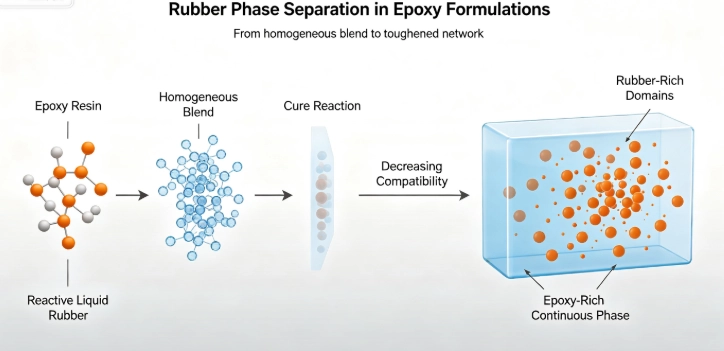
A reactive liquid rubber may initially dissolve in the epoxy resin, but its compatibility can change as the epoxy network develops. As molecular weight increases and crosslinking proceeds, the rubber can become less compatible with the growing thermoset network. The system then separates into a rubber-rich phase dispersed within an epoxy-rich continuous phase.
This rubber phase separation is one of the key mechanisms behind toughened epoxy systems. When controlled properly, it creates microscopic rubber domains that can absorb and redistribute stress. When it occurs too early, too late, or too extensively, the result may be poor transparency, increased viscosity, weak adhesion, or inconsistent mechanical properties.
For formulators working with CTBN for epoxy resin, understanding this transition is therefore more useful than simply comparing rubber content.
What Happens During Curing
The starting point is the compatibility between the liquid rubber and uncured epoxy.
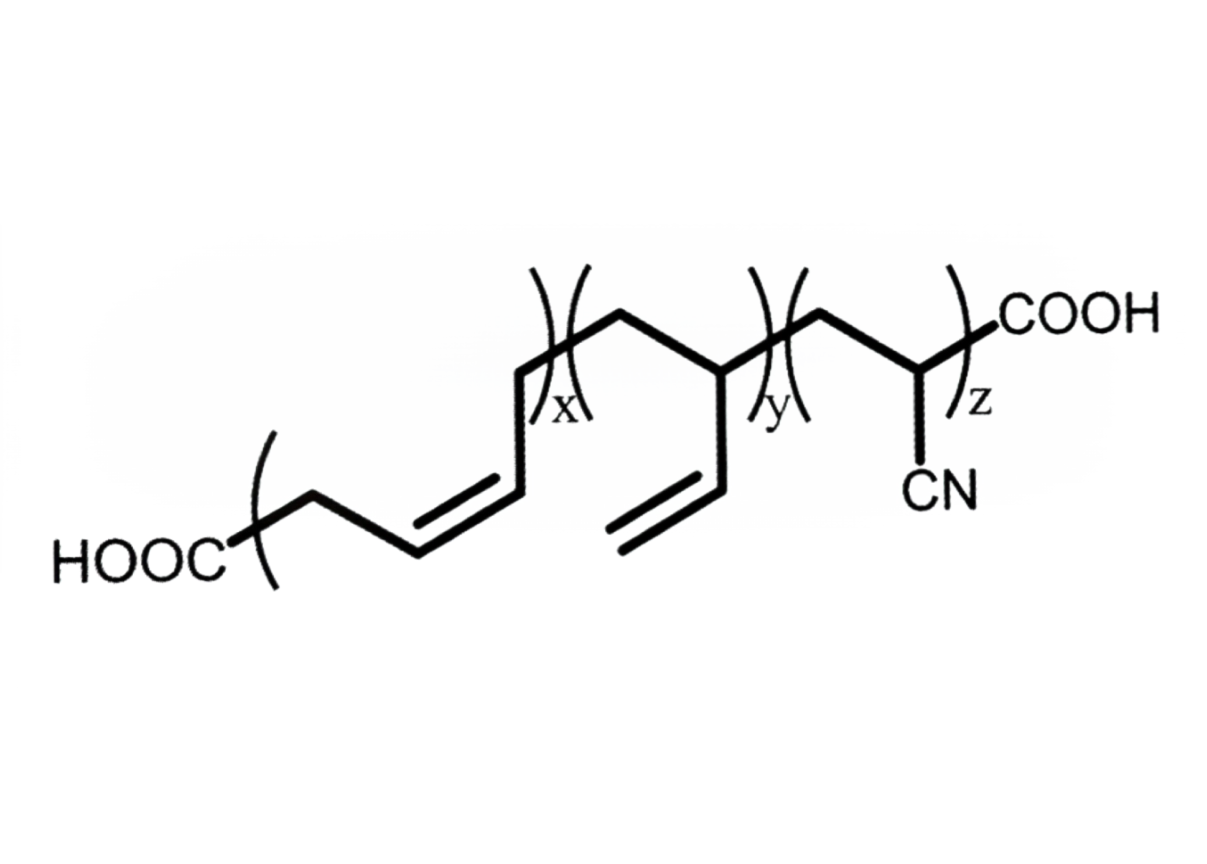
A reactive rubber such as CTBN contains carboxyl-functional groups that can interact or react with epoxy chemistry. Before curing, the rubber can be reasonably well dispersed in the resin. Once the curing reaction begins, the epoxy phase gradually develops a three-dimensional network.
At a certain point, the growing epoxy network becomes thermodynamically less favorable for the rubber to remain uniformly dissolved. Small rubber-rich regions begin to form. These domains continue to develop as curing proceeds.
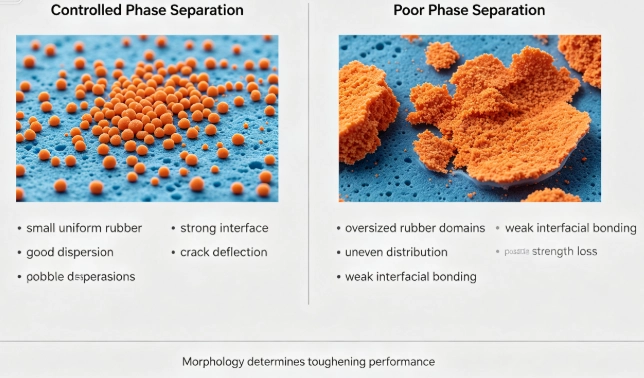
The important point is that phase separation is not necessarily a defect. Controlled phase separation is often the mechanism that gives rubber-modified epoxy its improved fracture toughness.
The morphology usually consists of rubber particles dispersed through a continuous epoxy matrix. Under mechanical loading, these particles can influence crack propagation through mechanisms such as local plastic deformation, cavitation and shear yielding of the surrounding epoxy.
The final morphology depends on several variables rather than rubber concentration alone:
· Rubber functionality and chemical structure
· Molecular weight and viscosity
· Acrylonitrile content in nitrile rubber
· Epoxy and curing-agent chemistry
· Rubber loading
· Cure temperature and time
· Initial compatibility between rubber and resin
This is why two formulations containing the same percentage of liquid rubber can show very different impact strength and fracture toughness.
CTBN and the Formation of Rubber-Rich Domains
CTBN rubber is widely used for epoxy toughening because its carboxyl termination provides a route for interaction with epoxy formulations while the butadiene-acrylonitrile backbone contributes elastomeric behavior.
The balance is important. The rubber needs enough compatibility with the epoxy to achieve good initial dispersion, but the cured system also needs sufficient thermodynamic driving force to produce a useful dispersed rubber phase.
If compatibility remains too high throughout curing, the rubber may not form the morphology needed for efficient toughening. If incompatibility develops too rapidly, larger rubber-rich regions can form before the epoxy network has developed sufficient strength to control their growth.
A useful formulation therefore aims for controlled rather than uncontrolled phase separation.
For applications where the exact CTBN grade matters, formulators should compare molecular weight, viscosity, functional group content and acrylonitrile level rather than selecting material solely by the CTBN name. Further's CTBN product can serve as the starting point when evaluating a reactive liquid rubber for epoxy formulations.
The Relationship Between Phase Separation and Toughness
The purpose of adding liquid rubber is usually not to make epoxy softer. It is to make a normally brittle thermoset better able to tolerate mechanical stress.
When a crack moves through an unmodified epoxy, the highly crosslinked matrix has limited ability to dissipate energy. Crack propagation can therefore occur rapidly.
A well-designed rubber-modified system introduces a second phase that changes how the crack develops. Rubber particles may cavitate under stress, forcing deformation of the surrounding epoxy matrix. This consumes energy and can slow crack growth.
That creates an important formulation trade-off.
Morphology | Typical effect | Formulation concern |
Very small, poorly developed rubber domains | Limited toughening effect | Insufficient phase separation |
Fine and uniformly dispersed domains | Good balance of toughness and strength | Usually desirable |
Large rubber-rich domains | Increased toughness may come with strength loss | Excessive phase growth |
Poorly dispersed agglomerates | Local weak points | Processing or compatibility problem |
Continuous rubber-rich phase | Significant softening | Excessive rubber content or poor network formation |
The objective is not to create the largest possible rubber particles. Particle size, distribution and interfacial bonding must work together with the epoxy network.
What Controls Rubber Phase Separation?
Rubber Chemistry
The chemical structure of the rubber has a direct effect on its compatibility with epoxy.
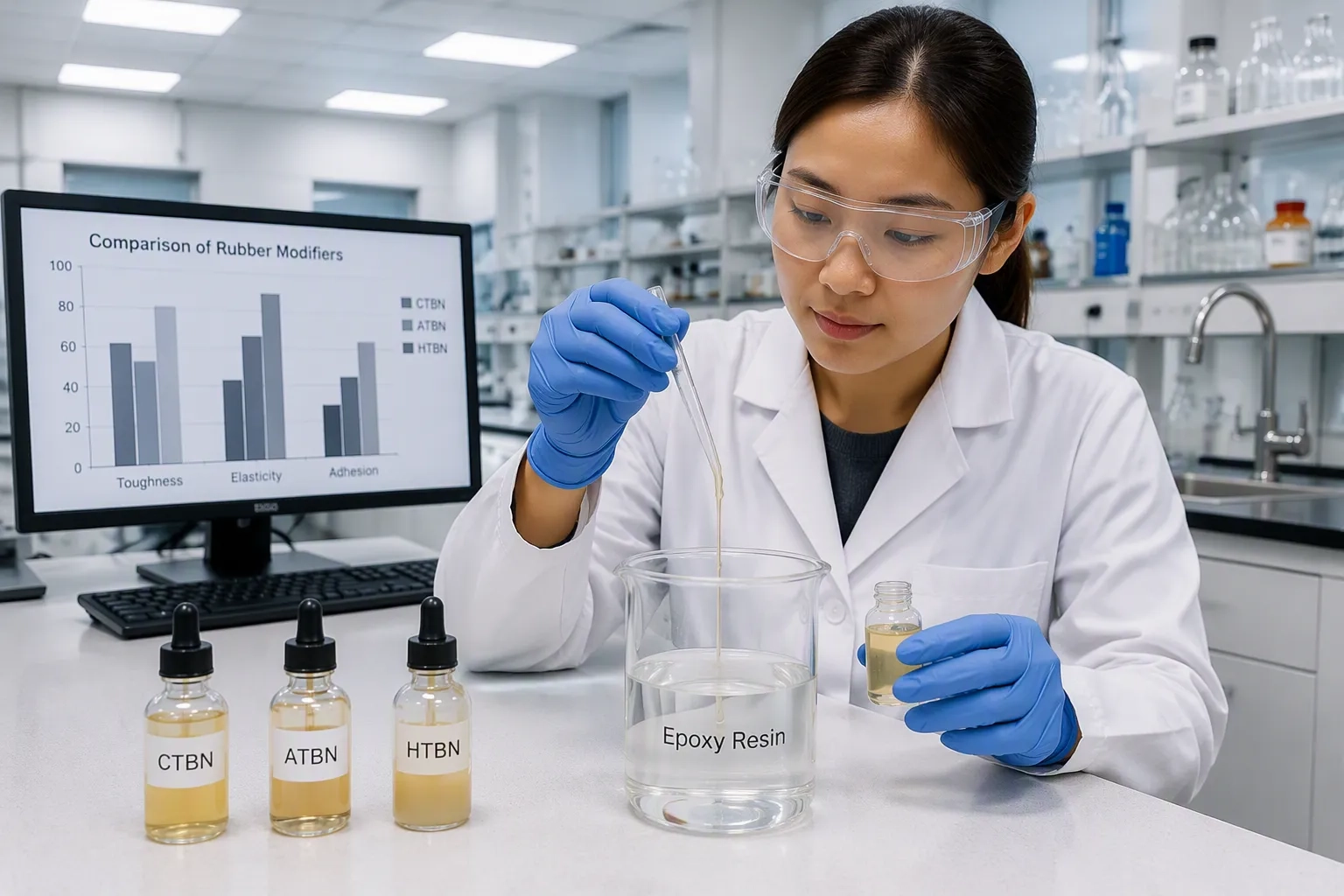
For example, CTBN and ATBN can both be considered for epoxy modification, but their terminal functionality creates different interactions with the resin and curing system. CTBN vs ATBN for epoxy resin is therefore a formulation question rather than a simple question of which material is stronger.
CTBN's carboxyl termination is particularly relevant when the formulation is designed around epoxy reactions involving carboxyl-functional rubber. ATBN introduces amino functionality and can produce different reaction behavior, cure kinetics and network structures.
This distinction becomes important when changing from one rubber chemistry to another without changing the epoxy or curing agent.
Rubber Loading
More rubber does not automatically mean more toughness.
At relatively low loading, increasing the rubber content can increase the number of stress-dissipating domains. Beyond an application-specific optimum, however, excessive rubber can reduce modulus, strength, thermal resistance or dimensional stability.
The correct loading depends on the target property. A structural adhesive, flexible coating and impact-resistant encapsulant may require very different rubber concentrations.
Cure Schedule
Cure temperature affects both reaction kinetics and phase morphology.
A rapid cure can cause the epoxy network to develop quickly, limiting the time available for rubber domains to grow. A slower cure can allow more extensive phase separation before the network becomes fully developed.
This means that the same CTBN formulation can produce different morphology under different curing conditions.
For production development, changing the cure schedule without monitoring mechanical properties can make it difficult to determine whether a performance change comes from chemistry or morphology.
Viscosity and Processing
Liquid rubber must be dispersed effectively before the system reaches the stage where phase separation begins.
High-viscosity materials can create mixing limitations, particularly when rubber loading increases. Poor initial dispersion can produce large domains that are difficult to distinguish from morphology generated naturally during curing.
For this reason, liquid rubber viscosity, mixing temperature and residence time should be considered together rather than treated as separate processing variables.
Phase Separation Is Not the Same as Poor Compatibility
One of the most common mistakes in rubber-modified epoxy development is treating every visible phase separation phenomenon as evidence of incompatibility.
A toughened epoxy is intentionally a multiphase material. The question is not whether separation occurs, but when it occurs, how large the resulting domains become, and whether the interface between the phases can transfer stress effectively.
A useful formulation generally requires three stages to work together:
1. Initial dispersion — the liquid rubber must be distributed throughout the uncured epoxy.
2. Controlled phase development — curing causes the rubber to form discrete domains rather than uncontrolled agglomerates.
3. Stable interfacial structure — the rubber and epoxy phases must remain sufficiently bonded to transfer stress during loading.
If the first stage fails, the final morphology may contain large agglomerates. If the second stage is poorly controlled, domain size may become excessive. If the third stage is weak, rubber particles may behave more like defects than toughening elements.
How CTBN Formulation Variables Affect Epoxy Performance
For formulators selecting a CTBN toughening agent, the useful parameters extend beyond chemical identity.
Variable | What it influences | Why it matters |
Acrylonitrile content | Rubber polarity and epoxy compatibility | Changes dispersion and phase behavior |
Molecular weight | Viscosity and rubber-domain formation | Influences processing and morphology |
Carboxyl functionality | Reaction with epoxy chemistry | Affects interfacial bonding and cure behavior |
Rubber loading | Domain population and flexibility | Too much can reduce stiffness and strength |
Cure temperature | Reaction rate and morphology | Changes phase-separation kinetics |
Mixing conditions | Initial dispersion | Determines starting morphology |
This is also why supplier data should be reviewed alongside actual formulation trials. A datasheet can provide viscosity, functionality and basic material specifications, but it cannot predict the exact morphology of every epoxy formulation.
Further's advanced polyurethane materials range includes CTBN, ATBN, HTPB, HTBN and other reactive liquid polymers, making it possible to evaluate different terminal-functional chemistries according to the resin system rather than treating liquid rubber as a single material category.
When Rubber Domains Become Too Large
There is a practical limit to beneficial phase separation.
If rubber domains grow excessively, they can reduce the effective load-bearing area of the epoxy matrix. Large domains can also create stress concentrations and reduce tensile strength or modulus.
This becomes especially important in systems requiring both epoxy fracture toughness and structural strength.
A formulation should therefore be evaluated using several mechanical indicators rather than impact strength alone. Depending on the application, useful measurements may include fracture toughness, tensile strength, modulus, elongation, glass-transition temperature and adhesive shear strength.
For structural adhesives, for example, a formulation that gains impact resistance but loses too much heat resistance may not be an improvement in practical terms.
Phase Separation in Different Epoxy Applications
The desired morphology changes with the application.
In epoxy adhesives, rubber modification is often used to improve peel resistance, impact resistance and tolerance to dynamic loading. The rubber phase must improve energy dissipation without compromising adhesion or heat resistance.
In composite matrices, the formulation must balance toughness with fiber bonding, processing viscosity and final mechanical strength. Excessive rubber can interfere with fiber wetting or reduce the stiffness of the matrix.
In coatings, flexibility and crack resistance may be more important than maximum fracture toughness. Viscosity, surface appearance and curing behavior also become significant.
For electronics and encapsulation, the formulation has an additional requirement: modification cannot introduce unacceptable changes in thermal stability, electrical insulation or processing behavior. Further has previously discussed HTPB in electronic potting and encapsulation, illustrating how reactive liquid polymers can be evaluated according to the requirements of the final material rather than as isolated additives.
How to Diagnose an Unstable Phase-Separated System
When a toughened epoxy gives inconsistent results, the first step should be to distinguish formulation chemistry from processing problems.
Signs that deserve investigation include:
· Large differences in toughness between batches
· Unexpected viscosity increases during storage
· Visible particles or cloudy regions before curing
· Significant loss of tensile strength after increasing rubber content
· Strong dependence of performance on cure temperature
· Poor adhesive strength despite improved impact resistance
Microscopy can be particularly useful because bulk mechanical testing only shows the final result. Microscopic analysis can reveal whether the rubber phase is finely dispersed, broadly distributed or present as large agglomerates.
For a formulation program, comparing morphology with fracture toughness often provides more useful information than changing several formulation variables at once.
Selecting Between CTBN, ATBN and Other Liquid Rubbers
There is no universal best liquid rubber for every polymer system.
CTBN is strongly associated with epoxy toughening because its carboxyl functionality can participate in epoxy formulation chemistry. ATBN can be attractive where amino functionality and different reaction behavior are desirable. HTPB, by contrast, is hydroxyl-terminated and is particularly relevant to polyurethane systems where hydroxyl functionality is matched with suitable isocyanates.
The distinction can be seen clearly when comparing their functional groups:
Liquid rubber | Terminal functionality | Typical formulation direction |
CTBN | Carboxyl | Epoxy toughening and impact modification |
ATBN | Amino | Epoxy and other reactive polymer systems |
HTPB | Hydroxyl | Polyurethane binders and elastomers |
HTBN | Hydroxyl + nitrile structure | Flexible polyurethane and specialty elastomer systems |
CTPB | Carboxyl | Reactive polybutadiene-based modification |
For example, a formulator developing an epoxy adhesive should generally start with CTBN for epoxy or ATBN screening rather than selecting HTPB simply because all three are liquid rubbers.
Further also provides HTPB, ATBN, HTBN and CTPB, allowing different reactive liquid rubber structures to be considered according to the chemistry of the host polymer.
A Practical Approach to Controlling Phase Morphology
A more reliable development process is to change one major variable at a time.
For an epoxy system based on CTBN, the initial screening can focus on:
1. CTBN loading and viscosity grade.
2. Epoxy-to-rubber compatibility before curing.
3. Cure temperature and cure time.
4. Final rubber-domain size and distribution.
5. Fracture toughness versus tensile and thermal properties.
The goal is to identify the point where the rubber phase is sufficiently developed to dissipate fracture energy without becoming a dominant soft phase.
This approach is more informative than simply increasing the rubber concentration whenever toughness is below target.
Why Supplier Selection Matters for Phase-Separated Epoxy Systems
Two materials described as CTBN may not behave identically in a formulation. Differences in molecular weight distribution, acrylonitrile content, carboxyl functionality, viscosity and manufacturing control can affect both processing and final morphology.
For industrial buyers, the supplier evaluation should therefore include more than price and nominal product name. Important information includes:
· Technical specifications and batch consistency
· Functional group values
· Viscosity range
· Storage stability
· Recommended processing conditions
· Application experience
· Availability of technical support and customization
For larger formulation programs, access to consistent raw materials is particularly important because changes in rubber characteristics can appear as changes in the epoxy formulation itself.
From Phase Separation to Better Epoxy Toughening
Rubber phase separation is best understood as a controlled morphology problem.
The strongest formulations do not simply maximize rubber content. They create a stable epoxy matrix containing well-distributed rubber domains with an effective interface, allowing the rubber phase to participate in stress dissipation without sacrificing the properties that make epoxy useful.
That is why CTBN selection should be connected to epoxy chemistry, cure conditions, processing viscosity and the mechanical requirements of the finished product.
For formulators comparing different approaches, the next step is often a direct comparison of CTBN toughening agents for epoxy resin systems, followed by formulation-specific testing rather than relying on a generic ranking of liquid rubbers.

 English
 English
  Spanish
  Russian
  Arabic
  French
  German
  Portuguese
  Turkish
  Dutch
Dutch  Polish
  Korean
  Vietnamese
  Indonesian
 07. Jul, 2026