When engineers begin developing a new polyurethane formulation, the first question is often surprisingly simple: Which reactive liquid rubber should we use? The answer, however, is rarely found in a product datasheet. Two materials may share similar viscosity, hydroxyl value, or molecular weight, yet produce completely different processing behavior and long-term performance once incorporated into a polyurethane network.
This is a challenge that Shanghai Further New Material Technology Co., Ltd. encounters regularly when working with customers developing elastomers, waterproof coatings, structural adhesives, casting compounds, and composite materials. In many cases, a formulation that performs well during laboratory evaluation begins to show inconsistent curing, poor elongation, or premature cracking after scale-up. The polymer itself is not necessarily the problem. More often, the issue lies in selecting a reactive liquid rubber that does not match the chemistry or processing conditions of the intended polyurethane system.
The discussion around liquid rubber has also changed considerably over the past decade. Early formulation work focused heavily on improving tensile strength or reducing material costs. Today's engineers are far more concerned with fatigue resistance, hydrolysis stability, weatherability, processing consistency, and long-term durability. End users expect polyurethane products to remain reliable after years of exposure to moisture, temperature cycling, vibration, and mechanical stress rather than simply passing initial laboratory tests.
That shift explains why polyurethane liquid rubber has become a technical subject rather than simply a purchasing decision. Selecting the correct reactive polymer influences every stage of production—from mixing viscosity and filler dispersion to curing efficiency, dimensional stability, service life, and even warranty claims years after installation.
For manufacturers, choosing the right liquid rubber is no longer about finding the strongest material. It is about building a polymer network that performs predictably throughout its entire lifecycle.
Why Reactive Liquid Rubber Cannot Be Selected by Datasheet Alone
Engineers naturally compare specification sheets when evaluating raw materials. Viscosity, hydroxyl value, molecular weight, and appearance are all important indicators, but none of them independently determine how a polyurethane system will perform after curing.
Two liquid rubbers can appear remarkably similar on paper while behaving very differently once mixed with the same polyisocyanate. One formulation may cure into a highly elastic network capable of surviving years of cyclic loading, while another develops internal stress, loses flexibility, or becomes increasingly brittle after environmental exposure. The difference lies not only in the numerical values shown on a technical data sheet, but also in how the polymer architecture participates in network formation.
Unlike conventional plasticizers, reactive liquid rubber becomes part of the polymer itself. Reactive terminal groups chemically bond into the polyurethane network during curing, permanently changing the structure of the material. Because these polymer chains become integrated rather than merely dispersed, they influence stress distribution, crosslink density, molecular mobility, and resistance to fatigue.
This distinction is particularly important in demanding polyurethane applications. A waterproof roofing membrane must tolerate years of thermal expansion without cracking. An industrial roller experiences millions of compression cycles during normal operation. A structural adhesive must maintain bond strength despite continuous vibration and seasonal temperature changes. Although each application requires flexibility, the underlying performance requirements differ significantly.
For this reason, experienced formulation engineers rarely begin by asking, "Which liquid rubber has the highest strength?" Instead, they ask several more practical questions.
· How will the polymer react with the selected isocyanate?
· Will it remain stable during processing?
· Can the cured network resist fatigue over extended service periods?
· Will moisture or elevated temperature gradually reduce performance?
· Does the material maintain consistent quality from one production batch to the next?
Those questions determine whether a formulation succeeds commercially far more often than any single mechanical property reported during laboratory testing.
Another misconception is that higher tensile strength automatically indicates a superior formulation. In reality, polyurethane products often fail long before reaching their theoretical tensile limit. Failure usually begins with microscopic crack initiation, internal stress accumulation, hydrolytic degradation, or cyclic fatigue. Once these defects appear, they continue growing until visible failure occurs, regardless of how impressive the original tensile data appeared.
This explains why modern polyurethane development increasingly focuses on balancing multiple properties instead of maximizing only one. Flexibility without adequate strength creates deformation problems. High crosslink density without molecular mobility leads to brittleness. Excessive hardness can reduce impact resistance, while low viscosity may improve processing but negatively affect cured performance if molecular architecture is poorly designed.
Successful formulations therefore achieve equilibrium rather than extremes.
Why HTPB Remains the Preferred Polyurethane Liquid Rubber
Among commercially available reactive liquid rubbers, HTPB has maintained its position in polyurethane chemistry for decades. That longevity is not the result of tradition; it reflects a molecular structure that aligns exceptionally well with polyurethane reaction mechanisms.
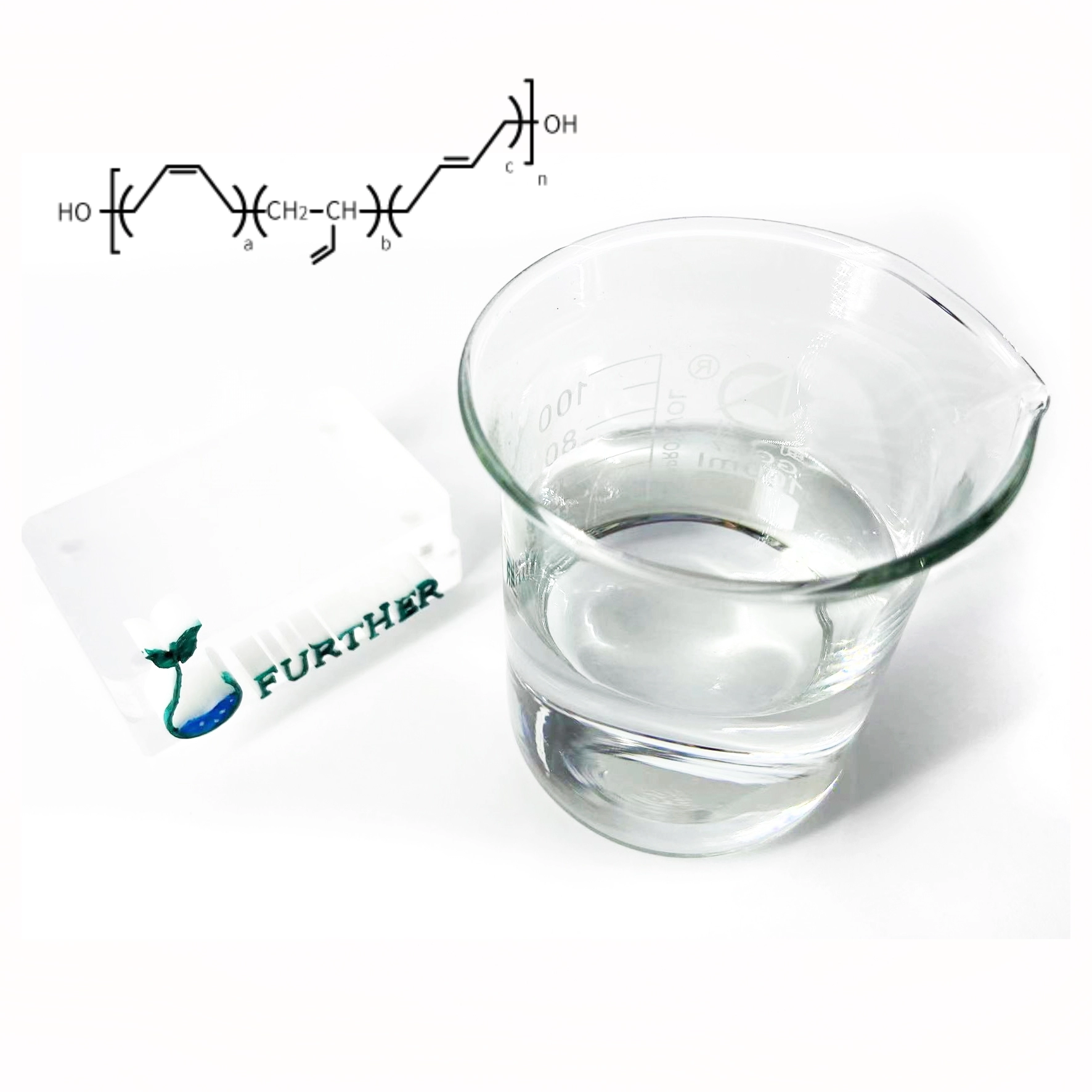
Unlike carboxyl-terminated or amine-terminated liquid rubbers designed primarily for epoxy modification, HTPB carries hydroxyl functional groups at both ends of its polymer chain. During curing, these hydroxyl groups react directly with isocyanates to form stable urethane bonds. Instead of acting as a secondary additive, HTPB becomes an integral component of the crosslinked polyurethane network.
This seemingly simple difference has profound effects on material performance.
Because the flexible polybutadiene backbone is chemically incorporated into the network, it allows stress to be distributed over a much larger molecular area. Under repeated deformation, polymer chains can absorb and redistribute mechanical energy instead of concentrating stress at localized defects. Crack initiation becomes more difficult, and once microscopic cracks appear, their propagation slows significantly.
From an engineering perspective, this is one of the main reasons HTPB-based polyurethane systems demonstrate outstanding fatigue resistance compared with many alternative formulations.
The benefits become particularly obvious in products subjected to continuous movement rather than static loading. Industrial wheels, conveyor rollers, mining liners, flexible coatings, bridge expansion materials, and waterproof membranes all experience repeated deformation during service. Materials in these applications rarely fail because of insufficient tensile strength. They fail because millions of loading cycles gradually damage the polymer network.
A properly formulated HTPB system addresses exactly that problem.
Equally important is its excellent hydrolysis resistance. Water remains one of the primary causes of long-term polyurethane degradation. Moisture gradually attacks susceptible polymer structures, reducing mechanical properties and accelerating aging. Because the polybutadiene backbone is inherently hydrophobic, HTPB contributes to lower water absorption while maintaining flexibility after prolonged environmental exposure. This characteristic explains why it is widely adopted in waterproof construction materials, marine coatings, sealing compounds, and outdoor polyurethane products.
Processing advantages should not be overlooked either.
Many engineers first notice the practical value of HTPB during production rather than after curing. Compared with higher-viscosity prepolymers, HTPB flows more easily around fillers and reinforcing materials. Pigments disperse more uniformly, trapped air escapes more efficiently during vacuum degassing, and mixing requires less mechanical energy. These improvements simplify manufacturing while reducing the likelihood of void formation inside the finished product.
Although these characteristics receive far less attention than tensile strength or elongation, they often have a greater influence on production yield and long-term product consistency.
Why Consistency Matters More Than Peak Performance
One observation repeatedly emerges in industrial production: customers rarely complain that a material is slightly weaker than expected. They complain when identical formulations produce different results from one production run to another.
For manufacturers, inconsistency is far more expensive than modest differences in mechanical performance. A slight variation in hydroxyl value may require adjustments to the NCO/OH ratio. Minor fluctuations in moisture content can introduce bubbles during curing. Variations in molecular weight distribution influence viscosity, filler wetting, and ultimately curing behavior. None of these issues may appear dramatic individually, yet together they can cause significant instability once production moves beyond laboratory scale.
This is why experienced raw material suppliers pay as much attention to manufacturing consistency as they do to developing new polymer grades.
At Shanghai Further New Material Technology Co., Ltd., quality control begins well before final inspection. Incoming raw materials undergo verification before entering polymerization, while reaction temperature, residence time, and process stability remain under continuous monitoring throughout production. The objective is not simply to manufacture HTPB that falls within specification, but to ensure that every shipment behaves predictably when customers incorporate it into their own polyurethane formulations.
From the customer's perspective, consistent raw materials reduce formulation adjustments, shorten development cycles, and improve scale-up reliability. Engineers spend less time correcting unexpected curing behavior and more time optimizing product performance.
This practical value is difficult to summarize in a specification sheet, yet it is often one of the strongest indicators of a dependable long-term supplier.
Where Polyurethane Formulations Usually Go Wrong
One misconception persists across the polyurethane industry: if the formulation works in the laboratory, it should perform the same way in production. In reality, the transition from a five-kilogram trial batch to a two-ton production run often exposes problems that never appeared during development.
From the technical support experience of Shanghai Further New Material Technology Co., Ltd., these issues are rarely caused by the reactive liquid rubber itself. More often, they result from overlooking interactions between raw materials, processing conditions, and curing chemistry.
Moisture is a typical example. Polyurethane chemistry is highly sensitive to water. Even trace moisture introduced through fillers, pigments, or improperly stored raw materials can react with isocyanates to generate carbon dioxide. In production, this appears as pinholes, bubbles, or internal voids. Many engineers initially suspect the liquid rubber, only to discover that the root cause lies elsewhere in the formulation process.
Another issue is the NCO/OH ratio. Formulators sometimes replace one hydroxyl-terminated polymer with another while keeping the original curing recipe unchanged. Although the viscosity may appear similar, differences in hydroxyl value and molecular weight alter the stoichiometric balance. The result may be incomplete curing, excessive hardness, or a noticeable reduction in elongation after aging.
Temperature control is equally important. Polyurethane reactions are exothermic, and curing behavior changes as batch size increases. A formulation that cures smoothly in a laboratory beaker may gel too quickly in industrial equipment if heat is not properly managed. Conversely, insufficient curing temperature can leave unreacted functional groups within the polymer network, affecting long-term durability.
Experienced manufacturers therefore spend as much time controlling production variables as they do selecting raw materials.
Several practical checkpoints are routinely reviewed before recommending a specific HTPB grade:
Production Factor | Why It Matters |
Isocyanate type | Determines curing rate and final network structure |
NCO/OH ratio | Controls crosslink density and mechanical properties |
Moisture content | Prevents bubbles and side reactions |
Filler loading | Influences viscosity and dispersion |
Mixing process | Ensures uniform polymer distribution |
Degassing conditions | Removes entrapped air before curing |
These discussions rarely appear in product brochures, yet they often determine whether a polyurethane formulation performs consistently after commercial production begins.
For that reason, technical communication between supplier and customer should begin long before material is shipped. Understanding the application, processing equipment, and curing conditions usually produces better results than simply recommending the highest-performing grade on paper.
Choosing Between Different Reactive Liquid Rubbers
Although HTPB is widely recognized as the preferred polyurethane liquid rubber, it is not intended to solve every polymer modification challenge. One of the most common misconceptions in formulation work is assuming that all reactive liquid rubbers serve the same purpose simply because they share similar physical appearances.
The chemistry tells a different story.
Each reactive liquid rubber family is designed around a different terminal functional group, and those functional groups determine how the material participates in polymerization. Once that principle is understood, product selection becomes much more logical.
For polyurethane systems, hydroxyl functionality remains the natural choice because hydroxyl groups react directly with isocyanates to form urethane linkages. This makes HTPB particularly suitable for elastomers, waterproof membranes, sealants, protective coatings, composite materials, and other flexible polyurethane applications where elasticity and fatigue resistance are essential.
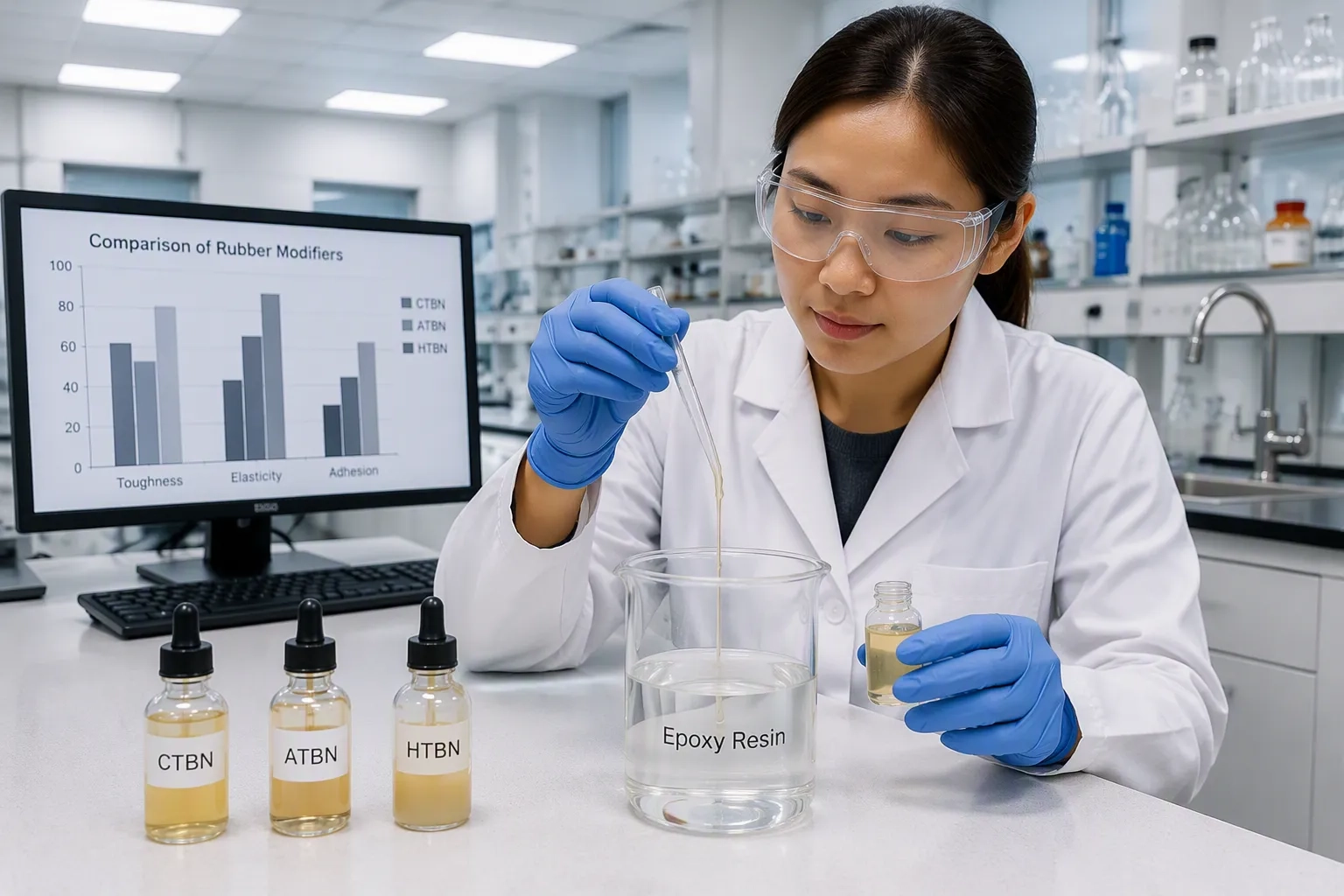
By contrast, CTBN is primarily developed for epoxy systems. Its terminal carboxyl groups react differently during curing and promote the formation of dispersed rubber domains within rigid epoxy networks. Rather than increasing flexibility in the same way as HTPB, CTBN significantly improves fracture toughness and impact resistance in otherwise brittle thermosetting resins.
Similarly, ATBN introduces amine functionality, allowing faster reactions with epoxy resins and making it valuable in applications where cure speed and low-temperature toughness are priorities.
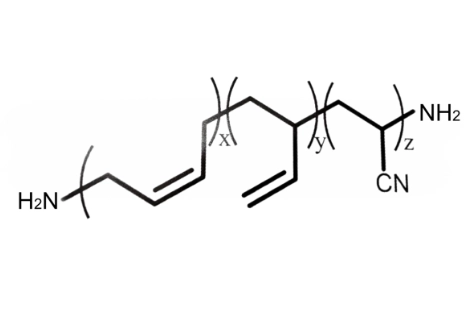
HTBN combines hydroxyl functionality with nitrile segments, providing a balance between polyurethane compatibility and enhanced oil resistance. This makes it attractive for seals, industrial hoses, and specialty elastomer formulations operating in aggressive environments.
Meanwhile, CTPB finds applications in selected polyester and specialty resin systems where improved adhesion and compatibility are required.
The key point is that these materials are not competitors—they are complementary technologies designed for different polymer chemistries.
Selecting the correct reactive liquid rubber therefore begins with identifying the curing mechanism rather than comparing viscosity or tensile strength.
Recommended Internal Link: CTBN Reactive Liquid Rubber (Link to the CTBN product page here.)
Looking Beyond Product Specifications When Selecting a Supplier
Raw material performance depends not only on molecular design but also on manufacturing capability. Two suppliers may offer products with similar technical specifications, yet customers often experience very different results once production begins.
When evaluating a supplier of reactive liquid rubber, procurement teams should look beyond the data sheet and consider how consistently the material can be reproduced over time.
Several questions deserve attention before placing long-term orders:
· Can the supplier maintain stable hydroxyl value and viscosity across different production batches?
· Are quality control procedures focused on process stability rather than only final inspection?
· Does the supplier provide technical support during formulation development?
· Can product grades be adjusted for different curing systems or processing requirements?
· Is long-term supply stability sufficient for commercial production?
These questions become particularly important when production volumes increase. Reformulating because of inconsistent raw materials often costs significantly more than paying a slightly higher purchase price for a dependable supplier.
At Shanghai Further New Material Technology Co., Ltd., cooperation with customers typically extends beyond material supply. Discussions frequently involve formulation optimization, curing recommendations, processing adjustments, and batch consistency requirements. This collaborative approach reduces development time while improving manufacturing reliability, particularly for customers introducing new polyurethane products to the market.
Making Better Decisions Starts with Better Chemistry
Choosing a reactive liquid rubber is ultimately a decision about polymer architecture rather than product branding. The most successful polyurethane formulations are rarely those built around the highest numerical properties; they are the formulations in which every component contributes to a balanced, durable network capable of performing consistently under real operating conditions.
For polyurethane systems, HTPB continues to provide an exceptional combination of flexibility, processability, hydrolysis resistance, and long-term mechanical stability. Its chemistry aligns naturally with isocyanate curing reactions, making it one of the most reliable foundations for high-performance elastomers, coatings, adhesives, waterproofing materials, and composite applications.
At the same time, understanding where CTBN, ATBN, HTBN, and CTPB fit within the broader family of reactive liquid rubbers allows engineers to make formulation decisions based on chemistry rather than habit. That understanding reduces development risks, shortens optimization cycles, and helps manufacturers build products with longer service life and more predictable performance.
As polyurethane applications continue to demand greater durability, lighter weight, and improved environmental resistance, material selection will depend less on individual product specifications and more on how well each reactive polymer integrates into the complete formulation. Companies that approach liquid rubber selection from this perspective are generally able to achieve more stable production, fewer quality issues, and better long-term product performance.
Frequently Asked Questions
Why is HTPB preferred for polyurethane instead of CTBN?
HTPB contains terminal hydroxyl groups that react directly with isocyanates to form polyurethane networks. CTBN, on the other hand, is primarily designed for epoxy modification through its carboxyl functional groups. Although both belong to the reactive liquid rubber family, they serve different polymer systems and are not intended to replace one another.
Does a higher hydroxyl value always produce better polyurethane performance?
Not necessarily. Hydroxyl value affects curing stoichiometry and crosslink density, but optimal performance depends on balancing hydroxyl value with molecular weight, viscosity, isocyanate selection, and application requirements. Simply choosing the highest hydroxyl value does not guarantee superior mechanical properties.
What causes bubbles in polyurethane systems using HTPB?
In most cases, bubbles are caused by moisture contamination rather than the HTPB itself. Water reacts with isocyanates to produce carbon dioxide during curing. Proper drying of fillers, controlling ambient humidity, and minimizing moisture throughout production are essential for preventing void formation.
How important is batch consistency for reactive liquid rubber?
Batch consistency is critical because small variations in hydroxyl value, viscosity, or moisture content can influence curing behavior and mechanical performance. Stable raw materials reduce formulation adjustments and improve production efficiency, particularly during large-scale manufacturing.
Can one reactive liquid rubber be used for every polymer system?
No. Different reactive liquid rubbers are designed for different chemistries. HTPB is generally used in polyurethane systems, while CTBN and ATBN are commonly selected for epoxy modification. Material selection should always begin with the curing mechanism of the target resin rather than the physical properties of the liquid rubber alone.

 English
 English
  Spanish
  Russian
  Arabic
  French
  German
  Portuguese
  Turkish
  Dutch
Dutch  Polish
  Korean
  Vietnamese
  Indonesian
 14. Aug, 2026