Why TMXDI Matters in Waterborne Polyurethane
Waterborne polyurethane (WPU) formulations must balance properties that do not always come easily together. A coating or adhesive may need to form a continuous film, remain flexible, resist water exposure and adhere to its substrate, while the dispersion itself must stay stable during storage and application.
The choice of diisocyanate influences this balance because it affects the polyurethane backbone, the distribution of hard and soft segments, and the way polymer chains organize during film formation. TMXDI (tetramethylxylene diisocyanate) is one option for developing waterborne polyurethane dispersions (PUDs), particularly when toughness, flexibility and the processability of high-solids formulations are important.
TMXDI has been used in waterborne polyurethane systems designed to achieve low volatile organic compound (VOC) levels without relying on organic solvents. However, the final result depends on more than the diisocyanate alone. Polyol chemistry, internal hydrophilic groups, neutralization, molecular weight, chain extension and dispersion conditions all influence the finished material.
The key question is how TMXDI can be incorporated into a formulation to meet specific performance targets, rather than whether it automatically improves every waterborne polyurethane.
How TMXDI Affects Prepolymer Formation
Molecular Structure and Reaction Behavior
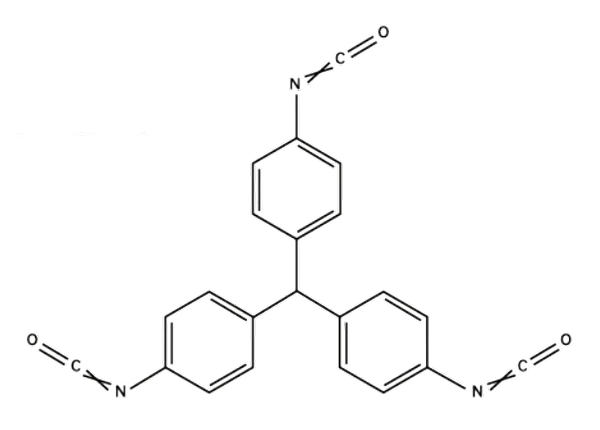
TMXDI is an aliphatic diisocyanate with two isocyanate groups attached to a tetramethyl-substituted aromatic ring through aliphatic linkages. This structure distinguishes it from commonly used alternatives such as isophorone diisocyanate (IPDI) and hexamethylene diisocyanate (HDI).
Its bulky, methyl-substituted structure influences the steric environment around the reactive groups and the architecture of the resulting polyurethane. Once incorporated into the polymer chain, TMXDI contributes to the balance between segmental mobility, intermolecular interactions and hard-domain formation.
These structural effects matter in waterborne systems because the polymer must perform two different jobs. Before application, it needs to remain dispersed in water. After application, the dispersed particles must come together and form a coherent film.
Reaction behavior cannot be predicted from molecular structure alone. Temperature, catalyst selection, polyol type, reactant ratio and conversion all affect prepolymer synthesis. Reaction progress and residual NCO content should therefore be monitored rather than assuming the same reaction profile for every formulation.
Controlling Prepolymer Viscosity and Molecular Weight
Prepolymer viscosity affects mixing, transfer, neutralization and the subsequent dispersion step. If viscosity becomes too high, incorporating the prepolymer into water can become more difficult, particularly at elevated solids content. Poor control of molecular weight or functionality can also lead to undesirable rheological behavior and inconsistent film properties.
TMXDI can be used in prepolymer designs intended to combine manageable viscosity with high polymer solids. Historical research on TMXDI-based aqueous polyurethane systems reported the potential for low-VOC formulations, high solids, low viscosity, toughness and flexibility. These findings support further evaluation of the chemistry, but they do not guarantee the same results in every formulation.
Several variables need to be considered together:
Polyol chemistry: Polyester and polyether polyols differ in polarity, hydrolytic behavior, segmental mobility and their contribution to mechanical properties.
NCO/OH ratio: The ratio of isocyanate groups to hydroxyl groups influences prepolymer end groups, molecular weight development and the amount of residual NCO available for subsequent reactions.
Prepolymer solids and temperature: Both affect viscosity and processability, which in turn influence the conditions required for dispersion.
The goal is not simply to achieve the lowest possible viscosity. A useful prepolymer must be easy to process under controlled conditions while providing the molecular architecture needed in the final film.
Why Formulation Balance Matters
A higher proportion of hard segments may improve strength or modulus in some systems, but it can also reduce flexibility or alter particle coalescence. A soft-segment-rich polymer may offer greater flexibility yet lack the cohesive strength required for demanding applications.
TMXDI should therefore be assessed within the complete polymer design. Changes in diisocyanate chemistry can alter how a polyurethane responds to the same polyol, hydrophilic monomer or chain extender. A formulation optimized for one diisocyanate should not automatically be transferred to another without checking its reaction behavior and final properties.
How TMXDI Influences Waterborne Dispersion Stability
The Role of Hydrophilic Groups and Neutralization
A waterborne polyurethane needs sufficient stabilization to remain dispersed in water. In internally stabilized anionic systems, this is commonly achieved through carboxylic acid groups introduced by a hydrophilic component such as dimethylolpropionic acid (DMPA). Neutralization converts these groups into ionic sites that help stabilize the polymer particles.
TMXDI does not replace this stabilization mechanism. Its contribution must be considered alongside the amount and distribution of hydrophilic groups, the degree of neutralization and the structure of the prepolymer.
Too little stabilization can lead to coarse particles, sedimentation or coagulation. Excessive hydrophilic content, on the other hand, may increase water sensitivity in the dried film. The formulation must provide enough ionic character for reliable dispersion without compromising the properties required after drying.
Neutralization timing, mixing intensity and the rate at which the prepolymer is introduced into water can also influence the result. These process variables become particularly important when moving from laboratory preparation to larger production batches.
Particle Size, Viscosity and Storage Stability
A stable PUD is not defined by appearance alone. A dispersion can look uniform immediately after preparation yet develop particle growth, viscosity drift or sedimentation during storage.
The relationship between particle size and viscosity is not straightforward. Solids content, particle-size distribution, particle interactions and polymer architecture can all contribute to the measured rheology. Two dispersions with similar average particle sizes may behave differently if their distributions or surface characteristics differ.
The following variables deserve attention during development:
| Formulation or process variable | Potential effect on dispersion | What to measure |
|---|
| Hydrophilic group content | Changes the balance between water compatibility and film water sensitivity | Particle size, water uptake and film resistance |
| Degree of neutralization | Influences ionic stabilization and dispersion behavior | pH, particle size and storage stability |
| Prepolymer viscosity | Affects mixing and particle formation during dispersion | Viscosity under controlled conditions and particle-size distribution |
| Solids content | Changes processing demands and dispersion rheology | Solids, viscosity and visible stability |
| Dispersion temperature and mixing | Influence particle formation and batch consistency | Temperature profile, particle size and coagulum content |
These measurements help distinguish a chemistry-related problem from a processing issue. If particle size increases during storage, the cause may involve insufficient stabilization, incompatible formulation components or inadequate control of the dispersion process. Replacing the diisocyanate is not necessarily the first or most effective correction.
How TMXDI Can Influence Film Performance
The value of a TMXDI-based WPU ultimately depends on the properties of the dried film. Dispersion stability is necessary, but it does not establish whether the material will meet mechanical, adhesion or water-resistance requirements.
Research into waterborne polyurethane and polyurethane-acrylic systems has shown that diisocyanate structure can influence film morphology and mechanical behavior. The effect also depends on polymer composition. In hybrid systems, for example, changes in the acrylic fraction can alter phase structure and modify the influence of the polyurethane chemistry.
Toughness and Flexibility
Toughness describes a material's ability to absorb energy before failure, whereas flexibility concerns its ability to deform without cracking or breaking. These properties are related but not interchangeable.
TMXDI-based polyurethane dispersions have been reported to offer a useful combination of toughness and flexibility. This makes the chemistry worth considering where a coating or adhesive must tolerate deformation without losing film integrity.
The actual balance depends on soft-segment composition, hard-segment content, molecular weight, chain extension and any crosslinking reactions. A formulation with high tensile strength may still have limited elongation, while a highly extensible film may not provide sufficient cohesive strength.
Evaluation should include tensile strength, elongation at break and, where relevant, modulus or other application-specific mechanical measurements. Testing films at controlled thickness and conditioning them under consistent temperature and humidity conditions helps make comparisons meaningful.
Adhesion and Film Integrity
Adhesion depends on both the polymer and the substrate. Surface energy, contamination, substrate polarity, wetting, drying conditions and the development of cohesive strength can all affect the bond.
TMXDI has been used in waterborne adhesive systems where flexibility and toughness are important. Its inclusion may help achieve a suitable balance of polymer properties, but it does not guarantee better adhesion to every substrate.
A flexible adhesive designed for a polymer film, for example, may require different cohesive strength and surface compatibility from a coating applied to metal or wood. The test method should reflect the intended use, whether that means peel strength, lap shear, pull-off adhesion or another application-specific measurement.
Film integrity also depends on particle coalescence. If particles do not merge adequately during drying, the resulting film may contain defects that compromise mechanical performance or resistance to liquid water. Minimum film-forming temperature, drying time and ambient conditions should therefore be considered alongside resin composition.
Water Resistance and Weatherability
Water resistance is often a key concern when developing WPU coatings and adhesives, but it should not be inferred from the use of TMXDI alone. Water uptake is influenced by hydrophilic group content, neutralization, polyol selection, crosslink density and the quality of the final film.
A dispersion that is stable in water can still form a film that absorbs too much moisture for a particular application. Conversely, reducing hydrophilic content to improve water resistance may make dispersion preparation more difficult.
The appropriate formulation balances these competing requirements. Water immersion, water uptake, whitening or blistering after exposure, and adhesion retention can provide a more complete picture than a single visual inspection.
Weatherability is a separate consideration. Although TMXDI is classified as an aliphatic diisocyanate, long-term outdoor performance depends on the full polymer structure, pigments, stabilizers, crosslinking chemistry and exposure conditions. Accelerated weathering tests and color or gloss measurements are needed before drawing conclusions about exterior durability.
| Target property | Main formulation factors | Recommended evaluation |
|---|
| Toughness and flexibility | Polyol type, hard-segment content, molecular weight and chain extension | Tensile strength, elongation and modulus |
| Adhesion | Substrate, wetting, film formation and cohesive strength | Peel, lap shear or pull-off testing as appropriate |
| Water resistance | Hydrophilic content, neutralization, crosslinking and film integrity | Water immersion, water uptake and post-exposure adhesion |
| Weatherability | Polymer structure, stabilizers, pigments and crosslinking | Accelerated weathering, color and gloss retention |
| Film appearance | Particle coalescence, drying conditions and formulation compatibility | Visual inspection, surface defects and film uniformity |
The most useful comparison is between a TMXDI-containing formulation and a suitable control prepared under the same conditions. This helps establish whether the observed change comes from the diisocyanate choice or from another variable introduced during formulation.
Where TMXDI-Based Waterborne Polyurethanes May Be Used
Water-Based Adhesives
TMXDI is relevant to waterborne adhesive development when flexibility, toughness and film integrity are important. Potential uses include adhesive systems for flexible materials and applications that benefit from a balance between bond strength and deformation.
The required property profile depends on the bonding process. A pressure-sensitive adhesive, a heat-activated adhesive and a laminating adhesive do not have the same requirements for tack, cohesive strength, heat resistance or long-term bond durability.
Formulation trials should therefore reproduce the actual bonding conditions, including substrate preparation, coat weight, drying profile, assembly pressure and time before testing. Results from a free film alone may not predict adhesive performance.
Coatings and Protective Films
Waterborne polyurethane coatings may be designed for surfaces that require flexibility, abrasion resistance, adhesion or a durable finish. TMXDI can be considered when the polymer architecture needed to meet these targets is compatible with the selected diisocyanate.
For protective coatings, the assessment should extend beyond initial hardness or appearance. Water exposure, repeated flexing, adhesion retention and resistance to the intended service environment may be equally important.
In adhesive formulations, TMXDI must be evaluated alongside the polyol, stabilizing chemistry, additives and any crosslinking components. The balance will differ between adhesives, sealants and potting compounds, where flexibility, cohesive strength, substrate compatibility and resistance to service conditions can carry different weight.
How to Evaluate TMXDI in a WPU Formulation
A controlled comparison is the most reliable way to establish whether TMXDI provides a meaningful advantage for a specific application. Rather than changing several ingredients at once, begin with a defined baseline and document both dispersion properties and film performance.
A practical development sequence includes three steps:
Establish a baseline. Record the NCO/OH ratio, polyol composition, hydrophilic group content, neutralization level, solids content, pH, viscosity and particle-size distribution. Also document the dispersion procedure and film-drying conditions.
Change one major variable at a time. Compare TMXDI with a suitable reference formulation while keeping other ingredients and processing conditions as consistent as possible. If the chemistry requires different processing conditions, document those differences rather than treating the samples as directly equivalent.
Test the dispersion and the finished film. Monitor storage stability, particle size and viscosity, then evaluate tensile behavior, adhesion, water resistance and any other properties relevant to the intended application.
Repeat batches where practical. A result from one laboratory preparation may reflect mixing variability or a temporary processing effect rather than a reproducible material advantage.
For reliable comparisons, define acceptance criteria before testing and keep sample preparation, film thickness and conditioning conditions consistent. These controls are particularly important when assessing changes through material testing and quality control, since differences in specimen preparation can obscure the effect of the formulation itself.
Selecting TMXDI for Waterborne Polyurethane
TMXDI is worth considering when a waterborne polyurethane formulation requires a carefully balanced combination of toughness, flexibility, processability and film performance. Its contribution depends on the polymer structure and the conditions under which the dispersion is prepared and applied.
Before selecting a grade, check the TMXDI diisocyanate specifications against the requirements of the intended synthesis route, including material handling, reaction control and compatibility with the other formulation components.
Ultimately, the right formulation is the one that delivers reproducible dispersion stability and meets the finished product's performance requirements under realistic use conditions.

 English
 English
 Spanish
 Russian
 Arabic
 French
 German
 Portuguese
 Turkish
 Dutch
 Polish
 Korean
 Vietnamese
 Indonesian
 07. Aug, 2026