What Is TMXDI Diisocyanate?
TMXDI, or tetramethylxylylene diisocyanate, is a specialty diisocyanate used in polyurethane chemistry. Its molecular structure combines an aromatic ring with two aliphatic isocyanate groups, giving it a different reaction profile from conventional aromatic and aliphatic diisocyanates. When assessing TMXDI for a formulation, its chemical specifications and physical properties are a practical starting point for checking material suitability.
For polyurethane formulators, the choice of diisocyanate affects more than curing speed. It can influence prepolymer viscosity, processing conditions, network formation and the mechanical properties of the finished material. TMXDI is worth considering when a formulation calls for a particular balance of processing behavior and end-use performance.
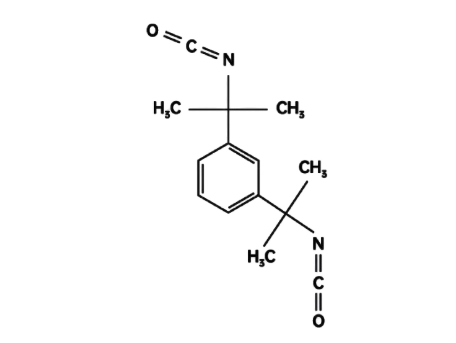
Its molecular structure distinguishes it from conventional aromatic diisocyanates, in which the NCO groups are directly attached to an aromatic ring. In TMXDI, the isocyanate groups are attached through aliphatic carbon atoms. This difference influences their chemical environment and reaction behavior, making TMXDI relevant to the development of specialty polyurethane systems.
TMXDI Chemical Structure and Reactivity
How Molecular Structure Affects Reactivity
TMXDI contains two isocyanate groups within a structure that also includes an aromatic ring and methyl substituents. The bulky groups surrounding the NCO functionality create steric hindrance, which can affect how readily the isocyanate groups react with other functional groups.
In polyurethane production, isocyanates react with hydroxyl groups to form urethane linkages. The resulting polymer structure depends on the functionality and chemical structure of the starting materials, the NCO-to-OH ratio, catalyst selection, temperature and reaction time.
TMXDI's reaction behavior can influence prepolymer preparation and the time available for mixing or application. However, it should not be assumed that TMXDI will always react more slowly than another isocyanate under every condition. The observed reaction rate depends on the complete formulation, including the polyol, catalyst and processing environment.
This distinction matters in industrial production. A reaction profile that works well for a two-component adhesive may not be suitable for a waterborne polyurethane dispersion or a rapid-cure molding process.
Reaction with Polyols and Other Functional Groups
The two NCO groups in TMXDI allow it to react with polyols to form polyurethane prepolymers and polymer networks. The ratio between available isocyanate and hydroxyl groups is a key formulation variable.
An excessive or insufficient NCO-to-OH ratio can change residual functionality, molecular structure and curing behavior. Formulators should calculate the required amount of TMXDI from the actual NCO content of the supplied material rather than relying solely on nominal molecular weight.
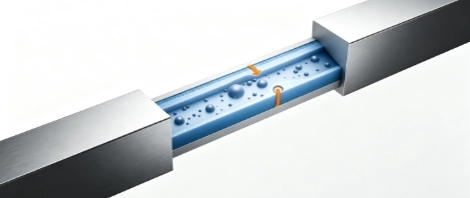
Moisture also requires attention. Isocyanates react with water, producing carbon dioxide and subsequent urea linkages. Depending on the formulation and processing conditions, this reaction can contribute to bubbles, changes in viscosity or unwanted variations in the cured material.
For this reason, moisture control, accurate metering and appropriate reaction conditions are essential when working with TMXDI.
Key Properties of TMXDI
TMXDI's value in a formulation comes from the relationship between its molecular structure, reaction behavior and the properties of the resulting polymer. The raw material's physical specifications are important for handling and formulation calculations, but they do not, by themselves, predict the performance of the finished polyurethane.
The following reference data can help with initial material identification.
| Property | Reference information | Formulation relevance |
|---|
| Chemical name | Tetramethylxylylene diisocyanate | Identifies the material |
| Abbreviation | TMXDI | Common technical and commercial reference |
| CAS number | 2778-42-9 | Supports material and documentation checks |
| Molecular weight | Approximately 244.3 g/mol | Used in stoichiometric calculations |
| Isocyanate functionality | Two NCO groups per molecule | Relevant to polyurethane prepolymer and network formation |
| Theoretical NCO content | Approximately 34.4 wt% | Reference for calculating isocyanate equivalents |
| Physical form | Confirm against the current product specification | Determines handling and processing requirements |
The theoretical NCO content is calculated from the molecular structure. The actual value used in production should come from the supplier's technical data sheet and, where applicable, the certificate of analysis for the delivered batch.
Reactivity and Processing Behavior
Reaction behavior affects several stages of polyurethane manufacture, from prepolymer synthesis to final curing. Depending on the formulation, TMXDI may be considered when a particular balance of reaction rate, viscosity development and processing time is required.
These factors should be evaluated together. A slower reaction does not automatically produce a better coating or adhesive, just as a shorter cure time does not necessarily indicate superior performance. The practical target is a reaction profile that fits the available equipment, application method and production cycle.
Mechanical Performance and Flexibility
The diisocyanate contributes to the structure of the polyurethane network, but it is only one part of the formulation. Polyol molecular weight, polyol functionality, chain extenders, crosslink density and curing conditions all influence the final material.
If flexibility or elongation is a priority, the formulator should evaluate the complete polymer system rather than select TMXDI on the assumption that its structure guarantees a particular mechanical result.
Useful measurements include tensile strength, elongation at break, modulus and, where relevant, tear resistance. Hardness and dynamic mechanical properties may also be important for elastomers and flexible coatings.
Weatherability and Thermal Performance
TMXDI can be considered for specialty polyurethane systems in which outdoor exposure, heat aging or color stability matters. Its chemical structure makes it relevant to the development of certain durable polyurethane formulations, but the performance of the finished material must be demonstrated through testing.
Weathering resistance, yellowing, thermal stability and long-term adhesion are affected by more than the diisocyanate alone. Polyol chemistry, additives, pigments, film thickness, substrate and curing conditions can all change the outcome.
For outdoor applications, accelerated weathering and thermal-aging tests provide more useful evidence than assumptions based on raw-material classification.
Industrial Applications of TMXDI
TMXDI is used in specialty polyurethane development where the formulator needs to balance chemical reactivity, processing requirements and end-use properties. Its suitability varies by application, so material selection should begin with the demands of the finished product rather than the ingredient alone.
Waterborne Polyurethane Dispersions
Waterborne polyurethane dispersions are used in coatings, adhesives and other applications where water is the primary dispersion medium. TMXDI may be evaluated as a diisocyanate component when designing a polyurethane structure with specific processing and film-performance requirements.
The formulation challenge extends beyond choosing the isocyanate. Prepolymer viscosity, the type and amount of internal hydrophilic groups, neutralization, chain extension and dispersion conditions all influence whether a stable dispersion can be produced.
After film formation, the relevant performance measures may include adhesion, flexibility, water resistance, abrasion resistance and resistance to environmental exposure. The best combination depends on the substrate and the intended service conditions.
TMXDI should therefore be assessed within the complete dispersion process. Results from a solvent-based polyurethane cannot be transferred directly to a waterborne system without checking the differences in formulation and manufacturing conditions.
Industrial Adhesives and Sealants
Adhesive and sealant formulations must often meet several requirements at once: reliable adhesion, adequate flexibility, resistance to environmental exposure and manageable processing time.
TMXDI can be evaluated in polyurethane adhesive systems where its reaction profile and contribution to polymer structure suit the intended application. Potential areas of investigation include industrial bonding, flexible adhesive layers and specialty sealant formulations.
The main selection criteria depend on the materials being joined. Metal, plastic, wood and composite substrates differ in surface energy, surface treatment requirements and response to moisture or temperature changes.
Before choosing TMXDI, formulators should examine:
Adhesion to the actual substrate: Test the intended material combination, including any required primer or surface treatment.
Cure and application behavior: Confirm workable time, viscosity development and cure conditions on the production line.
Durability under service conditions: Evaluate water exposure, thermal cycling, aging and mechanical loading where relevant.
A formulation that performs well on one substrate may not deliver the same bond strength on another. Lap-shear strength, peel strength or other application-specific tests should be selected according to the intended joint design.
These requirements vary across adhesive, sealant and potting compound applications, so performance should be verified using the intended materials and service conditions.
Protective and Specialty Coatings
Polyurethane coatings are selected for a range of properties, including abrasion resistance, flexibility, adhesion and resistance to environmental exposure. TMXDI may be considered in specialty coating development when its reaction behavior and the resulting polymer structure align with the required performance.
The evaluation should distinguish between the properties of the uncured formulation and those of the finished film. Viscosity and application behavior influence coating quality during processing, while film formation, crosslinking and substrate interaction determine much of the final performance.
For protective coatings, useful tests may include adhesion, hardness, flexibility, abrasion resistance, water resistance and accelerated weathering. Color retention and gloss stability may also matter in applications where appearance is important.
TMXDI is not automatically the preferred choice for every polyurethane coating. The decision should be based on performance data from the actual formulation and the conditions under which the coating will be used.
Polyurethane Elastomers and Reaction Injection Molding
Elastomers and reaction injection molding (RIM) systems place different demands on an isocyanate. Elastomer development often focuses on tensile properties, elongation, tear resistance and fatigue behavior, while RIM places additional emphasis on mixing, flow, mold filling and the timing of polymer formation.
TMXDI may be investigated in these systems when its chemistry is compatible with the selected polyols, chain extenders and processing equipment. Reaction kinetics and viscosity development need particular attention because they affect both manufacturing and the uniformity of the final part.
For elastomer applications, the formulation should be assessed through mechanical testing and, where required, dynamic or fatigue testing. For RIM, trials should also establish whether the reaction profile matches the mold-filling and demolding requirements.
When Should Formulators Consider TMXDI?
TMXDI is best assessed against a defined set of formulation requirements. Rather than assuming that one diisocyanate will outperform another in every respect, formulators should identify the property or processing limitation they need to address.
| Formulation objective | Why TMXDI may merit evaluation | What to verify |
|---|
| Control of prepolymer viscosity | Its reaction profile may suit a particular prepolymer design | Viscosity, molecular weight development and storage stability |
| Flexible polyurethane materials | Its contribution to the polymer structure may fit the required balance of properties | Elongation, modulus, tensile strength and tear resistance |
| Specialty coatings | It may be suitable for a formulation targeting specific film properties | Adhesion, weathering, abrasion and thermal aging |
| Waterborne polyurethane | It can be evaluated as part of a tailored dispersion formulation | Dispersion stability, particle size, film formation and water resistance |
| Industrial adhesive systems | Its chemistry may suit a defined combination of substrates and curing requirements | Bond strength, working time, moisture resistance and durability |
These are evaluation directions, not guaranteed outcomes. A meaningful comparison requires consistent test conditions and a clear definition of the target performance.
Comparing diisocyanates requires more than looking at their chemical structures or nominal reactivity. The polyol system, substrate, processing conditions and required end-use properties all affect the final result. These factors are equally important when selecting a polyisocyanate crosslinker for an industrial adhesive, where compatibility and curing behavior can determine bond performance.
TMXDI is not necessarily the right choice for every polyurethane formulation. Depending on the required reaction profile, substrate compatibility and end-use performance, formulators may also evaluate other specialty isocyanates, including Trans-CHDI, CHDI and DDI. The decision should be based on the requirements of the finished material rather than the isocyanate name alone.
Formulation and Quality Control Considerations
Reliable results depend on more than the choice of isocyanate. Material specifications, moisture exposure, metering accuracy and process control can all affect polyurethane quality.
Three checks are particularly important during formulation development and production:
Stoichiometry and curing: Calculate the isocyanate requirement from the actual NCO content and the hydroxyl value of the polyol. Establish the appropriate NCO-to-OH ratio through formulation trials rather than applying one ratio to every system.
Moisture management: Keep containers closed when not in use and follow the supplier's requirements for storage and handling. Control moisture in raw materials, equipment and the processing environment to reduce unwanted side reactions.
Incoming quality control: Check the product identity, batch documentation, NCO content and other specification limits relevant to the formulation. Record batch results so that any variation in processing or finished-product performance can be investigated.
TMXDI is a reactive chemical and must be handled according to its current safety data sheet. Appropriate ventilation, protective equipment, storage arrangements and spill procedures are essential. The applicable occupational safety requirements and local regulations should guide the handling procedure at each facility.
For manufacturers evaluating a new supply source, consistent specifications and traceable batch documentation are also important. A material that meets the required chemical specification should still be verified in the customer's own process before full-scale adoption.
Evaluating TMXDI for Your Application
TMXDI offers a distinct structural and reaction profile for specialty polyurethane development, but its practical value depends on how those characteristics fit the formulation and manufacturing process. Waterborne dispersions, industrial adhesives, coatings and elastomers each impose different requirements, and the relevant performance needs to be confirmed through application-specific testing.
Before selecting a grade, review the NCO content, physical specifications, handling requirements and available technical documentation. Then assess the material against the target processing window, mechanical properties and durability requirements.
The TMXDI diisocyanate product specifications provide a starting point for checking the material against these requirements. For a new formulation or a change in raw-material supply, the most reliable decision comes from matching the product specification to the intended application and validating the result under actual processing conditions.

 English
 English
 Spanish
 Russian
 Arabic
 French
 German
 Portuguese
 Turkish
 Dutch
 Polish
 Korean
 Vietnamese
 Indonesian
 20. Sep, 2026