Why Hexagonal Boron Nitride Is Used in Electrically Insulating TIMs
Heat must move efficiently from a semiconductor, power module or electronic component to a heat sink. The difficulty is that the material between these surfaces must also prevent unwanted electrical conduction. A filler that provides excellent thermal transport but creates conductive pathways can introduce electrical leakage, short-circuit risks or insulation failures.
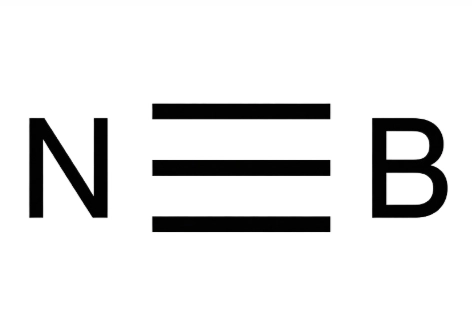
Hexagonal boron nitride (h-BN) addresses this requirement through a combination of high thermal conductivity and electrical insulation. Its layered crystal structure supports efficient phonon transport, while its wide electronic band gap makes it electrically insulating. This combination makes it a useful ceramic filler for polymer-based thermal interface materials, including thermal greases, gap-filling gels, potting compounds and thermally conductive insulating sheets.
Unlike graphite or graphene, which can introduce electrical conductivity into a polymer composite, h-BN can improve heat transfer without intentionally creating an electrically conductive filler network. This distinction is particularly important in power electronics, EV battery systems, LED assemblies and high-voltage electronic packaging.
However, selecting a suitable h-BN filler for thermal interface materials involves more than checking the nominal thermal conductivity of the powder. Particle size, platelet dimensions, surface area, packing behavior and orientation all influence the performance of the finished composite. The polymer matrix and processing method matter just as much.
How h-BN Particle Structure Affects Heat Transfer
The crystal structure of h-BN explains both its advantages and some of its formulation challenges.
Boron and nitrogen atoms form a hexagonal network within each layer. Strong covalent bonds hold atoms together in the plane, while weaker van der Waals interactions connect adjacent layers. Heat therefore travels more readily along the basal plane than across the stacked layers.
This anisotropy is important when choosing a powder for a particular TIM geometry.
In-Plane and Through-Plane Thermal Conductivity
In-plane thermal transport refers to heat movement along the surface of an h-BN platelet. Through-plane transport refers to heat movement perpendicular to the platelet surface.
In a typical thermal interface layer, heat travels from a chip or component toward a heat sink through the thickness of the material. If plate-like particles settle or align parallel to the substrate during processing, their high-conductivity planes may lie mainly parallel to the interface. This can support lateral heat spreading but may limit heat transport across the bond line.
A different particle orientation or a three-dimensional filler network can provide more continuous pathways through the thickness.
<AsyncImage query="hexagonal boron nitride platelet layered crystal structure scientific illustration thermal conductivity anisotropy" aspectRatio="16:9" width="100%" fit="contain"/>
The practical implication is that a powder with large platelets is not automatically the best choice for every thermal interface application. Its suitability depends on the direction in which heat must travel and how the particles orient under the actual processing conditions.
Research on thermally conductive h-BN polymer composites consistently identifies filler morphology, orientation and interfacial structure as major factors controlling the thermal performance of the final material.
Intrinsic Conductivity Is Not the Same as Composite Conductivity
The thermal conductivity of an individual h-BN crystal or platelet is not the same as the conductivity of a filled silicone, epoxy or polyurethane compound.
In a polymer composite, heat must pass through several different regions:
The h-BN particles themselves.
The contact points between neighboring particles.
The polymer layers separating adjacent particles.
The interface between the filler and the polymer matrix.
Each transition can introduce thermal resistance. Even a highly conductive filler may produce only a moderate improvement if particles remain separated by thick polymer layers or if the filler network contains many poorly connected contacts.
This is why the conductivity of the finished TIM should be measured directly rather than estimated from the powder's intrinsic properties.
Choosing Particle Size and Surface Area for the Formulation
Particle size is one of the most practical starting points when screening h-BN grades. It affects packing, dispersion, viscosity, surface interaction and the ability of the material to fill narrow spaces.
The product specifications published by Shanghai Further New Material Technology Co., Ltd. include several grades with different D50 values, crystal sizes and BET surface areas. These differences provide a useful basis for initial formulation screening.
What the Available h-BN Grades Indicate
The following values are taken from the company's published technical index. They are typical product values, not guaranteed batch specifications.
| Grade | BN content | D50 | Crystal size | BET surface area |
|---|
| PW02 | 99% | 2–4 μm | 500 nm | 12–30 m²/g |
| TW02 | 99.3% | 2–4 μm | 1 μm | 15–30 m²/g |
| TW06-H | 99.7% | 6–8 μm | 7 μm | 4–8 m²/g |
| TW10-H | 99.7% | 9–12 μm | 12 μm | 4–8 m²/g |
| TW20-H | 99.7% | 18–22 μm | 12 μm | 3–6 m²/g |
| TW20-W | 99.5% | 20–25 μm | 20 μm | 1–4 m²/g |
| TW50-H | 99.7% | 45–55 μm | 12 μm | 3–6 m²/g |
The table shows two useful trends. First, the finer PW02 and TW02 grades have substantially higher specific surface areas than the larger-particle grades. Second, the larger grades offer a different particle-size range that may be useful when designing a multimodal filler blend.
One important qualification: D50 and crystal size are separate specification parameters. They should not be treated as interchangeable measurements or as a direct substitute for platelet lateral dimensions and aspect ratio. For applications where particle shape and orientation are critical, request SEM images and additional morphology data.
Fine Grades Versus Larger Particle Grades
Fine h-BN grades can be useful where small particles are needed for dispersion, thin bond lines or more uniform filler distribution. However, their higher surface area also means more polymer-filler interface.
This can increase the amount of resin needed to wet the particles and may raise compound viscosity. Agglomeration can become more difficult to control, particularly when the formulation contains a high filler loading.
Larger particles may reduce the total surface area at a given filler volume and can help build more efficient particle contacts in some formulations. Their limitation is that they may not fit narrow gaps or thin bond lines, and their behavior depends strongly on particle shape and packing.
A useful starting point is to consider the following differences:
| Selection factor | Fine h-BN grades | Larger h-BN grades |
|---|
| Dispersion requirement | Often require careful deagglomeration | May disperse more easily but still require uniform wetting |
| Specific surface area | Generally higher | Generally lower |
| Compound viscosity | Can rise significantly with loading | May be easier to process at comparable volume fractions, depending on morphology |
| Thin bond lines | Potentially more suitable | Risk of particle-size mismatch or surface roughness |
| Particle packing | Can fill spaces between larger particles | Can form the main packing structure |
| Main evaluation | Agglomeration, resin demand and viscosity | Gap compatibility, packing and through-plane contacts |
For some formulations, combining fine and coarse fractions is more effective than relying on a single particle-size range. Smaller particles can occupy spaces between larger particles, increasing packing efficiency and potentially reducing the amount of polymer between neighboring particles.
This should be confirmed experimentally. A multimodal blend may improve packing, but it can also increase viscosity or produce uneven distribution if the particle sizes and surface characteristics are poorly matched.
Matching h-BN Grades to Different TIM Applications
The required particle characteristics depend on the physical form of the thermal interface material.
Thermal Greases
Thermal greases need to spread across the contact surfaces and fill microscopic gaps without creating excessive resistance to application.
For this type of formulation, particle-size distribution and rheology are closely connected. A very fine powder may produce high viscosity because of its large surface area, while an excessively coarse powder may affect smoothness, dispensing behavior and bond-line uniformity.
A useful screening approach is to compare fine and intermediate particle-size grades at the same filler volume fraction. Measure viscosity, spreadability, sedimentation behavior and thermal conductivity after application.
Gap-Filling Gels and Soft Interface Materials
Gap-filling gels must accommodate dimensional tolerances and surface irregularities while maintaining stable thermal contact.
The formulation needs to balance thermal conductivity with low modulus, compression behavior and recovery. Increasing filler loading can improve the potential for heat conduction, but it may also make the gel stiffer and less capable of filling irregular gaps.
In these systems, particle morphology and packing efficiency can be as important as nominal particle size. The best grade is the one that provides a sufficiently connected heat-transfer network without compromising the required compliance.
Thermally Conductive Potting Compounds
Potting materials protect electronic assemblies while transferring heat away from sensitive components. They also need to maintain electrical insulation and mechanical integrity after curing.
The choice of filler affects more than thermal conductivity. It can influence viscosity before curing, sedimentation, air release, curing behavior and the mechanical stress transferred to encapsulated components.
For polyurethane-based encapsulation systems, the interaction between filler loading and the flexibility of the cured polymer deserves particular attention. The discussion of HTPB-based potting and electronic encapsulation provides relevant background on the mechanical and insulation requirements of electronic potting formulations.
Filler Loading and the Trade-Off Between Conductivity and Processability
Increasing h-BN loading generally helps build a more continuous thermal conduction network. However, the improvement is not necessarily linear.
At low concentrations, individual particles may remain separated by polymer, leaving the matrix as the dominant heat-transfer path. As loading increases, particle-to-particle contacts become more frequent and thermal conductivity can rise more substantially.
Beyond a certain point, further loading may produce diminishing returns while making the material difficult to process.
Common problems include:
Excessive viscosity: High filler concentrations can make mixing, pumping, dispensing and coating more difficult.
Poor wetting and agglomeration: Incomplete resin coverage or particle clusters can create defects and reduce effective thermal contact.
Reduced flexibility: A highly filled polymer may become harder and less compliant, affecting its ability to maintain contact under thermal cycling.
Air entrapment: Increased viscosity can make degassing more difficult, leaving voids that interrupt heat-transfer pathways.
A good development program should therefore compare thermal conductivity with viscosity and mechanical performance at each loading level. Reporting conductivity alone does not provide enough information to judge whether a formulation is commercially viable.
Improving Filler-Matrix Interfaces and Thermal Networks
The interface between h-BN and the polymer matrix can be a major source of thermal resistance. The surface of h-BN is relatively chemically stable, which can make strong interaction with some polymer matrices difficult.
Poor wetting or weak interfacial contact can leave microscopic gaps around the particles. These gaps increase thermal resistance and may also affect mechanical reliability.
Several approaches are worth evaluating.
Surface Treatment and Compatibility
Surface modification can improve the interaction between h-BN and selected polymer matrices. However, treatment chemistry must be chosen carefully.
A surface treatment that improves dispersion may introduce additional organic layers or defects that reduce heat transfer. The goal should not simply be to maximize compatibility, but to improve particle wetting and contact without creating an excessively resistive interface.
The treatment should be assessed through both dispersion tests and thermal measurements on the cured composite.
Particle Orientation and Network Design
For applications where through-plane conductivity is the priority, random dispersion is not always the most efficient arrangement.
Depending on the material form and manufacturing process, orientation methods such as controlled casting, compression, extrusion or template-assisted structuring can influence the direction of heat transfer. Three-dimensional interconnected filler networks are another approach to reducing the number of isolated particle contacts.
The choice of method depends on whether the final product is a grease, gel, molded pad, film or potting compound. A technique suitable for a rigid sheet may not be practical for a soft dispensable TIM.
How to Evaluate an h-BN Grade Before Production
A useful selection process should connect powder specifications with the properties of the final thermal interface material. A supplier's technical data sheet is a starting point, not a substitute for formulation testing.
For a new h-BN grade, the evaluation should cover:
Powder characterization: Confirm BN content, impurity levels, D50, crystal size, BET surface area and tap density. Request morphology information if platelet shape and aspect ratio are important.
Dispersion and rheology: Measure viscosity at relevant shear rates, check agglomeration and assess whether the powder can be incorporated using the intended mixing equipment.
Thermal performance: Measure the thermal conductivity of the cured or applied composite using a suitable method. Record the measurement direction, sample thickness and conditioning procedure.
Electrical insulation: Check volume resistivity, dielectric strength and other electrical properties required by the application.
Mechanical and reliability testing: Evaluate hardness, modulus, compression behavior, adhesion and performance after thermal cycling or environmental exposure.
The thermal test method deserves particular attention. Different measurement techniques, specimen geometries and test directions can produce different values. Results should only be compared when the measurement conditions are sufficiently consistent.
For a thermal interface layer, also record the bond-line thickness and contact conditions. A high bulk thermal conductivity does not automatically guarantee low total thermal resistance if the material cannot conform to the component surfaces or is applied too thickly.
Selecting a Suitable h-BN Grade for Your Formulation
There is no single h-BN grade that is optimal for every electrically insulating TIM. The choice depends on the target bond-line thickness, required heat-flow direction, polymer chemistry, filler loading and manufacturing process.
The published HBN portfolio from Shanghai Further New Material Technology Co., Ltd. includes fine grades such as PW02 and TW02, as well as larger particle-size options including TW06-H, TW10-H, TW20-H, TW20-W and TW50-H. These grades provide different starting points for evaluating surface area, particle packing and processing behavior.
For initial screening, it is useful to compare at least one fine grade with one intermediate or larger grade under the same formulation conditions. If the compound requires higher packing efficiency, a multimodal blend can then be evaluated.
The HBN hexagonal boron nitride product specifications provide the published grade data for this comparison. HBN is part of the company's fine chemicals product range, and customized development is also indicated for specific customer requirements.
Before finalizing a grade, confirm the current batch specification and request additional particle morphology information where necessary. The most reliable selection is the one that delivers the required thermal conductivity while remaining electrically insulating, processable and mechanically stable in the finished TIM.
Designing for Thermal Performance Without Losing Electrical Insulation
h-BN is valuable in thermal interface materials because it can provide a heat-transfer pathway without relying on electrically conductive fillers. Its performance in a polymer system, however, is determined by the complete composite structure rather than by the ceramic powder alone.
Particle size, platelet morphology, orientation, filler loading and interface quality all influence the final result. A fine grade may be appropriate for a thin bond line, while a larger or multimodal particle system may offer advantages in packing and network formation. Neither choice should be made without checking viscosity, dispersion and through-plane thermal conductivity.
For manufacturers developing thermal greases, gap fillers, potting compounds or insulating thermal pads, the most effective selection process begins with the actual geometry and operating conditions of the component. Matching the h-BN grade to those requirements is more useful than choosing a powder solely because it has the highest nominal purity or largest particle size.

 English
 English
 Spanish
 Russian
 Arabic
 French
 German
 Portuguese
 Turkish
 Dutch
 Polish
 Korean
 Vietnamese
 Indonesian
 20. Oct, 2026