Why NDI Is Used in High-Performance Polyurethane Elastomers
When a polyurethane component operates under repeated loading, friction or elevated temperatures, ordinary hardness and tensile strength figures tell only part of the story. The material must retain its mechanical response while resisting heat build-up, surface damage and fatigue over time. This is where 1,5-naphthalene diisocyanate (NDI) becomes an important building block for high-performance polyurethane elastomers.
NDI is an aromatic diisocyanate with a rigid, symmetrical naphthalene structure. Its molecular geometry can promote more regular hard-segment packing in polyurethane, particularly when combined with a suitable chain extender and soft-segment polyol. The resulting hard segments can form strong intermolecular interactions, including hydrogen bonding, which contribute to the mechanical integrity of the elastomer.
The advantage does not come from the diisocyanate alone. Polyurethane properties depend on the structure and proportion of both hard and soft segments, their degree of phase separation, and the way the material is processed. NDI provides a structural basis for building elastomers with high modulus, wear resistance and strong dynamic performance, but the formulation determines how effectively those characteristics are developed.
NDI-based polyurethane elastomers have traditionally been used in demanding components such as industrial wheels, shock absorbers and rollers. These applications place different demands on the material, but all require a combination of mechanical strength and resilience under service conditions.
How NDI-Based Polyurethane Delivers Heat and Wear Resistance
The performance of an NDI-based polyurethane is closely related to its segmented structure. Hard segments provide physical reinforcement, while soft segments allow the polymer chains to deform and recover. The balance between these two phases influences stiffness, elasticity, heat resistance and resistance to mechanical damage.
Hard-Segment Structure and Thermal Performance
The rigid aromatic structure of NDI contributes to the formation of relatively stiff polyurethane hard segments. When the hard segments are sufficiently organized, they can act as physical junctions within the polymer network. Their hydrogen-bonding interactions help resist chain movement and support the material under mechanical stress.
This structure can improve the retention of stiffness as temperature rises. However, thermal performance is not determined by the diisocyanate structure alone. Soft-segment chemistry, molecular weight, hard-segment concentration, chain extender selection and curing conditions all influence the final thermal response.
It is also important to distinguish between heat resistance, thermal aging resistance and thermal decomposition. A polyurethane may retain useful mechanical properties during a particular heat-aging test without having the same temperature limit under continuous mechanical loading. Likewise, a high decomposition temperature does not necessarily mean that the elastomer will maintain its original hardness, elasticity or compression recovery at that temperature.
For this reason, formulation comparisons should consider both thermal analysis and mechanical-property retention after exposure to the intended service conditions.
Wear Resistance Under Friction and Repeated Loading
Wear resistance is not simply a consequence of high hardness. During sliding contact, a polyurethane surface experiences repeated deformation, frictional heating and local stress concentration. If the material cannot recover effectively, surface damage may develop through abrasion, tearing or fatigue-related crack growth.
NDI-based polyurethane can provide a useful combination of hard-segment reinforcement and soft-segment elasticity. The hard domains help carry mechanical stress, while the flexible segments accommodate deformation. A well-balanced structure can therefore resist surface damage without becoming excessively brittle.
Dynamic loading introduces another consideration: hysteresis and internal heat generation. Each deformation cycle dissipates part of the input energy as heat. If the component operates at high frequency or under substantial strain, this heat can accumulate and accelerate mechanical deterioration. A formulation with high initial hardness may still perform poorly if its energy dissipation and heat build-up are excessive.
Research published in Macromolecules in 2024 examined the microstructural evolution of NDI-based casting polyurethane under cyclic loading. The reported material withstood up to 700,000 cycles in a flexural fatigue test. This is a result for the specific formulation and test conditions used in that study, not a guaranteed service life for every NDI polyurethane. The research is nevertheless useful because it connects fatigue behavior with changes in the material's internal structure.
Formulation Factors That Determine NDI Polyurethane Performance
Choosing NDI is only the first step. The soft segment, chain extender and hard-segment content must be selected around the component's actual operating conditions. A formulation designed for a load-bearing wheel, for example, may need a different balance of stiffness and resilience from one intended for a shock absorber.
Selecting the Soft Segment
Polyol chemistry has a substantial influence on the behavior of the finished elastomer. Polyester and polyether polyols are both used in polyurethane systems, but they offer different combinations of mechanical strength, flexibility and environmental resistance.
Polyester-based soft segments can provide good mechanical strength and abrasion performance in many elastomer formulations. Their resistance to hydrolysis, however, must be considered where moisture and elevated temperatures occur together. Polyether-based soft segments generally offer better hydrolysis resistance and can be useful in applications involving prolonged moisture exposure or repeated flexing.
Molecular weight also matters. Increasing the soft-segment molecular weight generally increases the length of the flexible portion of the polymer chain. This can improve flexibility and lower the relative hard-segment concentration, but it may also reduce modulus and alter the material's thermal and dynamic response.
The right choice depends on the dominant failure mode. A component that wears through under friction requires a different formulation priority from one that loses resilience after prolonged compression.
Balancing Hard-Segment Content and Chain Extender Selection
Hard-segment content affects hardness, modulus, dimensional stability and the material's response to heat. Increasing it can improve stiffness and load-bearing capacity, but excessive hard-segment content may reduce elongation and flexibility. It can also change the degree of phase separation and the way stress is distributed through the elastomer.
Chain extenders influence hard-segment formation and organization. Their chemical structure and reactivity affect hydrogen bonding, segment packing and the development of the final morphology. A suitable chain extender should therefore be selected in conjunction with the NDI-to-polyol ratio and the intended processing route.
The following relationships are useful starting points for formulation development:
| Formulation variable | Main influence | Potential trade-off |
|---|
| Soft-segment chemistry | Flexibility, hydrolysis resistance and mechanical response | Different abrasion, moisture and processing behavior |
| Soft-segment molecular weight | Chain mobility and elastic recovery | Changes in modulus and hard-segment concentration |
| Hard-segment content | Hardness, stiffness and load-bearing capacity | Reduced flexibility or elongation at excessive levels |
| Chain extender chemistry | Hard-segment organization and hydrogen bonding | Changes in cure behavior, morphology and final properties |
These relationships are directional rather than universal. Their actual effects depend on the complete formulation and processing conditions. Small-scale trials should be used to establish the best balance before production parameters are fixed.
Processing Challenges in NDI-Based Polyurethane Production
NDI offers a useful structural foundation for high-performance elastomers, but its physical properties create specific processing requirements. Its melting point is relatively high; the Further product specification lists a melting point of at least 126°C. This means that melting, metering and reaction temperatures need to be managed carefully during prepolymer preparation.
The main challenge is not simply reaching the required temperature. NDI prepolymer synthesis may involve elevated temperatures, and prolonged exposure can promote unwanted reactions between isocyanate groups and other reactive groups in the system. These reactions can increase molecular weight, raise viscosity, reduce available NCO content or cause premature branching and gelation.
A 2023 study on NDI reaction activity and prepolymer preparation identified side reactions involving isocyanate and urethane groups at the elevated temperatures used in NDI prepolymer synthesis. A separate study published in Materials Today Chemistry in 2025 investigated boric acid as a stabilizer for NDI-based prepolymers and examined its effect on storage stability and the properties of the resulting elastomers. Together, these studies show why prepolymer stability needs to be treated as a process-control issue rather than assumed from the nominal NDI content.
In production, attention should be given to several points:
Moisture control: Water can react with isocyanate groups, consume NCO and generate carbon dioxide and urea linkages. Raw materials, equipment and storage conditions should be kept dry.
Temperature and residence time: Heating should be sufficient for melting and reaction control, but unnecessary thermal exposure should be avoided. Temperature uniformity is important throughout the process.
Prepolymer monitoring: NCO content, viscosity and storage stability should be checked against defined process limits. A change in viscosity may indicate that the prepolymer is no longer behaving as expected.
The appropriate process window depends on the polyol, NDI grade, catalyst or stabilizer system, target NCO content and production equipment. Conditions reported for one formulation should not be transferred directly to another without validation.
How to Evaluate NDI Polyurethane for Heat and Wear Applications
Material selection should be based on the stresses the component will experience, not just on a supplier's general description of an elastomer as heat-resistant or wear-resistant. A useful test plan connects each service requirement with a measurable property.
Thermal and Dynamic Mechanical Evaluation
Dynamic mechanical analysis (DMA) helps show how the viscoelastic response changes with temperature and frequency. Storage modulus indicates the material's ability to store elastic energy, while loss modulus and tan δ provide information about energy dissipation. These results help identify temperature regions where stiffness or damping behavior changes.
Heat-aging tests provide a more direct view of property retention after exposure to elevated temperatures. Hardness, tensile strength, elongation and mass change can be measured before and after aging. The exposure temperature and duration should reflect the intended service environment as closely as practical.
For components exposed to repeated compression, compression set is also important. It indicates how much permanent deformation remains after a specified compression and recovery period. Dynamic fatigue testing can then help assess how repeated deformation affects the material over time.
Abrasion and Mechanical Durability Testing
Different forms of mechanical damage require different tests. Abrasion testing measures material loss under a defined friction condition, while tear strength evaluates resistance to crack propagation. Cut resistance is relevant where sharp edges, debris or concentrated contact stresses are present.
For rolling or impact-loaded components, rebound resilience and dynamic heat build-up can be as important as abrasion loss. A material that performs well in a static abrasion test may still generate excessive heat during high-frequency operation.
| Application requirement | Recommended evaluation | What to examine |
|---|
| Elevated operating temperature | Heat aging and DMA | Modulus change and mechanical-property retention |
| Repeated compression | Compression set and dynamic fatigue | Permanent deformation and fatigue damage |
| Sliding or rolling contact | Abrasion testing | Volume loss and surface wear |
| Sharp-edge or impact contact | Tear and cut resistance | Crack initiation and propagation |
| High-frequency loading | Hysteresis and heat build-up testing | Energy dissipation and internal temperature rise |
Test results should be interpreted together. For example, low abrasion loss does not automatically indicate good fatigue resistance, and high tensile strength does not guarantee low heat build-up. The most suitable formulation is the one that meets the combined requirements of the component.
Industrial Applications of NDI-Based Polyurethane Elastomers
NDI-based polyurethane elastomers are used where components must withstand mechanical stress, friction or repeated deformation. The specific formulation should be matched to the dominant operating condition.
Forklift load-bearing wheels experience sustained loads, rolling contact and repeated compression. Their performance depends on abrasion resistance, load-bearing capacity, compression recovery and the ability to manage heat generated during operation. Wheel diameter, floor condition, speed and load distribution should all be considered when defining the material specification.
Automotive shock absorbers and related damping components undergo repeated deformation and dynamic loading. In these applications, fatigue resistance, energy dissipation and temperature rise are important. A formulation that is too stiff may not provide the required deformation behavior, while excessive hysteresis can lead to heat accumulation during continuous operation.
Printing and textile rollers are exposed to continuous contact, friction and sometimes elevated operating temperatures. Surface wear, dimensional stability and consistent mechanical response are important because changes in roller geometry or surface condition can affect process quality.
Bridge buffer blocks and industrial cushioning components must maintain their mechanical response under long-term compression and environmental temperature changes. Compression set, resilience and aging behavior are therefore important selection criteria.
These examples illustrate why NDI should be considered as part of a complete elastomer design. The required hardness, resilience, abrasion resistance and fatigue life will differ from one component to another, even when all use NDI-based polyurethane.
When Should You Consider NDI for a Polyurethane Formulation?
NDI is worth evaluating when an elastomer must combine high mechanical strength with resistance to wear, repeated loading and elevated temperatures. It is particularly relevant to demanding applications such as industrial wheels, dynamic damping components and heavy-duty rollers.
Before selecting an NDI-based system, confirm the following:
The component operates under sustained or repeated mechanical loads, friction or impact.
Heat build-up, thermal aging or loss of mechanical stability is a known service concern.
The required hardness and load-bearing capacity can be balanced with sufficient elasticity and fatigue resistance.
The manufacturing process can accommodate NDI's melting and prepolymer-processing requirements.
The finished formulation can pass application-specific thermal, abrasion and dynamic tests.
NDI is not automatically the best choice for every polyurethane application. Where low-temperature flexibility, hydrolysis resistance, weatherability or simpler processing is the main priority, other diisocyanate systems may deserve consideration. The decision should be based on the complete set of operating conditions rather than one headline property.
For material evaluation, the quality of the NDI raw material also matters. Purity, NCO content, hydrolyzed chlorine, appearance and storage conditions should be reviewed as part of incoming quality control. Further's 1,5-naphthalene diisocyanate (NDI) product specification lists an NCO content of 40 ± 0.5%, hydrolyzed chlorine of no more than 0.01%, and a solid content of at least 99%. These figures provide a starting point for supplier qualification; buyers should confirm the current specification and batch documentation for each order.
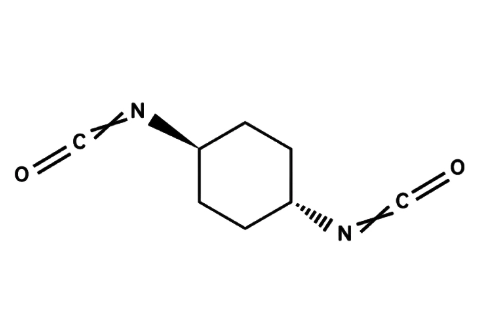
For polyurethane developers comparing different isocyanate chemistries, the wider range of specialty isocyanates for polyurethane systems offers additional formulation options. The choice between NDI and alternatives such as Trans-CHDI should ultimately reflect the balance of dynamic performance, thermal behavior, mechanical requirements and processing constraints. Related considerations are discussed in matching HTPB with isocyanates for polyurethane elastomer applications.

 English
 English
 Spanish
 Russian
 Arabic
 French
 German
 Portuguese
 Turkish
 Dutch
 Polish
 Korean
 Vietnamese
 Indonesian

 31. Aug, 2026